
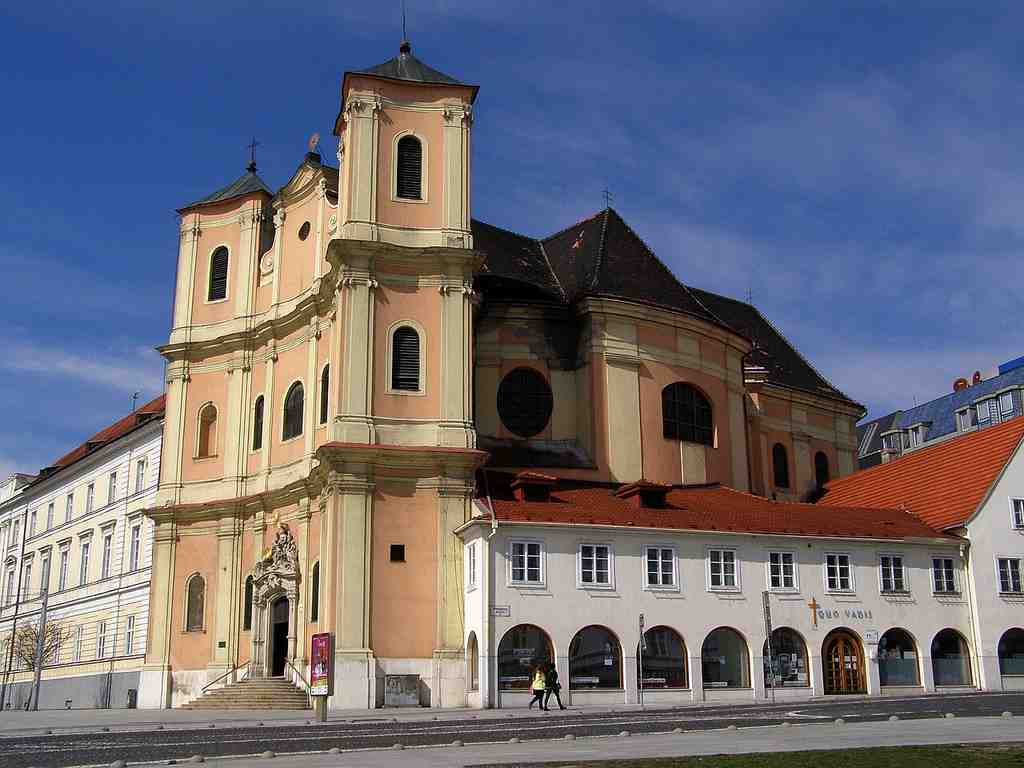
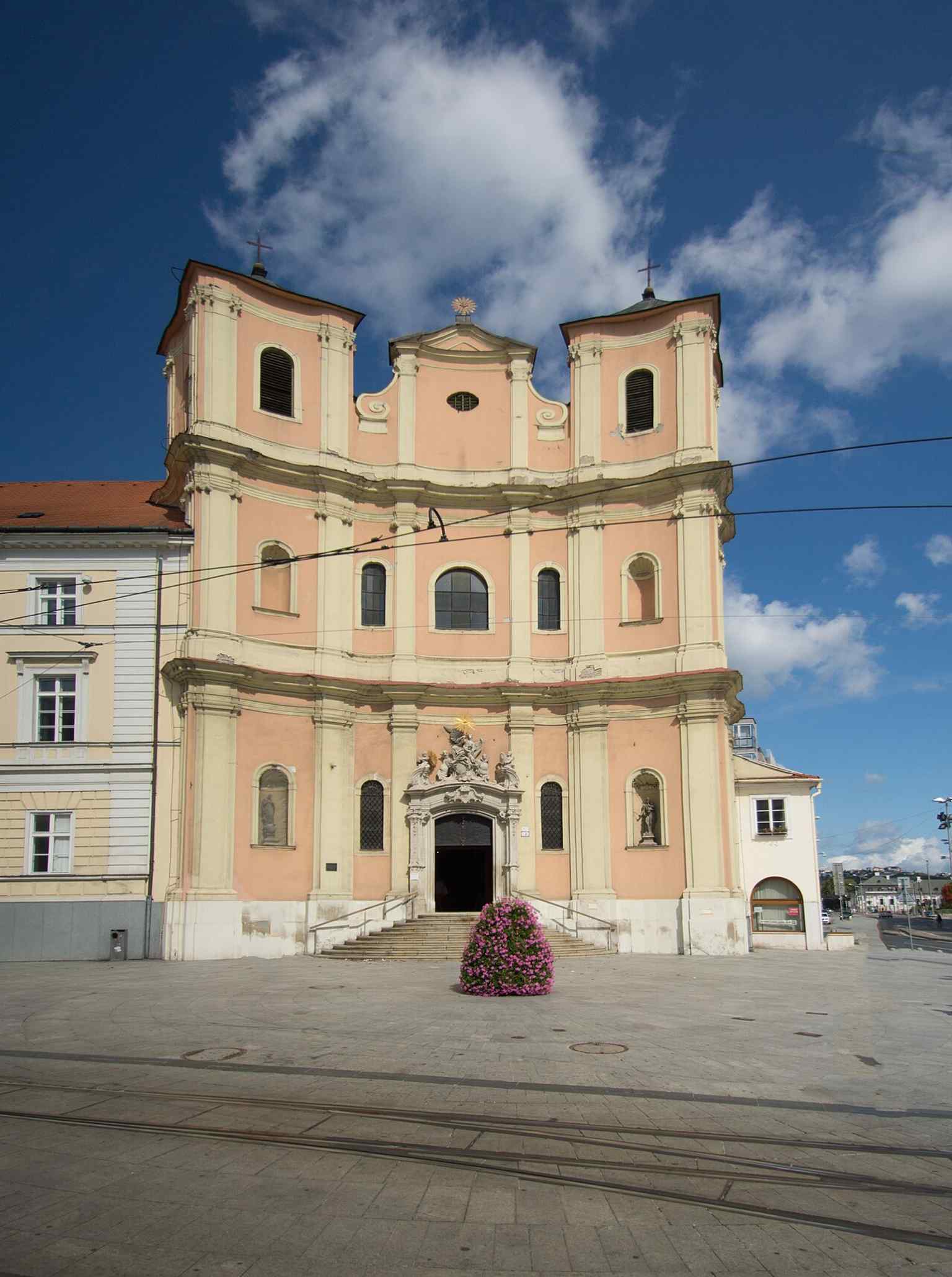
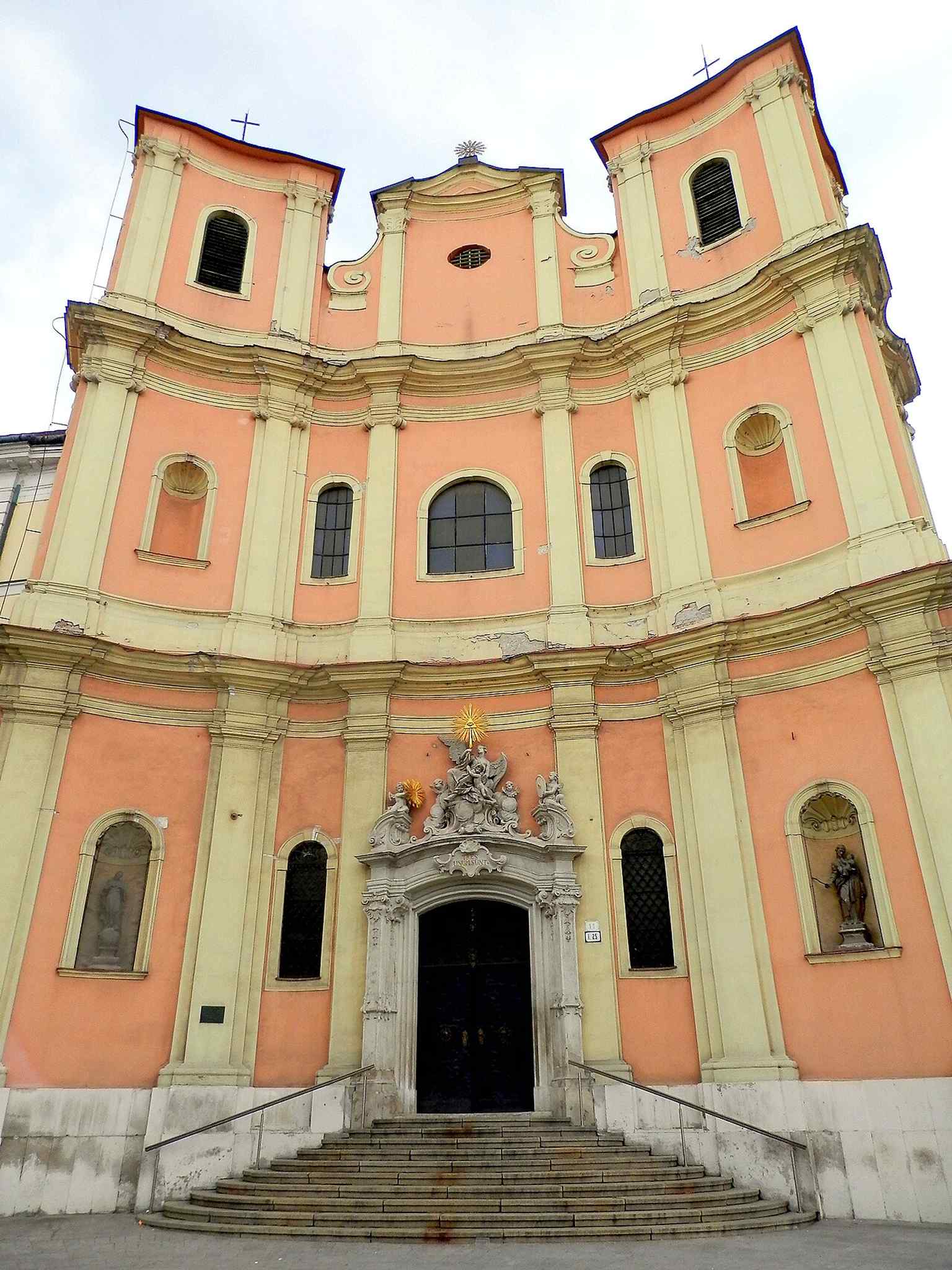
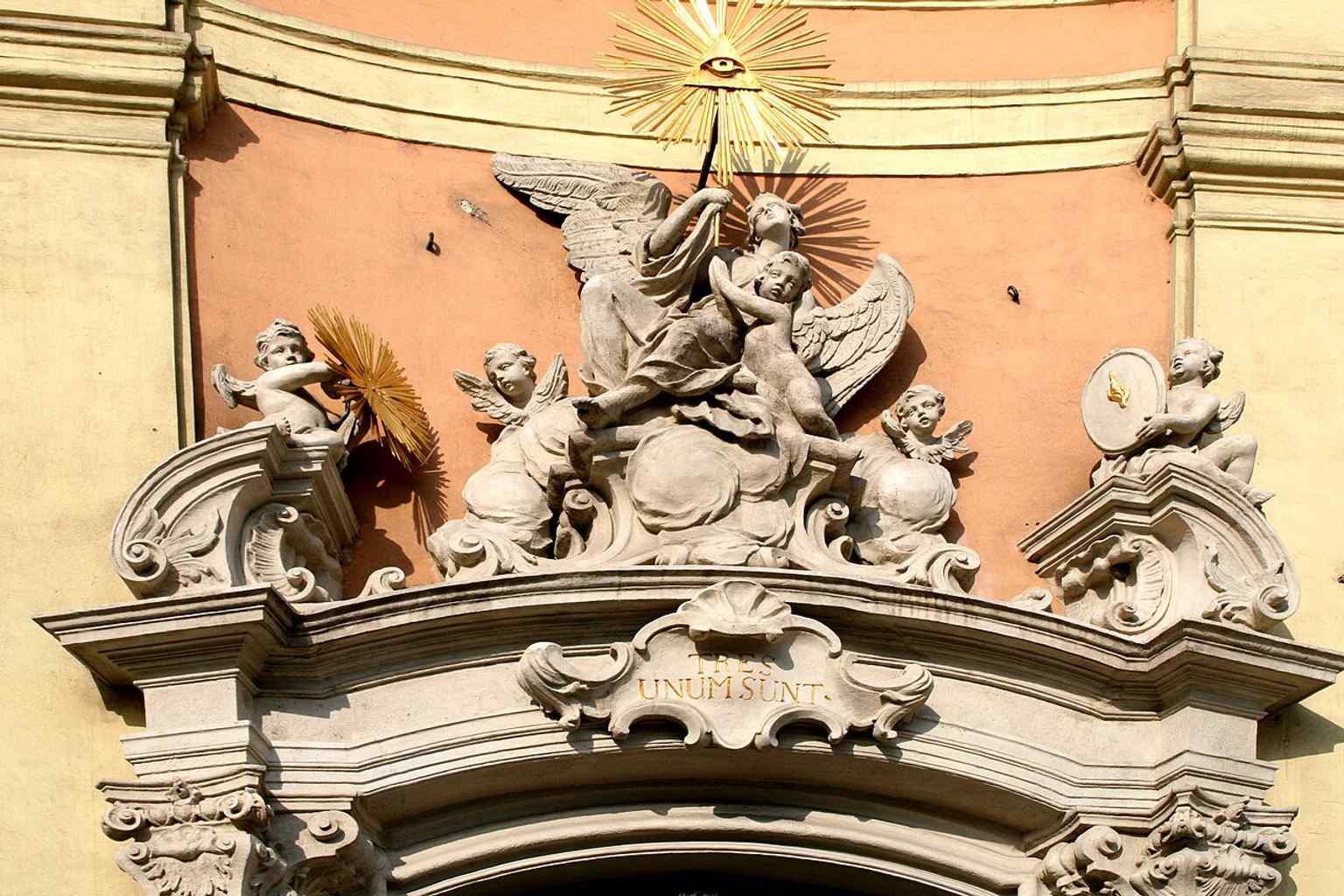
On your right, look for the pale stone Baroque façade with its gentle inward curve, twin square towers, and a richly carved portal topped with the symbol of the Holy Trinity.
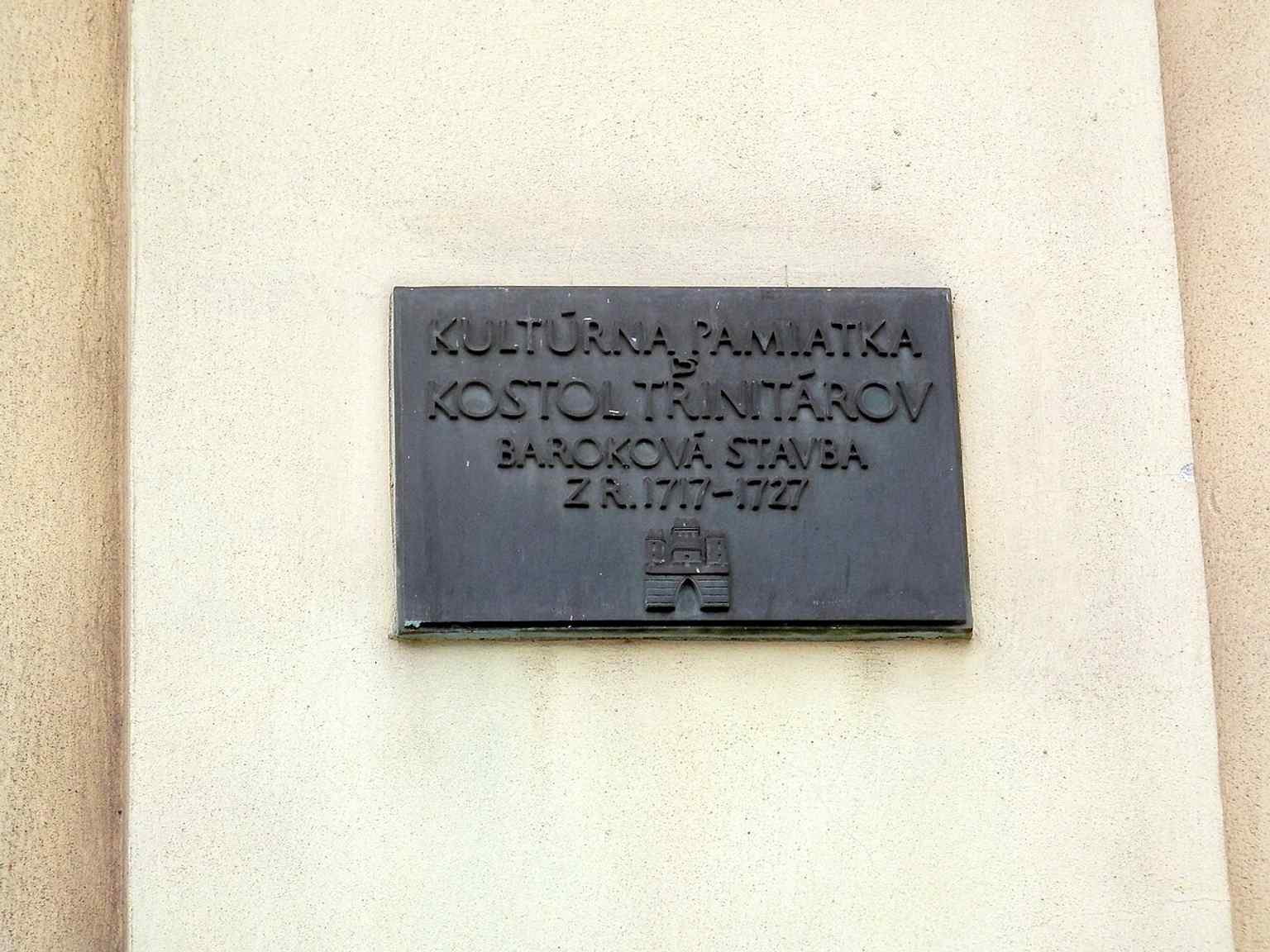
This church tells a very Bratislava story: a vision brought from elsewhere, paid for by powerful patrons, then absorbed so thoroughly that it now feels native to the street. It belonged to the Trinitarians, one of Europe’s oldest religious orders, founded by Saint John of Matha, and their mission was unusually direct and dramatic: they raised money to ransom captives and enslaved people back to freedom.
That helps explain the church’s design. Baroque architecture liked to persuade through space, light, and surprise... and this building does that with a little flourish. From out here, the front wall bends inward, almost like a stage curtain being drawn back. If you glance at the image in your app, you can see that rare concave façade clearly. It was the first church front of its kind in this region. And behind it sits something rarer still in Slovakia: an oval church plan, with the main worship space shaped like an ellipse rather than the usual long rectangle. In plain English, it wraps the congregation around the action.
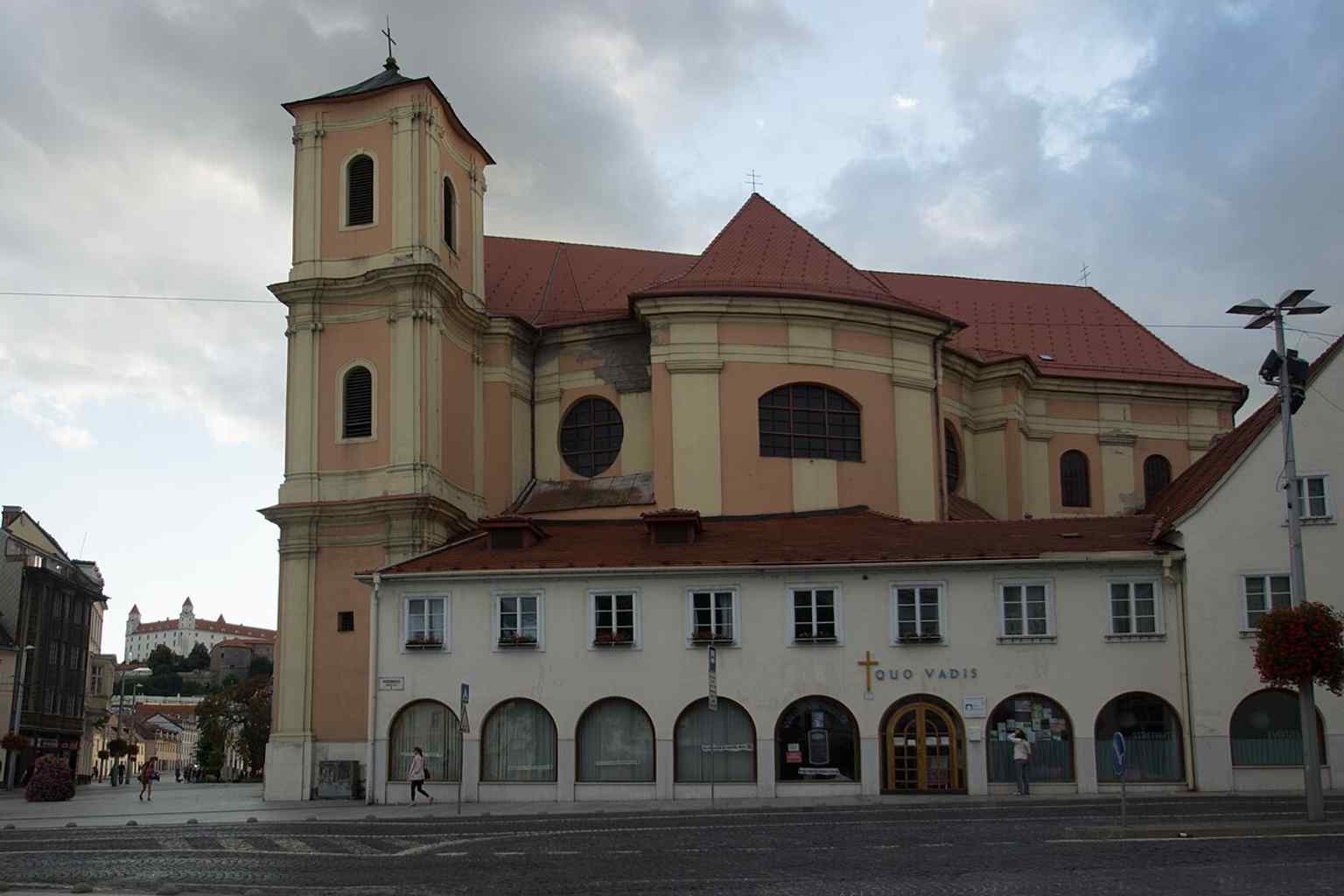
Now here comes the twist. This splendid church did not rise from an empty patch of ground. The Trinitarians arrived in Pressburg, old Bratislava, in sixteen ninety-seven from Ilava, and their first superior was Father Michael, a monk from Corella in Navarre, in Spain. They lodged in an inn, bought a house, then gradually gathered land with help from noble families and Archbishop Imrich Esterházi. But some of that land came from the old Saint Michael cemetery and the vanished Protestant cemetery nearby, and the foundation stone went down in seventeen seventeen on the site of an even older parish church of Saint Michael, demolished long before, in fifteen twenty-six. So this elegant Baroque statement stands on ground already crowded with memory. That is the city’s trick, and sometimes its ache: one era does not politely wait for the next.
The design likely came from Johann Lucas von Hildebrandt, the great Austrian architect of Italian background, though some historians argue for Franz Jänggl, a Vienna-based builder who also owned a house here in Bratislava and probably supervised the work. Either way, the message is clear: Rome inspires, Vienna translates, Bratislava adopts. You could call it the Habsburg version of international shipping.
Look closely at those towers. They seem a little blunt on top because they lost their original high Baroque roofs and onion domes. After eighteen oh five, the copper from similar towers reportedly got stripped for cannon casting. Even church towers, it turns out, could get drafted into empire.
And if you step inside later, the real magic happens overhead. The painter Antonio Galli da Bibbiena created an illusion of a soaring dome on a nearly flat vault, a grand piece of visual persuasion worthy of a theater set. Sacred devotion here worked hand in hand with patronage, money, and spectacle.
Next, we follow that same patronage from altar to aristocratic residence, where status found another language in ceremony and music at Grassalkovich Palace.
If you want to come back for the interior, the church generally opens daily from around seven until about five thirty, with longer hours on Sunday.





.jpg)
.jpg)


