
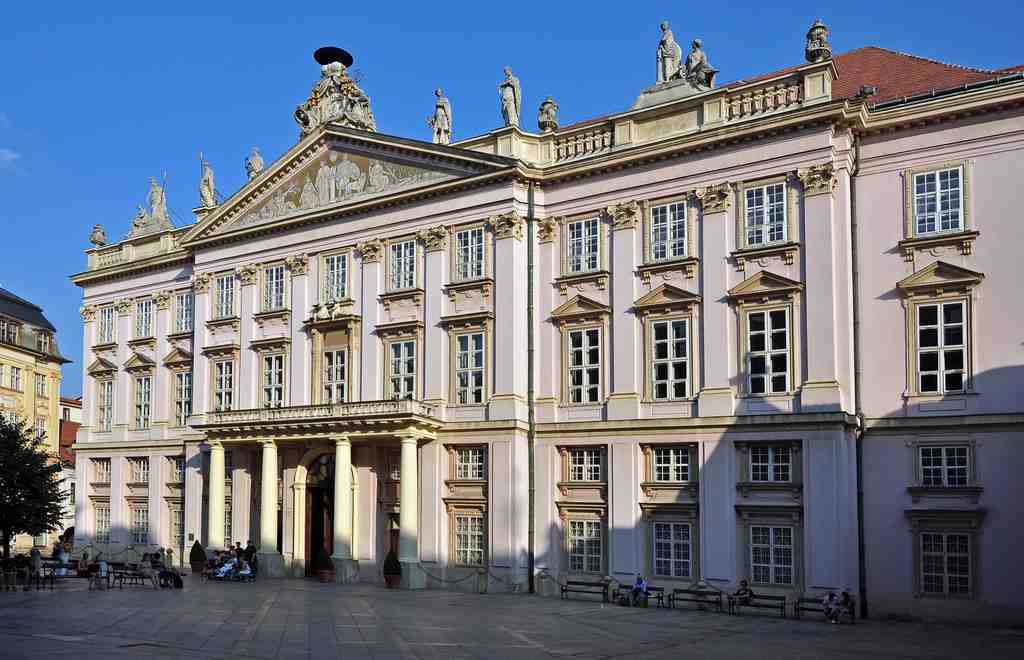
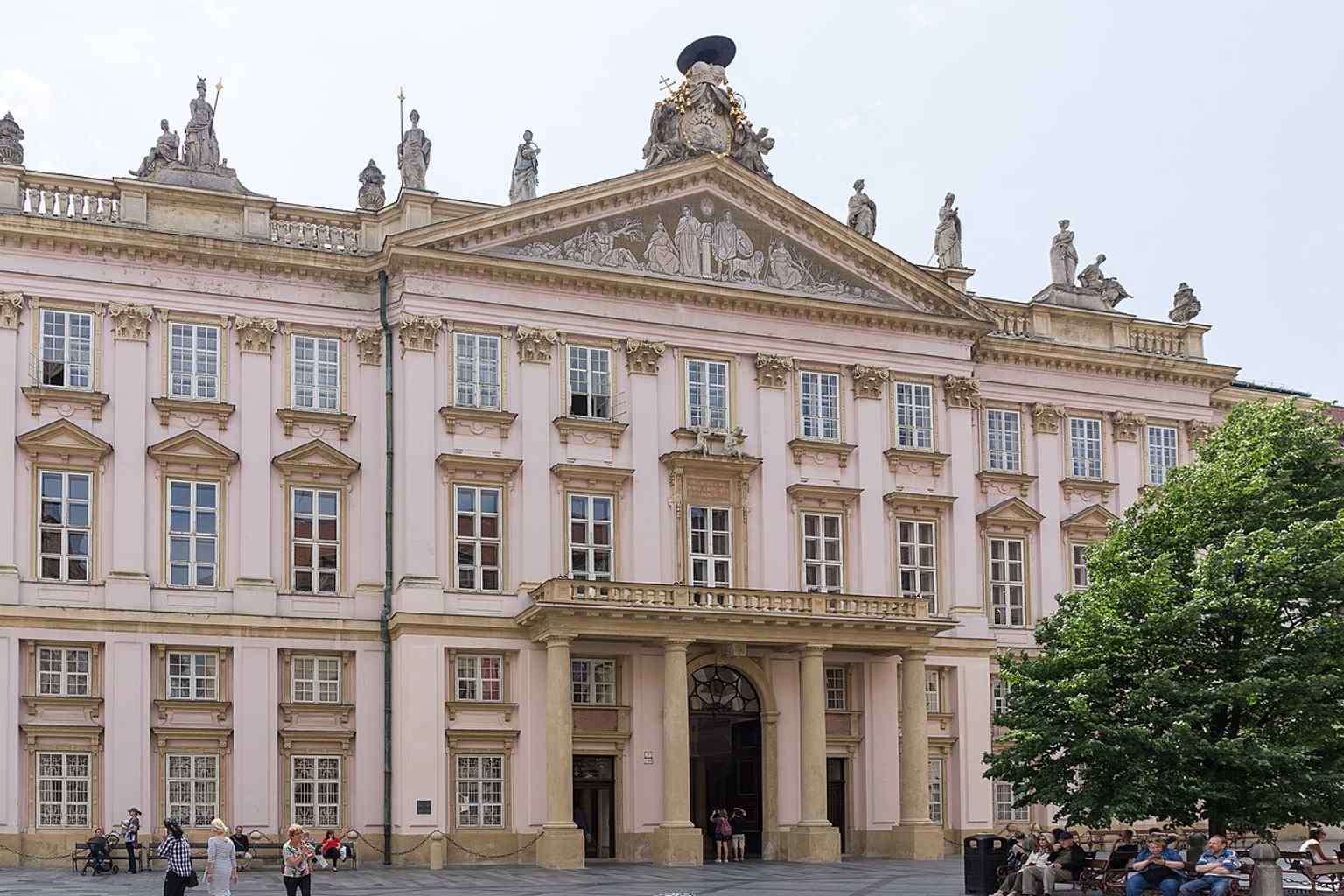
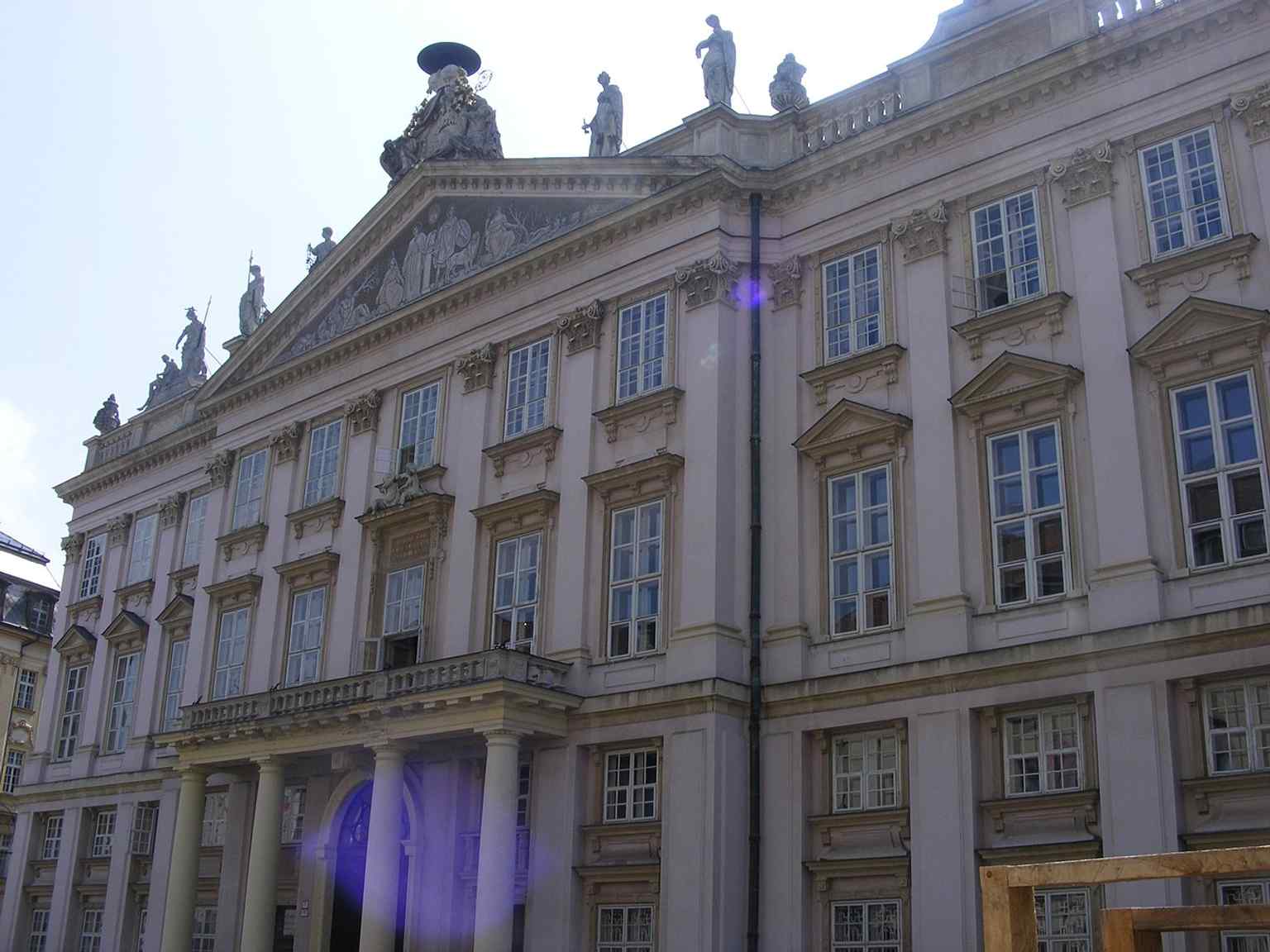
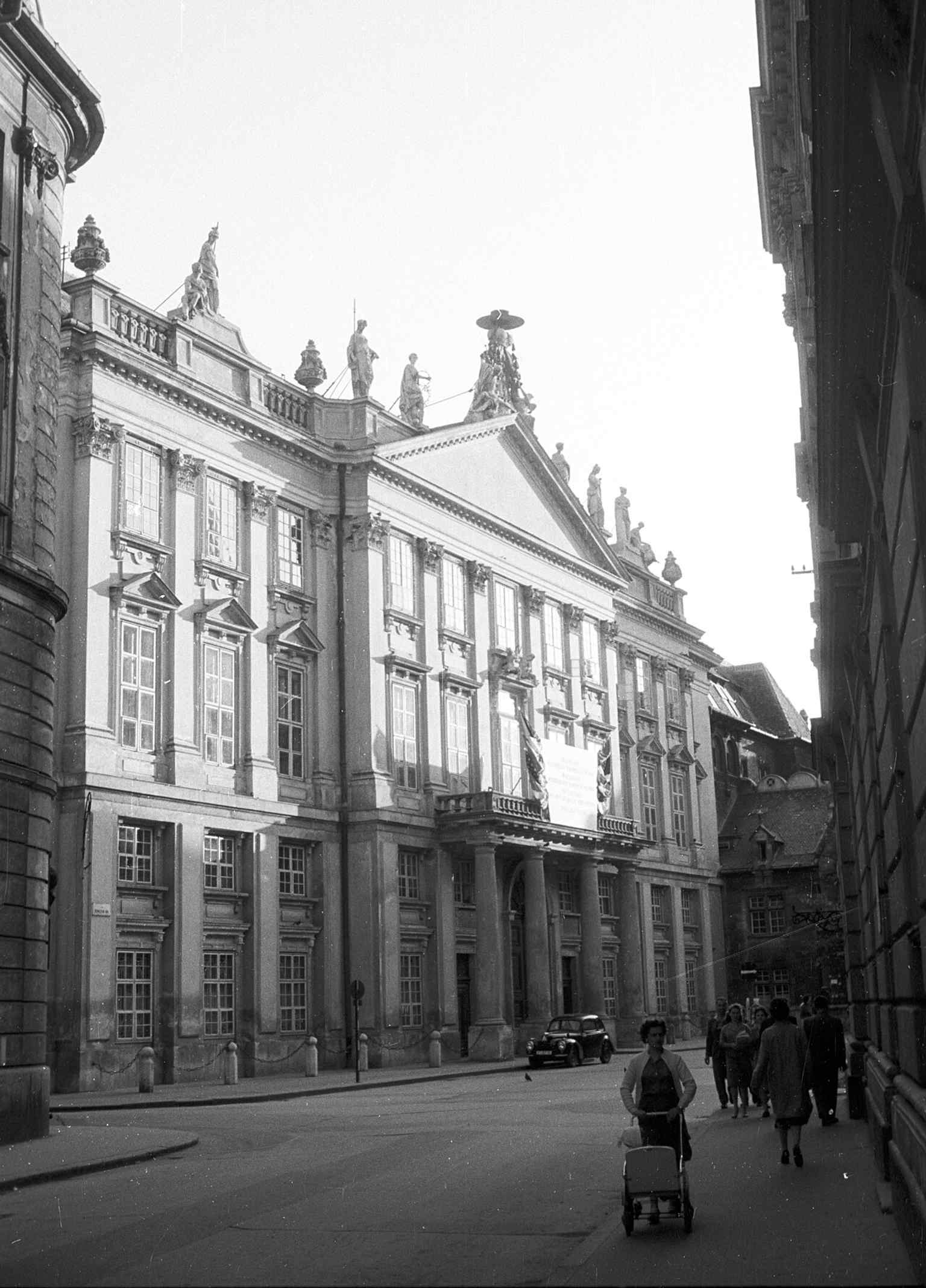
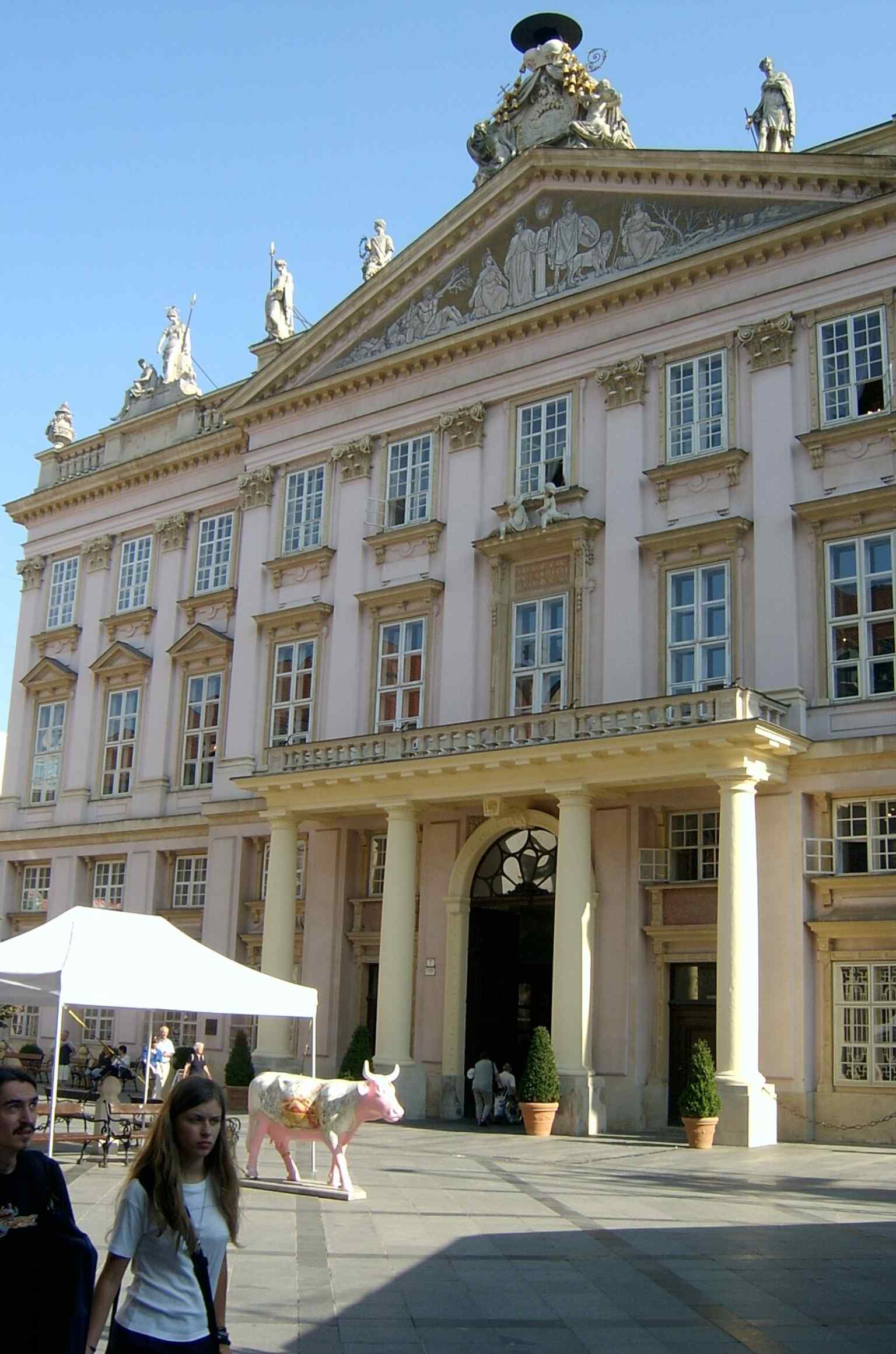
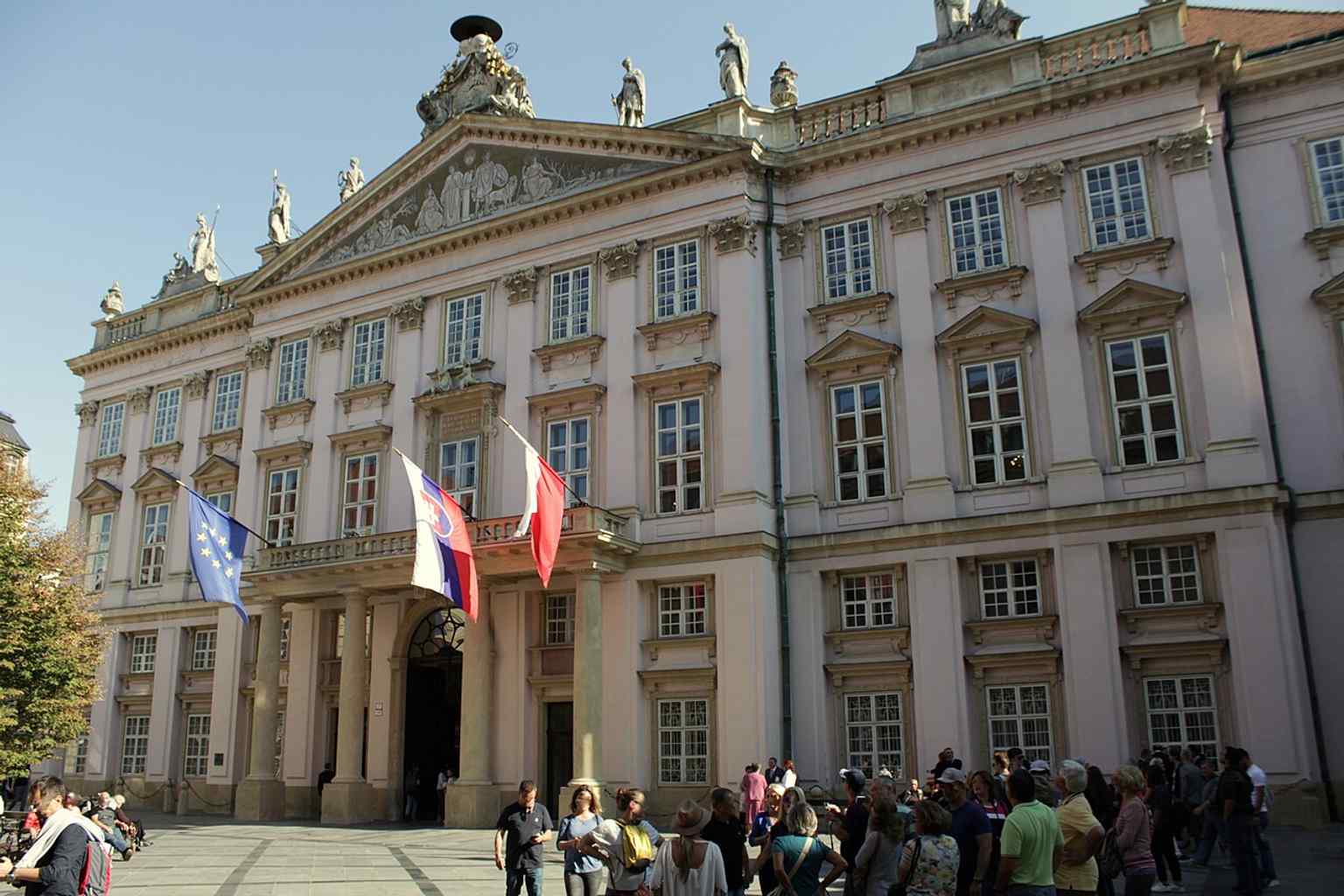
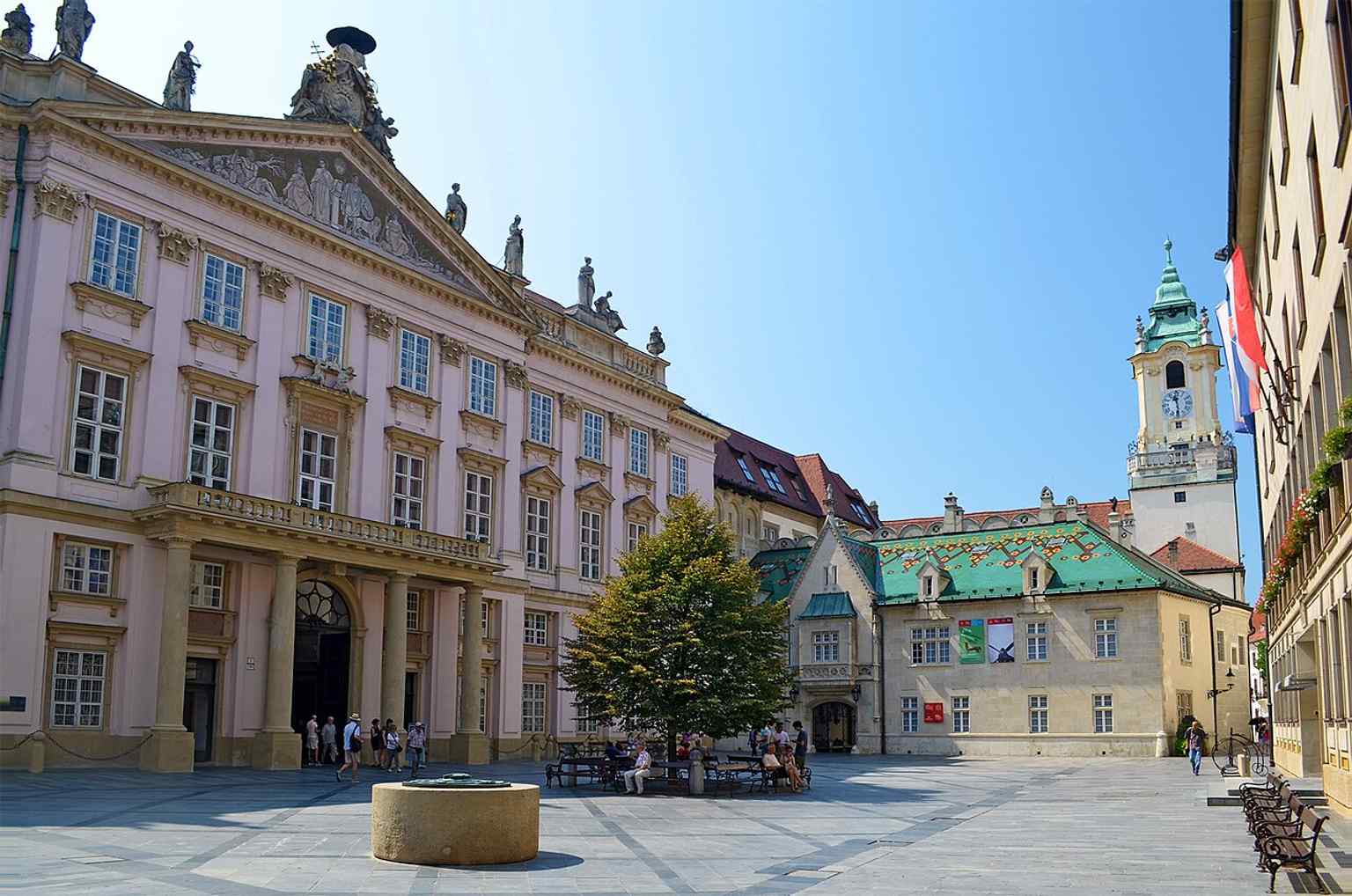
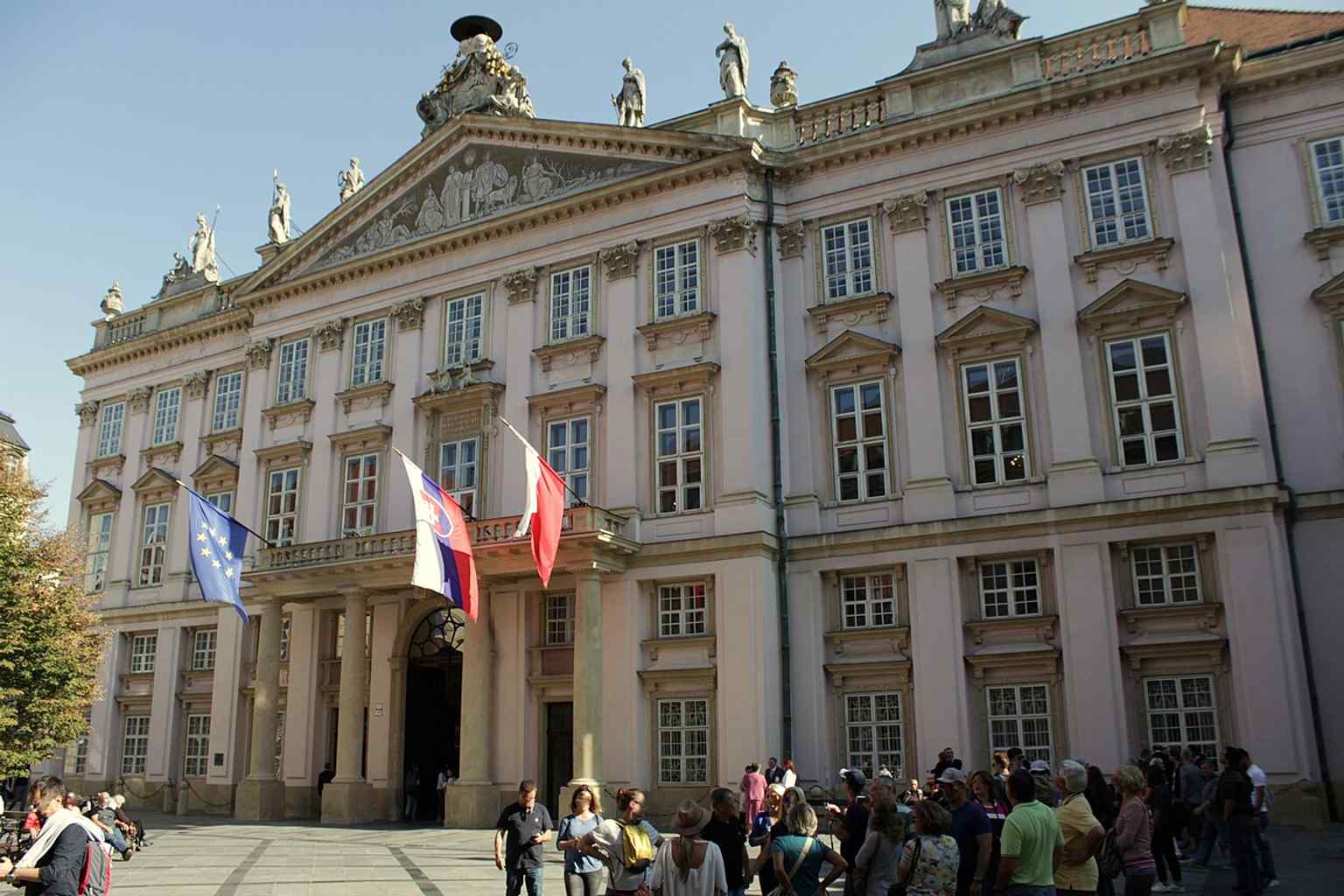
On your right, look for the wide pale pink stucco façade, the central balcony carried by four stone columns, and the huge coat of arms set high along the roofline.
This is Primate’s Palace, and it wears power very neatly. Not loud power... the organized kind. The kind that signs treaties, hosts dignitaries, and decides how a capital should present itself to the world.
Before this elegant front rose here in the late eighteenth century, this spot already mattered for centuries. Most visitors admire the polish and keep walking, but beneath it lies one of the old city’s deepest roots: a central medieval zone where the archbishop kept a working residence, where a chapel of Saint Ladislaus stood by the fifteenth century, and where archaeology pushes human presence back to Roman times. Bratislava has a habit of laying a fresh tablecloth over an ancient table.
When the Hungarian army was defeated at Mohács in fifteen twenty-six, the kingdom’s center of gravity shifted north. Pressburg, today’s Bratislava, grew into a coronation city, and once kings were crowned here, the supporting machinery of rank and rule clustered close by. Crowns touched heads in Saint Martin’s Cathedral, but the hosting, lobbying, filing, bargaining, and ceremonial planning needed headquarters like this one.
That helps explain the title here. The primate was not just a senior churchman, but the leading archbishop of the kingdom, with land, money, influence, and a direct hand in shaping the city. In a place like Bratislava, religious authority and political authority often shared the same front door.
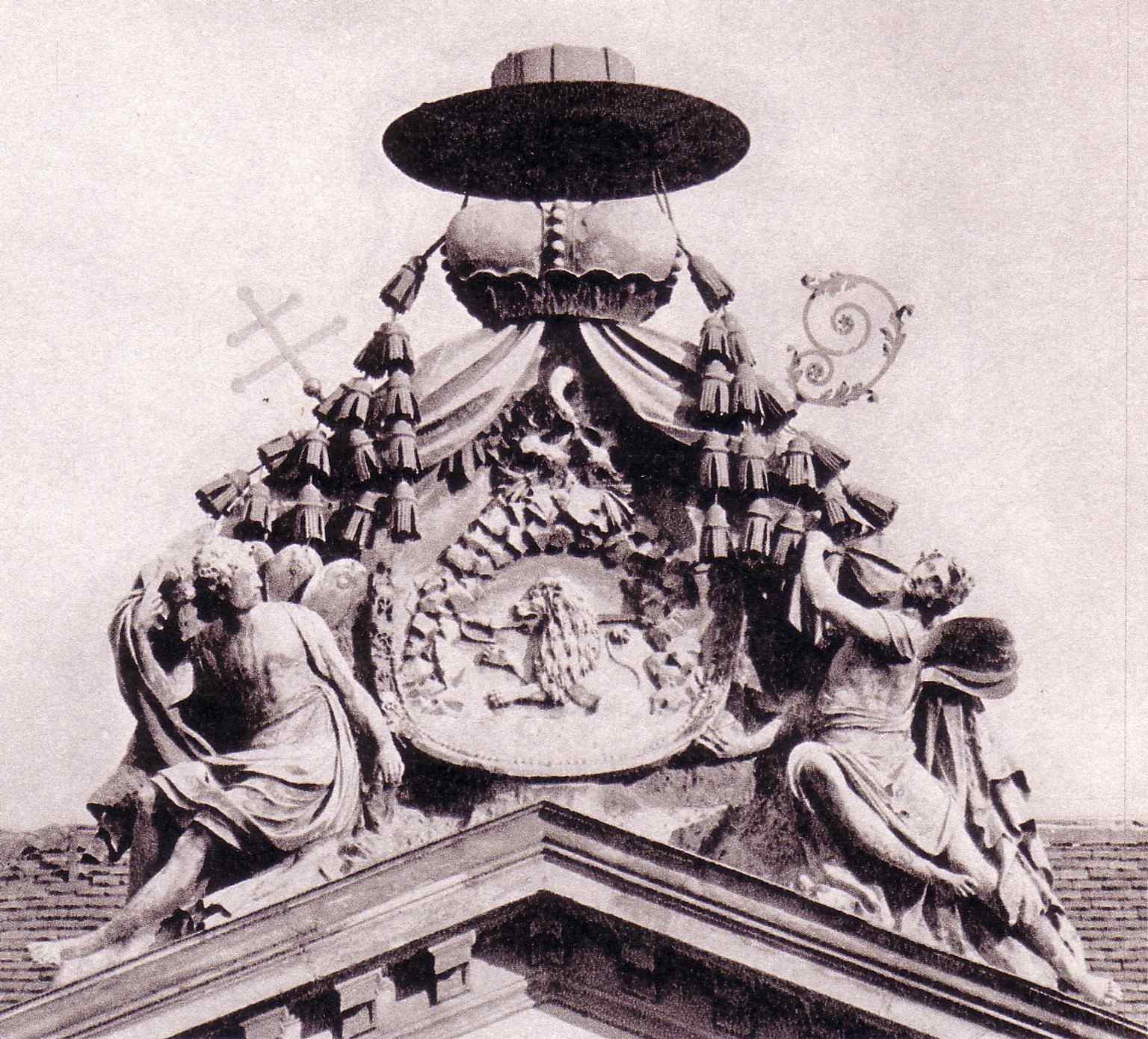
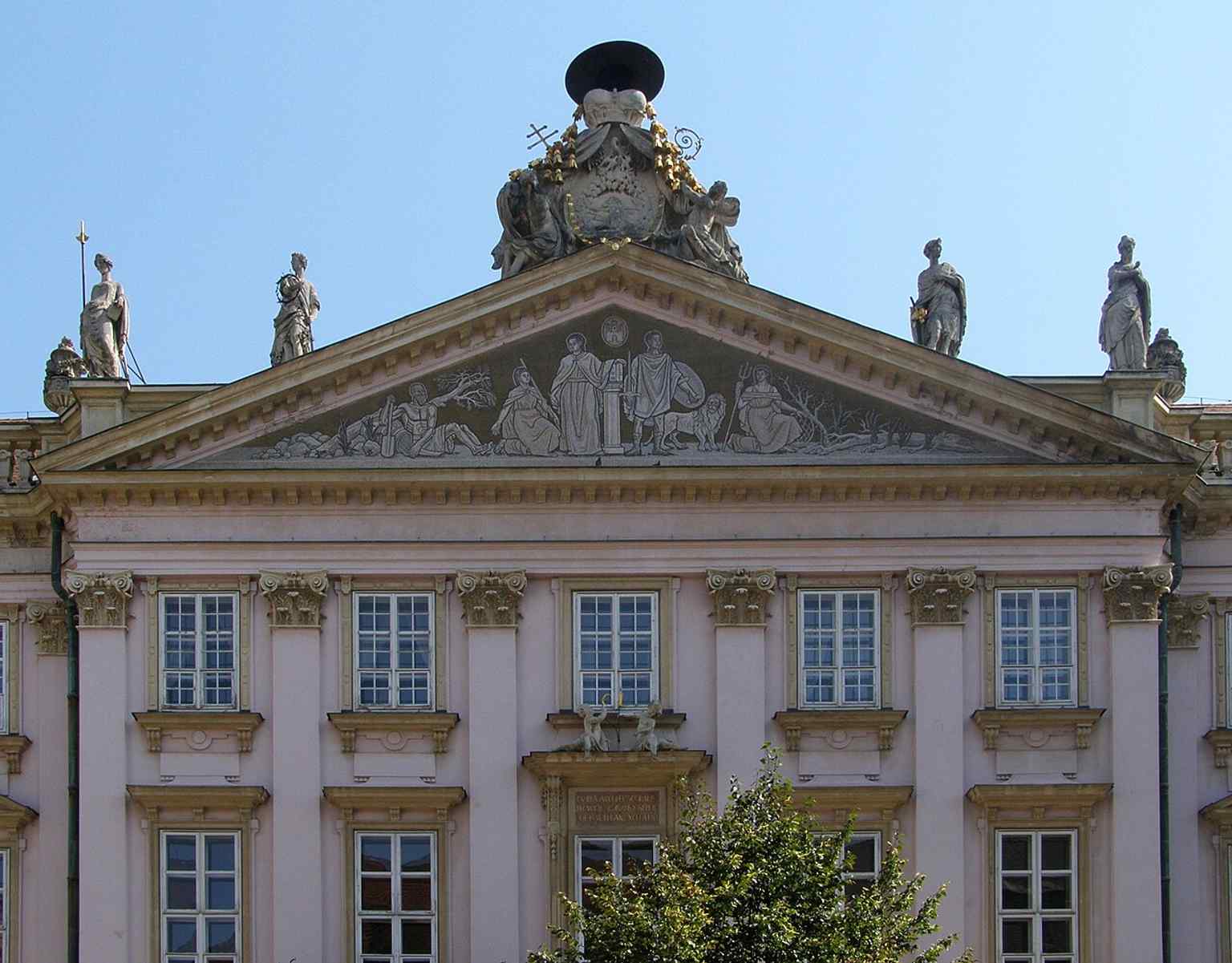
The man who gave the palace its present form was Archbishop József Batthyány. In the seventeen seventies, he decided Bratislava needed a residence worthy of his office and convenient for his family ties, nearby estates, and the imperial court in Vienna. He hired his Viennese architect, Melchior Hefele, approved the final plan in seventeen seventy-eight, and within just a few years this broad, symmetrical palace stood here with its inner courtyard, grand façade, and roofline statues. If you glance at your screen, image three isolates Batthyány’s coat of arms above you. Those two little figures above the balcony hold the letters C and I, for his motto: clemency and justice. A pretty tidy job description, if you ask me.
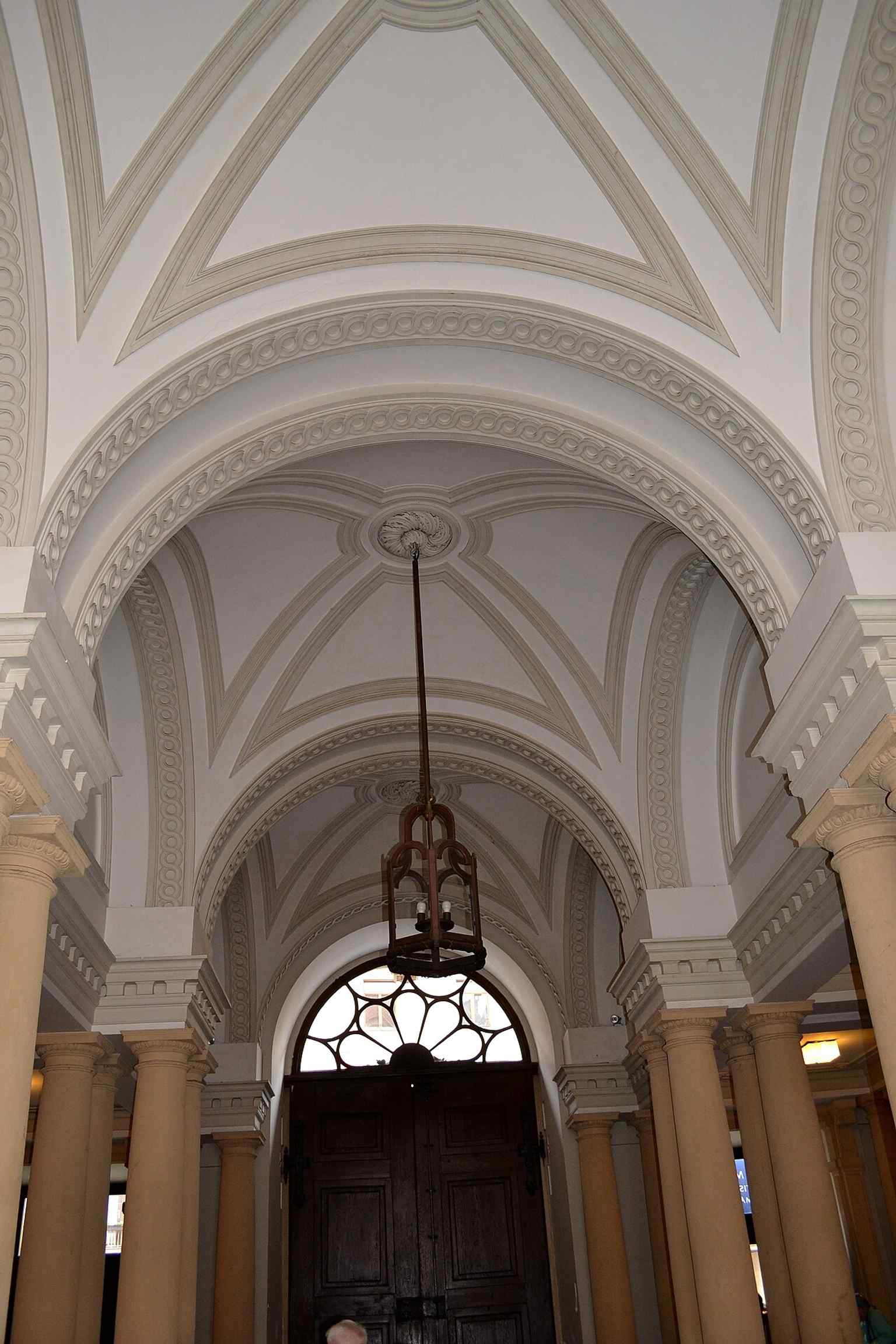
Inside, the grand reception room is the Mirror Hall, and that room has seen Europe reshuffled. On the twenty-sixth of December, eighteen oh five, after Napoleon’s victory at Austerlitz, Prince Johann-Joseph von Liechtenstein signed the Peace of Pressburg here for Austria, and Charles-Maurice de Talleyrand signed for France. Later, Ferdinand the Fifth signed the March Laws here in eighteen forty-eight. Even in nineteen sixty-eight, communist leaders used this palace for the Bratislava Declaration. Same walls... different empires, different paperwork.
And then the city added one more layer. After the archbishops moved back to Esztergom, the palace declined, until Bratislava bought it in nineteen oh three and turned it into city property. During that restoration, workers found six lost tapestries hidden behind coverings near the Mirror Hall, like history slipping a note out from inside the wall. Some parts now serve the city mayor, some hold gallery spaces, and the building still hosts public life rather than merely posing for it.
Carry that thought with you to Mirbach Palace: in Bratislava, the loveliest façades often stand on much older claims.







.JPG)


