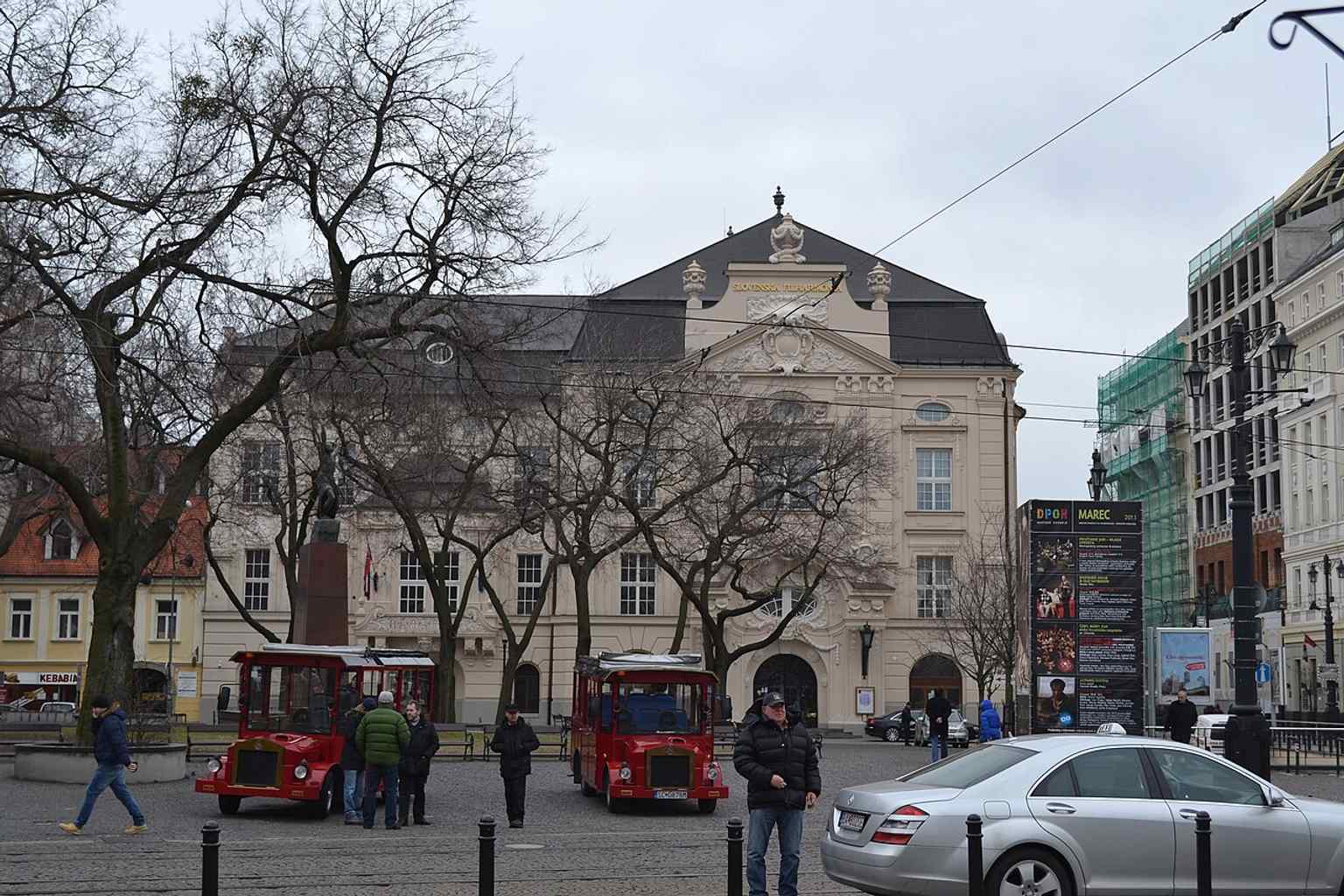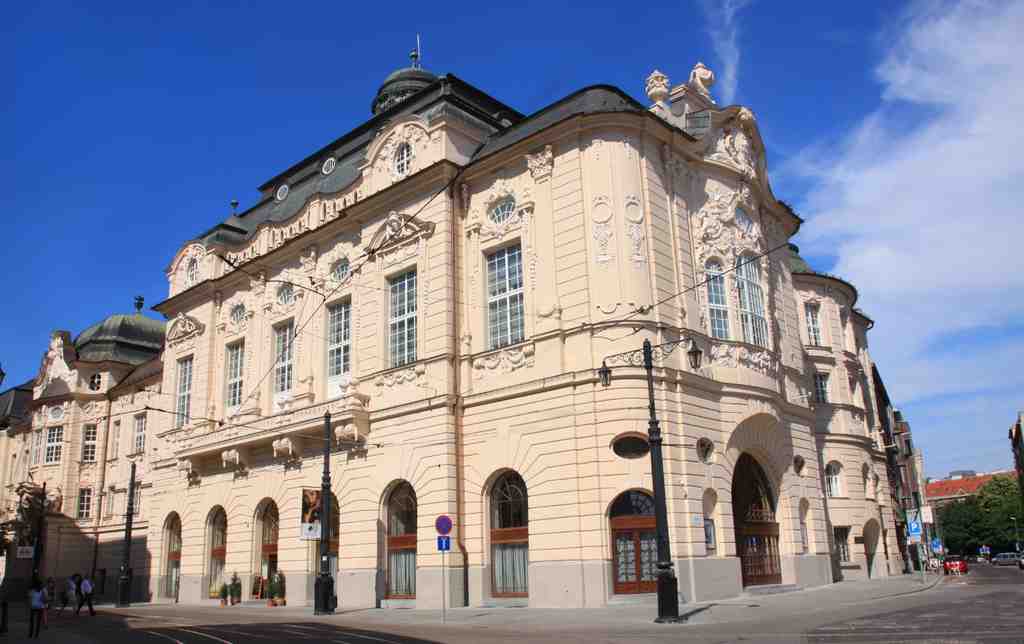
On your right, look for a pale stone corner building with a tall mansard roof, curved window lines, and a façade crowded with columns, pilasters, and little roof turrets.
This is the Reduta, and it tells you a lot about Bratislava very quickly: this city liked culture, but it also liked showing up for culture in good shoes. The name comes from the French word redoute, meaning a ballroom or dance hall. Before this building stood here, the city had a Theresa-era granary on the site. In nineteen oh-one, city leaders bought that old storage building, cleared the way, and slowly turned a place for grain into a place for glamour.
Budapest architects Dezider Jakab and Marcell Komor won the design competition in nineteen oh-six, and construction ran from nineteen thirteen to nineteen nineteen, slowed by the First World War. For all its lace-like decoration, the building was technically modern for Bratislava: one of the city’s early reinforced-concrete structures. So under the fancy clothes, this place had very new bones.
And Reduta never lived just one life. It was a hybrid cultural machine from the start: ballroom, concert hall, meeting place, and one of Bratislava’s earliest cinemas, opened here in nineteen sixteen. During carnival season, masked balls and society parties pulled in the city’s elite. At the same time, film screenings and concerts shared the building. In other words, Bratislava entertained itself here while teaching itself how to be modern. Not a bad multitasker.
Take a moment and study the building’s bulk and decoration. Does it feel like a palace, a concert hall, or a very dressed-up civic clubhouse? That uncertainty is the point. A pilaster, by the way, is a flat decorative column attached to a wall, and a mansard roof is that steep, layered roof shape that squeezes in extra upper rooms. If you want a clearer view of the façade’s full theatrical spread, glance at your screen now.
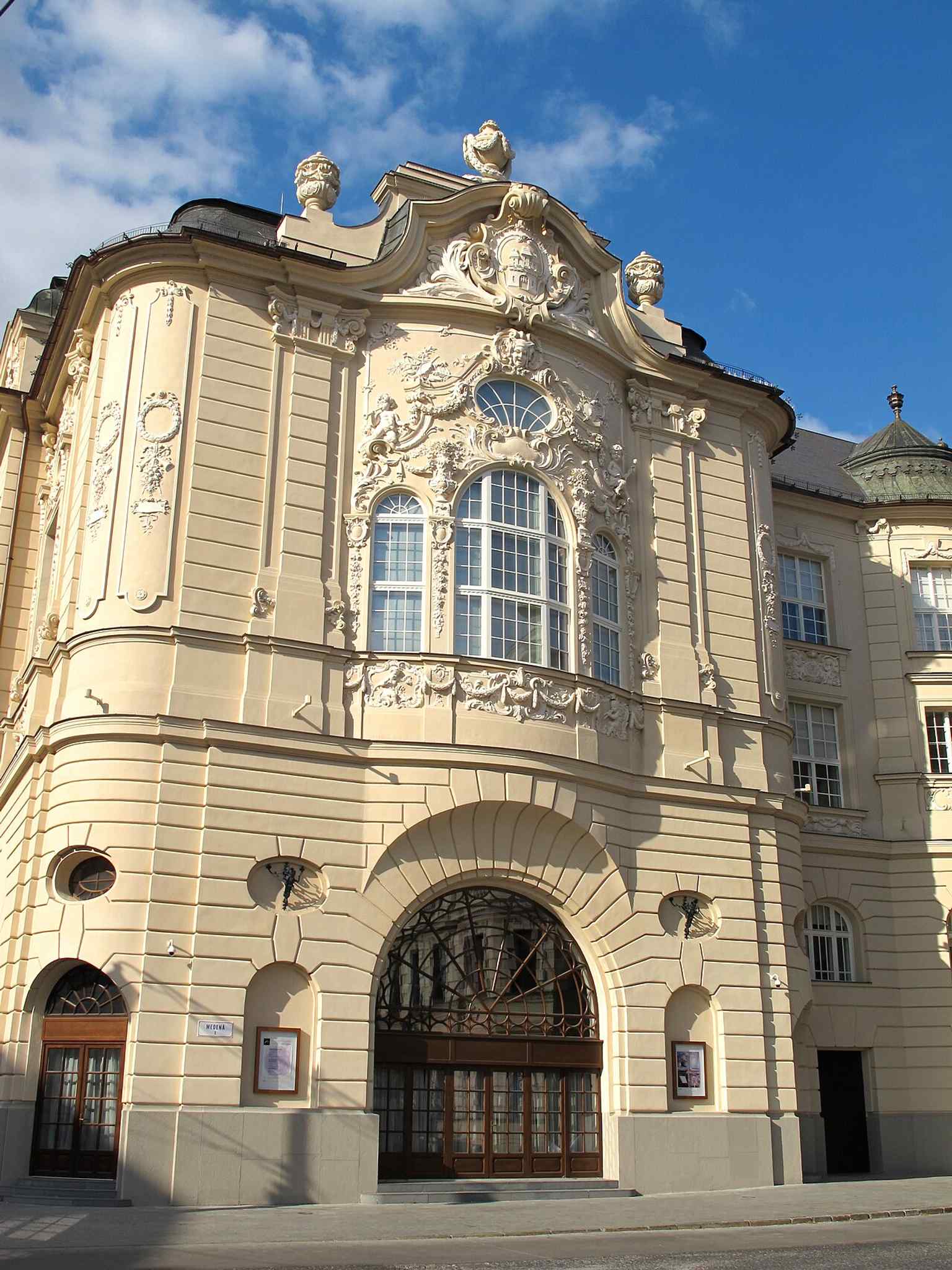
By the interwar years, major names turned Reduta into a serious musical address. Erich Wolfgang Korngold performed here repeatedly, and so did the Vienna Philharmonic, Richard Strauss, and Béla Bartók. After the Second World War, the state nationalized the building and gave it to the Slovak Philharmonic, which still calls it home. A huge restoration, backed by nearly thirty-seven point eight four million euros, revived thousands of square meters of stucco inside and out; later, in twenty sixteen, Reduta even hosted important meetings during Slovakia’s presidency of the Council of the European Union.
So this building kept changing costumes without leaving the stage. Now the performance spills outdoors. Head on toward Hviezdoslavovo námestie, about a three-minute walk, where city life trades chandeliers for open sky.