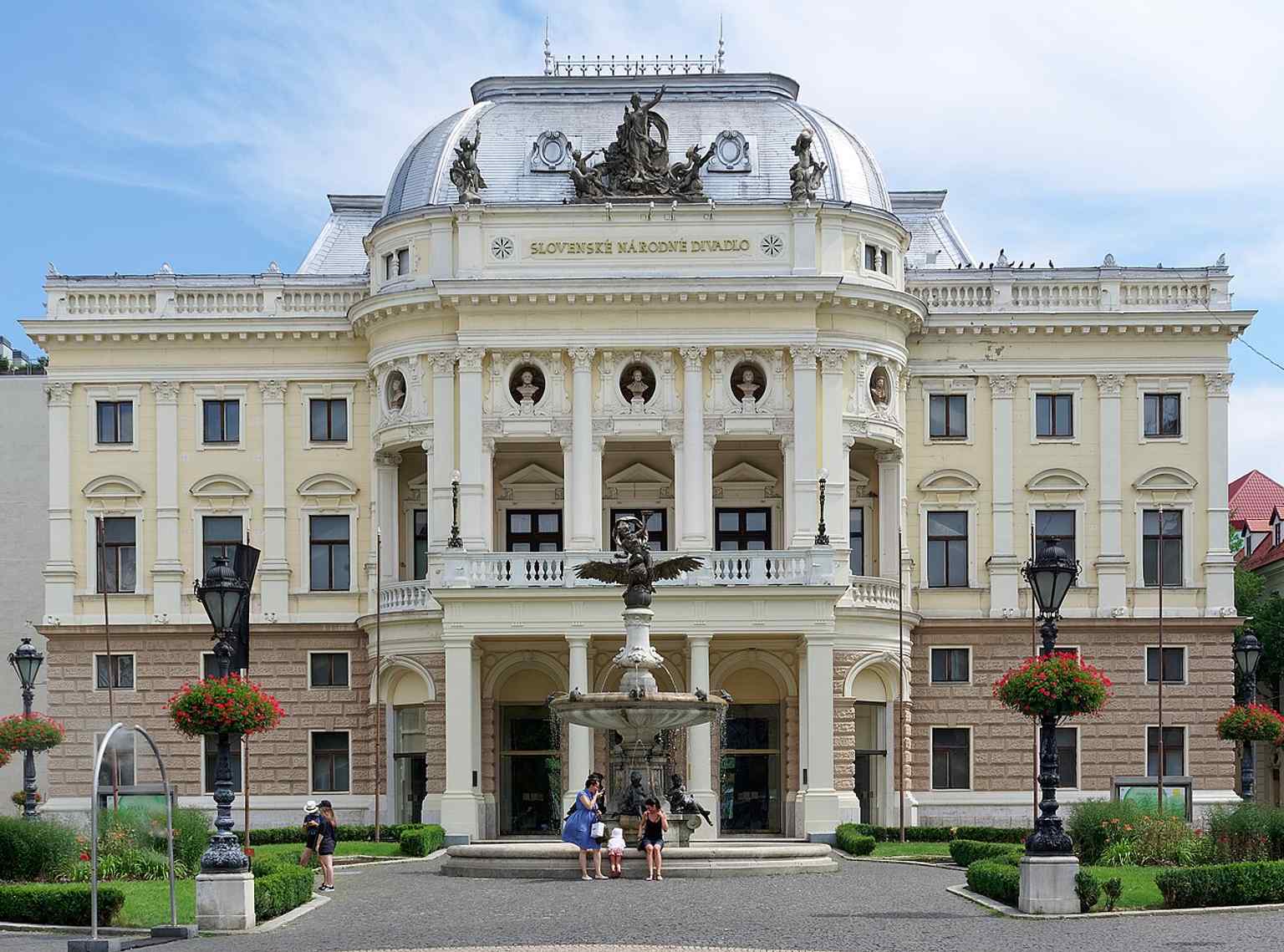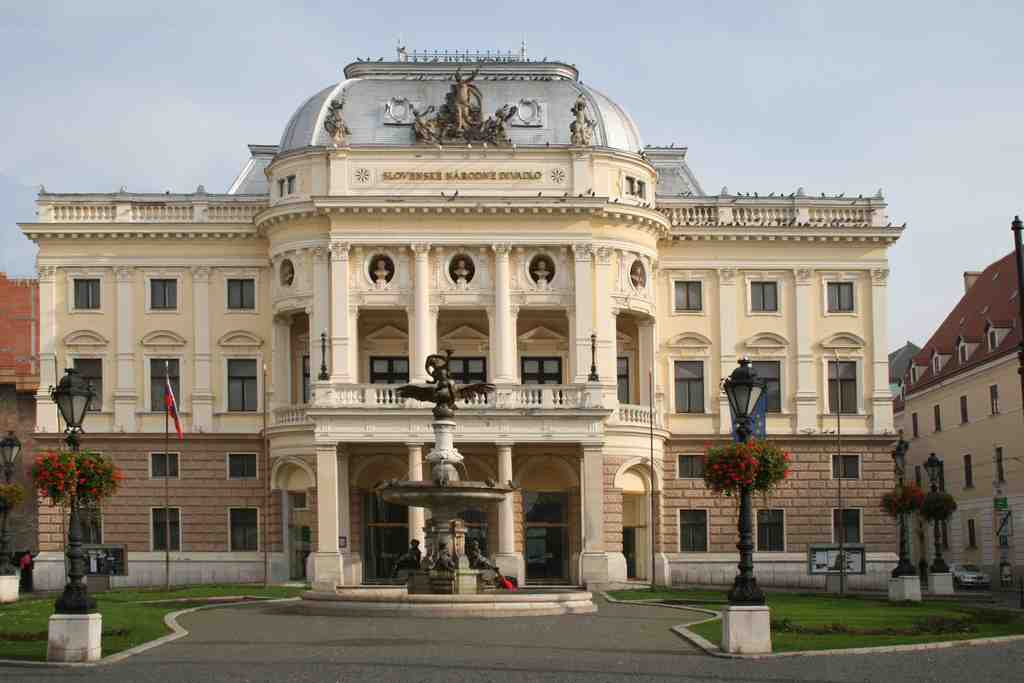
In front of you stands a pale stone neo-Renaissance theater with a rounded central dome, tall arched windows, and a sculpted figure group perched above the main entrance.
Welcome to Bratislava... and to a building that tells you, right away, how this city likes to work. It rarely throws the old script away. It keeps the stage, changes the cast, and gives the lines a new voice.
This theater stands on a site where a city playhouse had already been performing since seventeen seventy-six, when Count Juraj Csáky commissioned one from the designs of Matej Walch. The building you see now arrived later, opening on the twenty-second of September, eighteen eighty-six. Two Viennese architects, Ferdinand Fellner and Hermann Helmer, designed it as one of their many grand theaters across Europe, and the local builder Ignác Feigler Junior pushed the work through at remarkable speed, from August of eighteen eighty-four to September of eighteen eighty-six. That is brisk, even by contractor bragging standards.
Look at the façade and you can read its inheritance: imperial taste, formal symmetry, a little flourish, a little authority. Early on, the house welcomed German and Hungarian companies. Then, after the birth of Czechoslovakia, the same walls took on a new job. From nineteen twenty, this became the home of the Slovak National Theatre, one of the key places where Slovak professional culture learned to stand on its own feet.
That change did not happen with trumpets and instant perfection. It began modestly, almost tenderly. After the premiere of Mariša on the second of March, nineteen twenty, the first Slovak productions followed within months, including Hriech and V službe. In nineteen twenty-one, the first Slovak actors joined the ensemble, among them Andrej Bagar and Ján Borodáč. And here is the detail locals love to point out: when ballet chief Václav Kalina staged Delibes’s Coppélia in May of nineteen twenty, the ballet troupe was so small that the production had to borrow amateurs and members of the opera chorus just to fill the stage. A national institution, yes... but one still stitching its costume in the wings.
That is why this place matters. It was never only a pretty shell. Under this dome, Bratislava practiced becoming something new without pretending it had come from nowhere. Opera conductor Oskar Nedbal helped train the company in serious musical theater, and in nineteen twenty-six the house presented Kováč Wieland by Ján Levoslav Bella, the first Slovak opera to claim the stage here as its own.
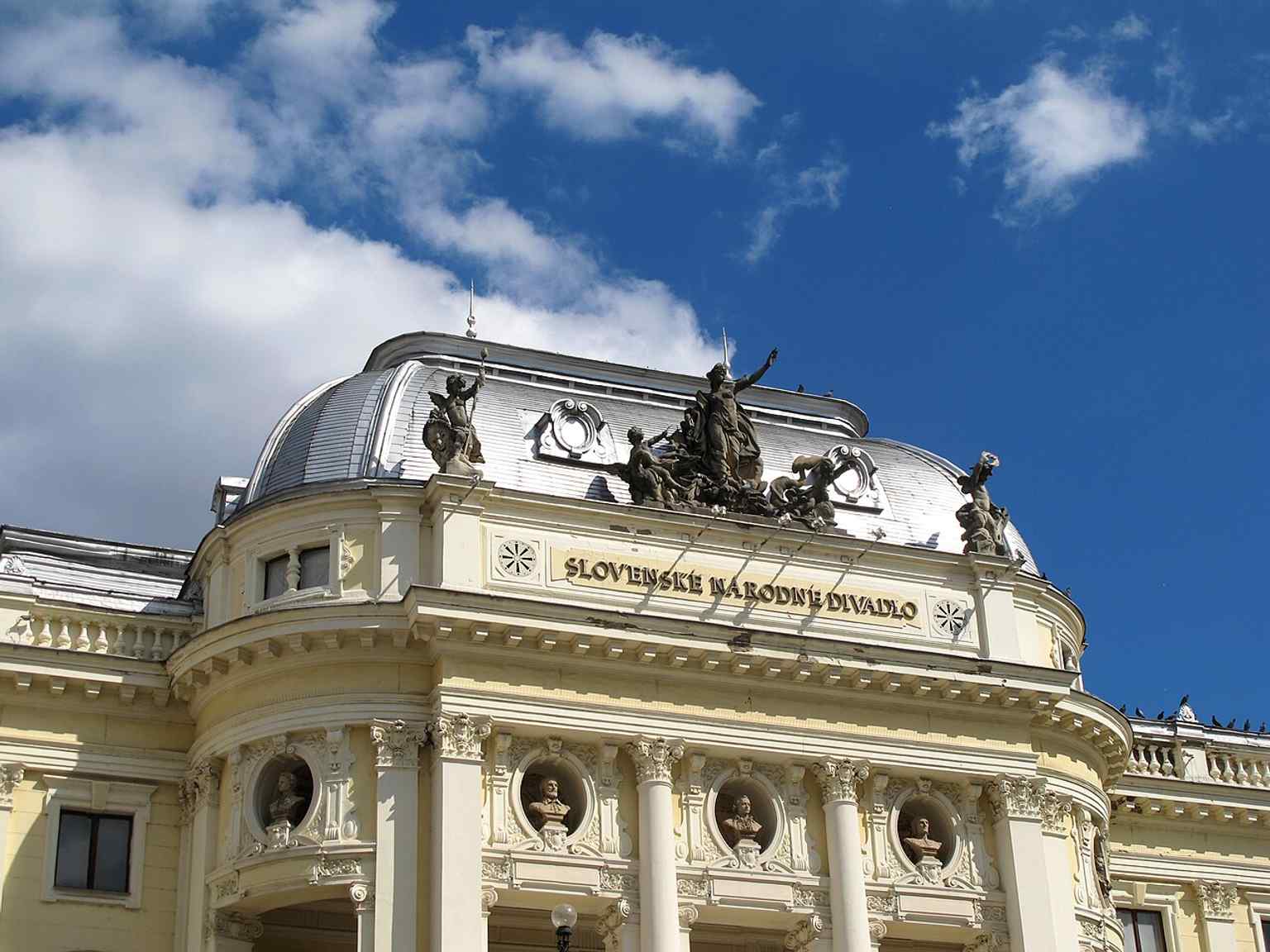
If you glance at your screen, the photo helps the upper façade read a little more clearly. Above the loggia, those busts carry a quiet argument about identity. The originals came down in nineteen thirty-six, with plans to replace them with Slovak and Czech figures. The replacements never arrived, the busts sat in the basement for decades, and copies returned only in two thousand and three, with the missing one replaced by Mozart. That, in one small stone episode, is Bratislava all over: symbols revised, restored, and renegotiated.
The building itself kept needing rescue too. Bomb damage in the nineteen forties cracked foundations under the auditorium, later renovations modernized the stage and backstage, and because the historic parts are protected, the façade, foyer, and auditorium had to keep their old character even as the working guts changed behind them. Today the story is still unfinished; the historic building closed for performances in May of two thousand twenty-one because of its technical condition, while the national company performs in the newer riverside building.
So as we begin, keep this image in mind: a theater with borrowed forms, local ambitions, and a city learning to perform itself in public. Step away from the curtain now and toward the next hall where Bratislava showed off its civic elegance-the Reduta is about a one-minute walk from here.