AudaTours logoAudaTours

Stop 14 of 16

Neptune Fountain

headphones 04:25 Buy tour to unlock all 18 tracks

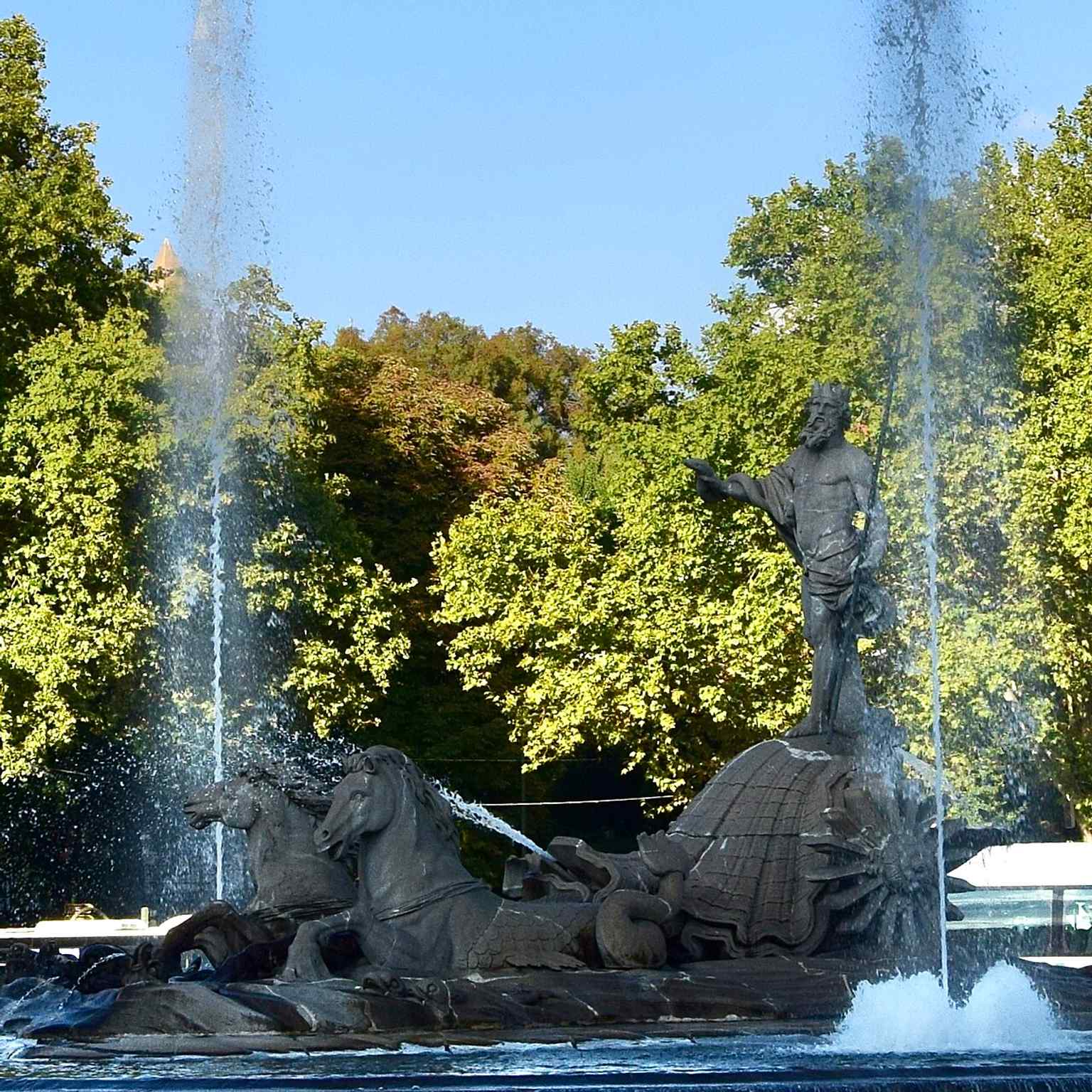
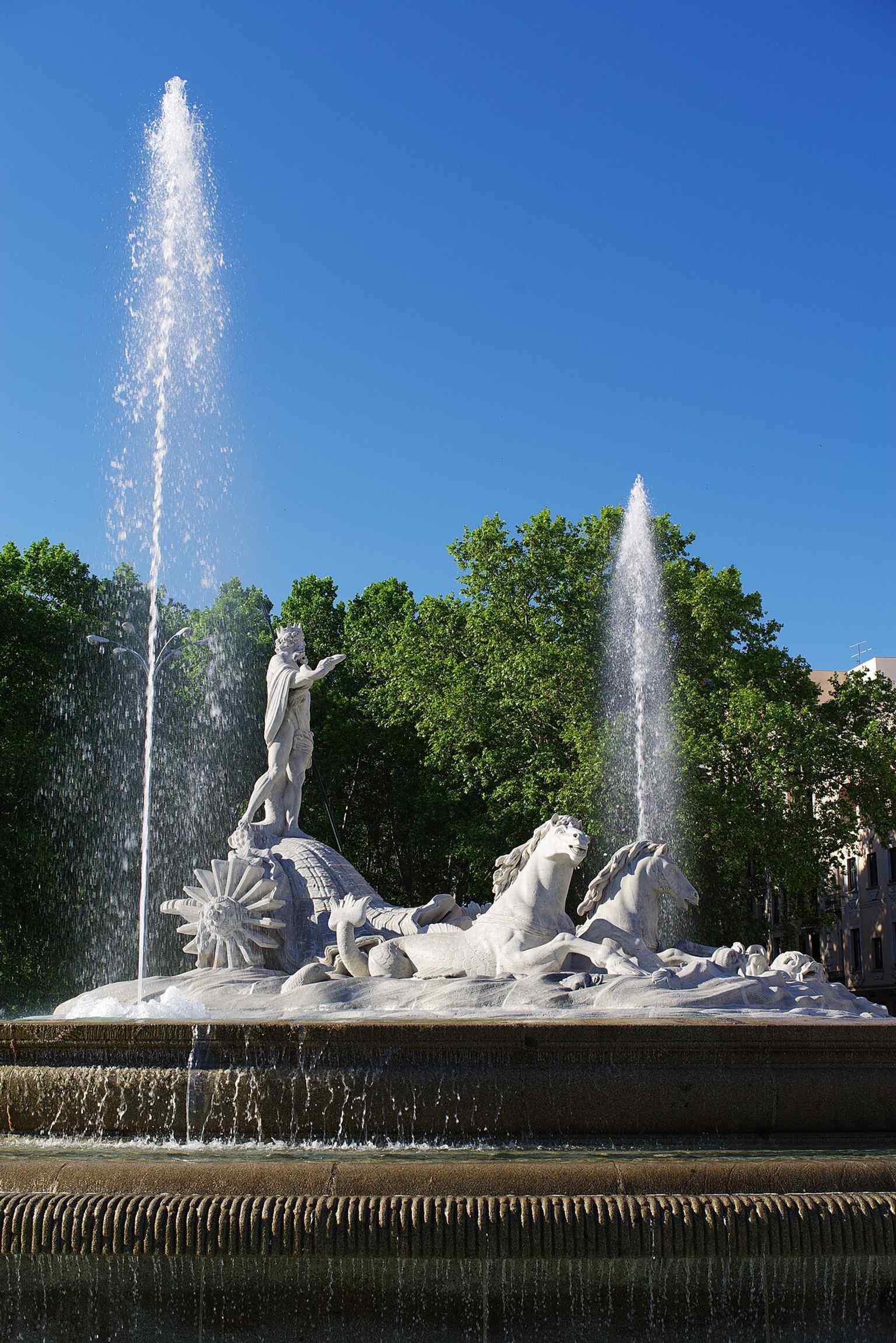
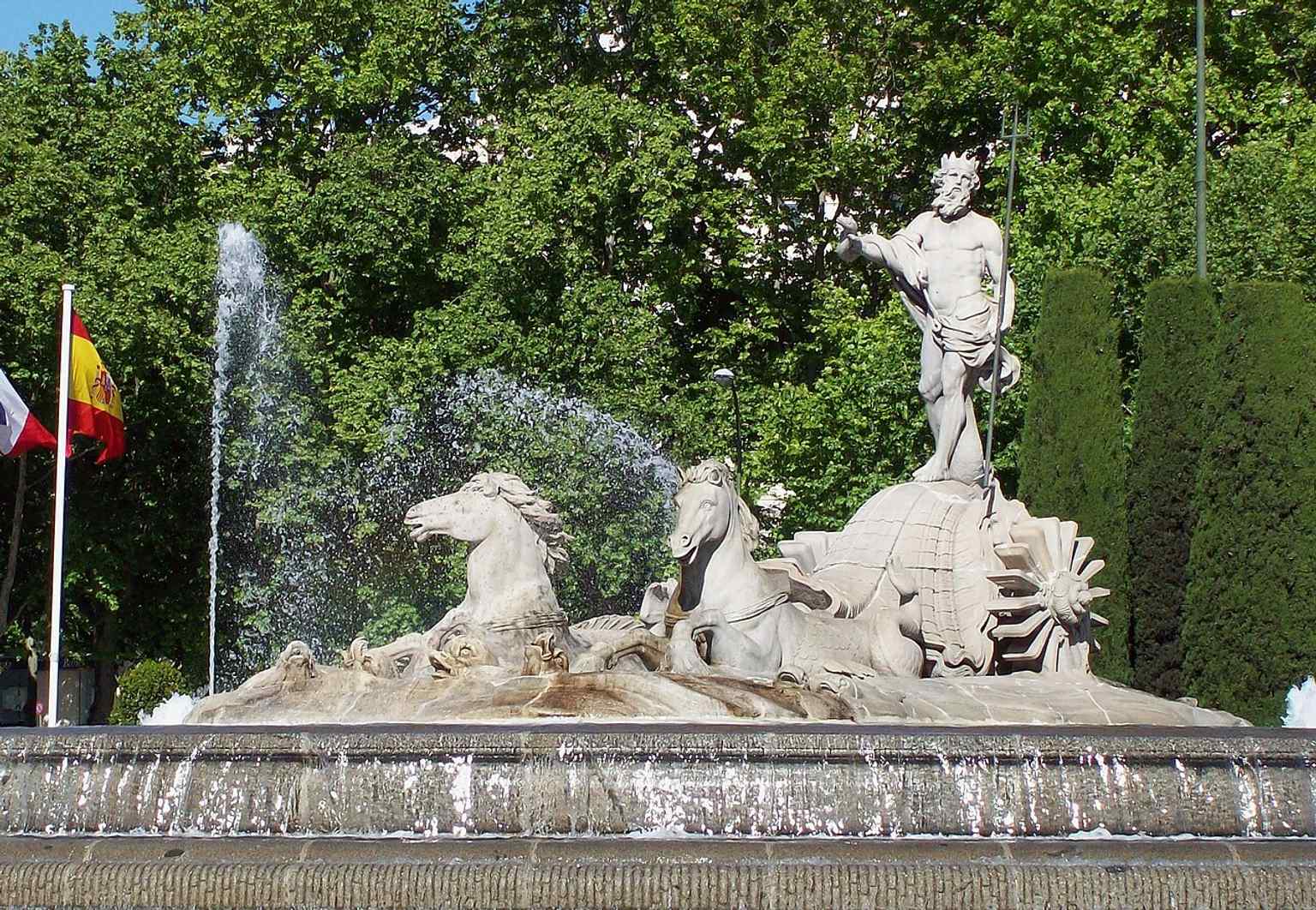
In front of you is a white marble fountain set in a broad circular basin, crowned by a muscular sea god standing on a shell-shaped chariot, with two fish-tailed sea horses as his unmistakable marker.

This is Neptune... calm, balanced, and very deliberate, like Madrid dressing up for company. In the late seventeen hundreds, King Charles the Third wanted his capital to look like it belonged in the same conversation as Paris and Saint Petersburg. So he pushed a grand makeover of the city, and this fountain became part of that plan: not just decoration, but a statement that Madrid could think big, build beautifully, and put its power on display in public.

The architect Ventura Rodríguez drew the whole ensemble in seventeen seventy-seven as part of the planned Salón del Prado, a formal urban promenade lined with major monuments. He did not work alone. Miguel Ximénez shaped wooden models for the design, and Juan Pascual de Mena took on the main sculpture in white marble from Montesclaros, near Toledo. Here’s the human wrinkle in the stone: Mena began carving in seventeen eighty-two, but he died in seventeen eighty-four after finishing only Neptune himself. His pupil José Arias, along with José Rodríguez, Pablo de la Cerda, and José Guerra, carried the rest forward. So what looks perfectly unified from here is actually a team effort... several hands chasing one enlightened idea.

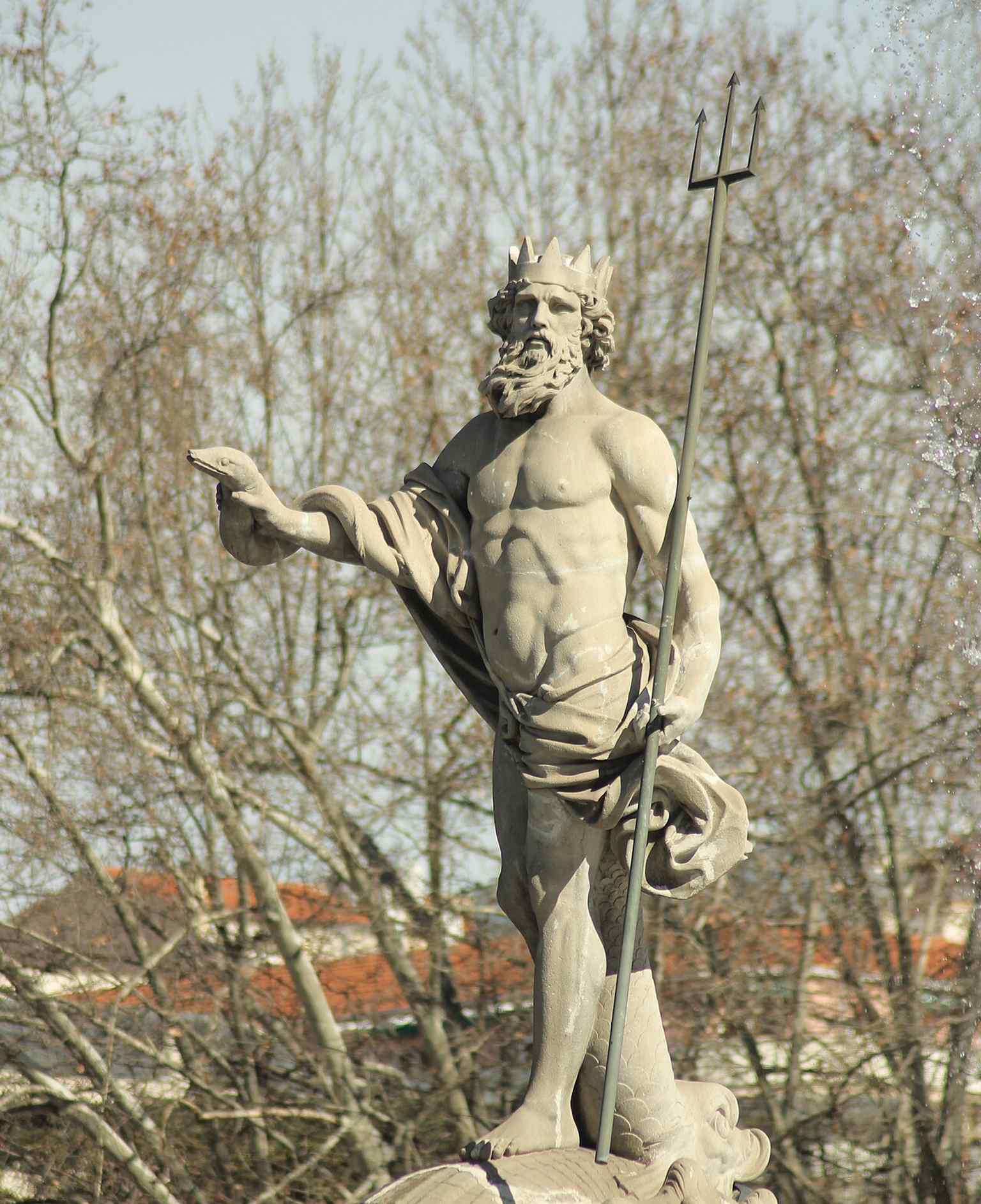
Look at the figure in the center. Neptune stands upright in his sea chariot, a shell pulled by two hippocamps, which are mythical sea horses with fish tails instead of hind legs. Around them, seals and dolphins send water upward. The original program gave him a snake in one hand and a trident in the other, though by eighteen fourteen the trident had already disappeared. Madrid, even in marble, has never been entirely safe from wear, mishap, or a little mischief.

If you want a closer look at the carving, glance at the detail image on your screen; it makes the stone texture and Neptune’s pose much easier to read.
A close, clear view of the marble sculpture, letting you read the god’s pose and the carriage group carved around him.
A close, clear view of the marble sculpture, letting you read the god’s pose and the carriage group carved around him.Photo: Photograph: Luis García (Zaqarbal), Wikimedia Commons, CC BY-SA 3.0. Cropped & resized.

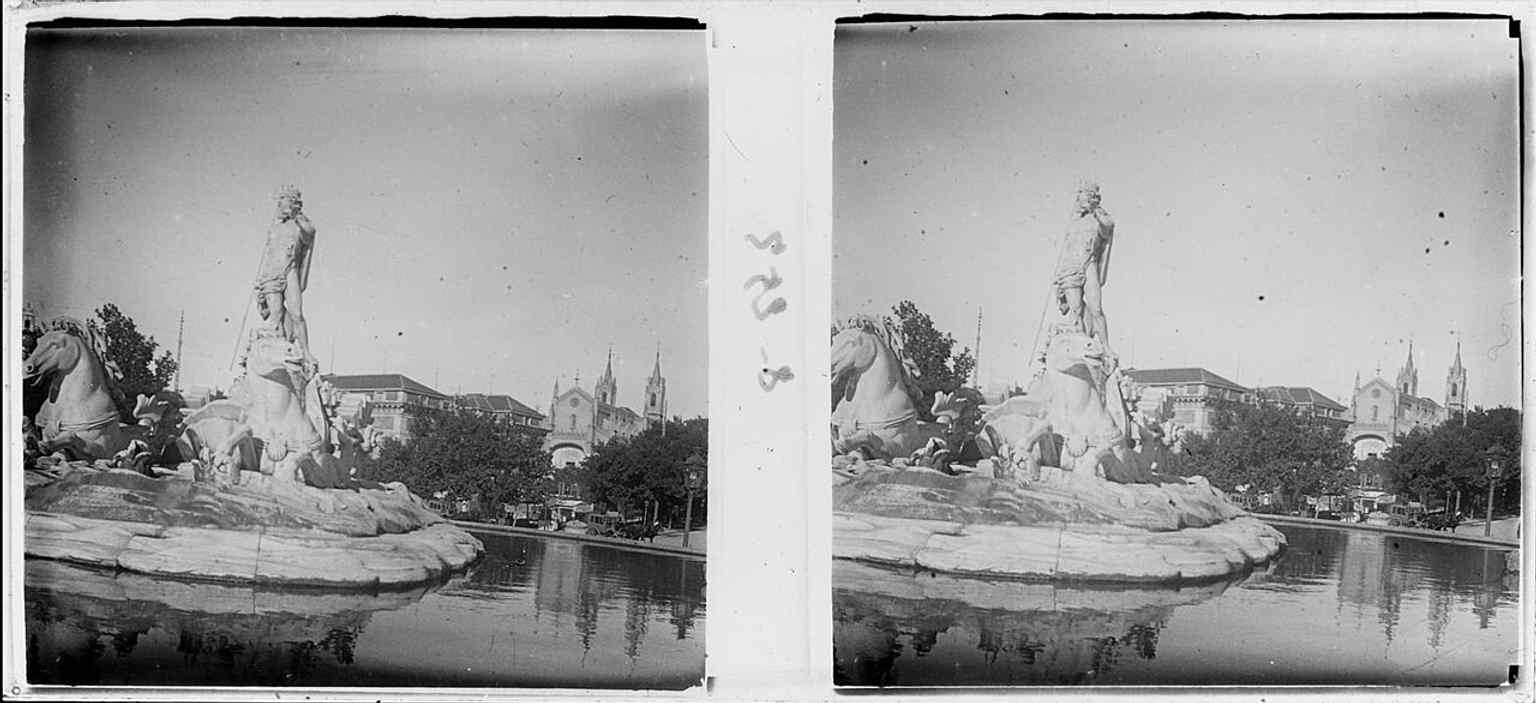
This fountain did not always stand here. It first stood farther up, on the slope of the Carrera de San Jerónimo, where Neptune visually faced Cibeles and joined Apollo in a kind of mythological conversation across the Prado. Then, in eighteen ninety-eight, the city moved him to the center of this roundabout. Practical city planning won that round, but the original choreography changed. If you like, check the before-and-after image in the app; it shows how a quieter early twentieth-century view turned into today’s busy traffic circle while Neptune stayed put at the center.

And he has kept gathering meanings. In the eighteen forties, registered water carriers filled their jars here. During the Civil War, workers shielded Neptune with bricks against bombardment. In hard times, Madrileños even hung a sign on him that joked, “Feed me or take away my fork.” Dry humor... very local. Since nineteen ninety-one, Atlético de Madrid fans have claimed this spot for victory celebrations, turning enlightened marble into living ritual.

That may be Neptune’s real gift to Madrid: he started as a royal vision of order, and he ended up belonging to everybody.

Ahead, the story narrows from public monument to painted memory. Walk about five minutes to the Prado Museum, where the city gathers its image of itself indoors at last. And one practical note: this fountain sits out here all day, every day, so you can always circle back for another look.
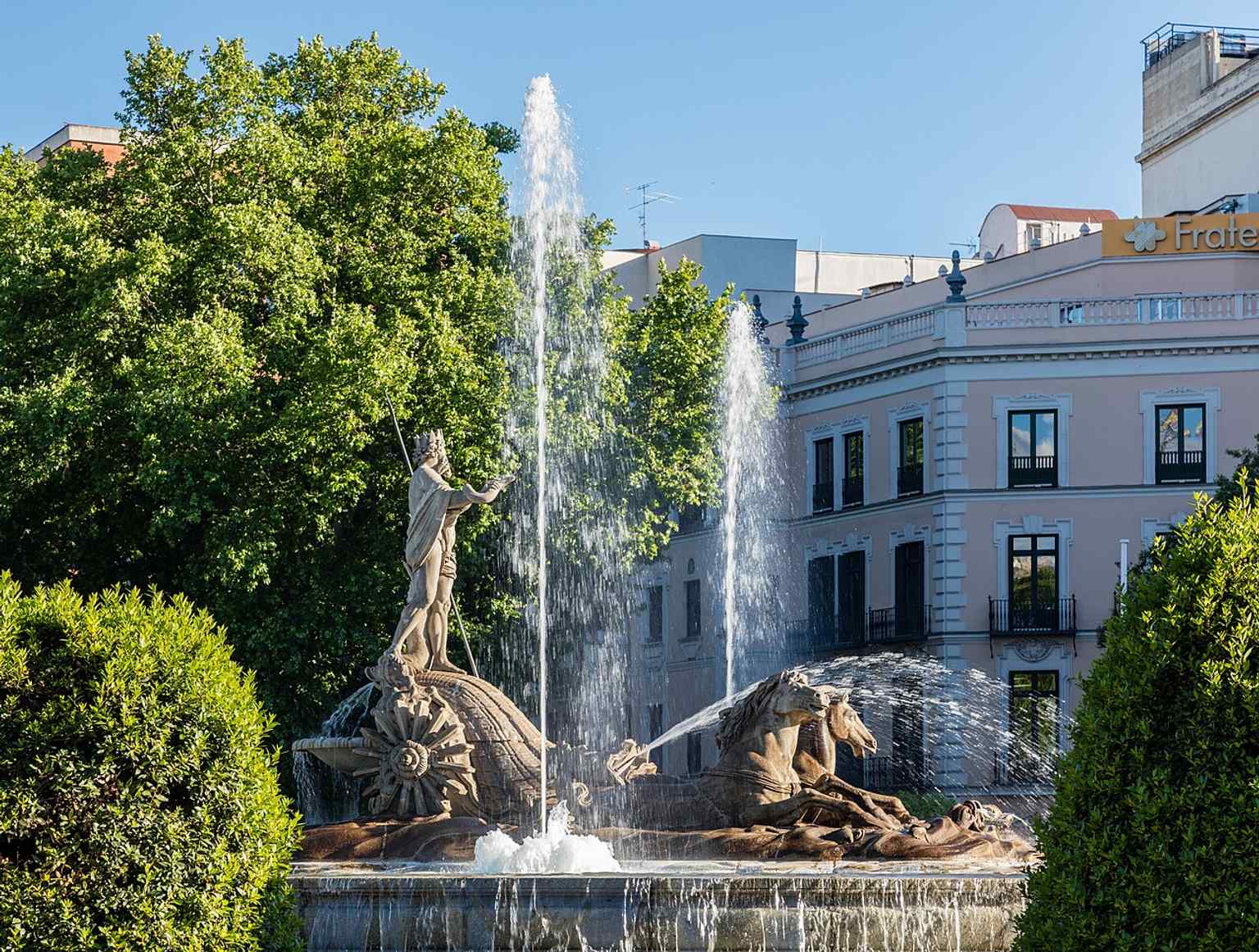
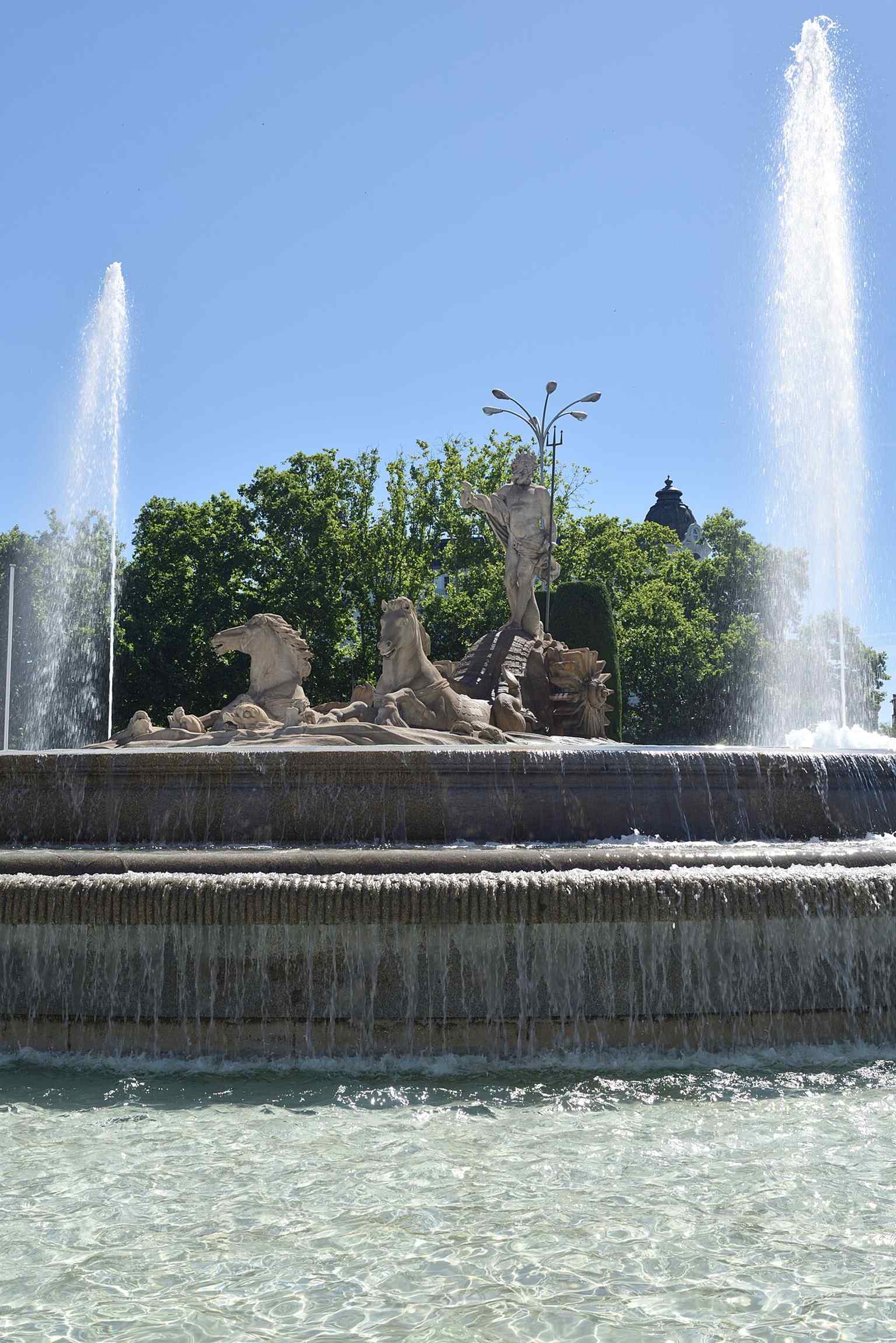
A crisp daylight view of the fountain in Plaza de Cánovas del Castillo, where Neptuno was relocated in 1898.
A crisp daylight view of the fountain in Plaza de Cánovas del Castillo, where Neptuno was relocated in 1898.Photo: Diego Delso, Wikimedia Commons, CC BY-SA 4.0. Cropped & resized.
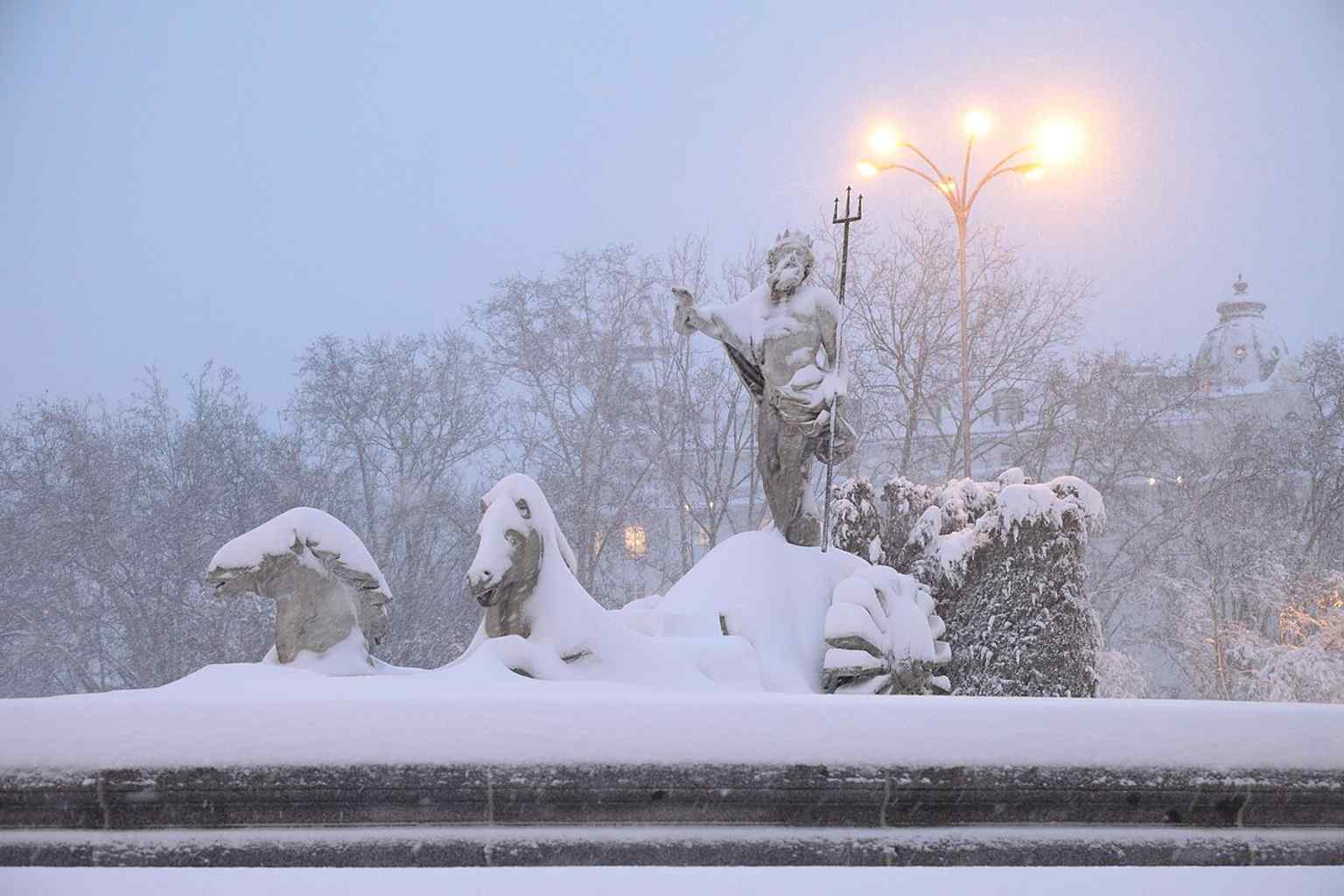
Neptuno under snow during Storm Filomena in 2021 — a dramatic modern scene that transforms the fountain into a city landmark in winter.
Neptuno under snow during Storm Filomena in 2021 — a dramatic modern scene that transforms the fountain into a city landmark in winter.Photo: Javier Pérez Montes, Wikimedia Commons, CC BY-SA 4.0. Cropped & resized.
An early 20th-century photograph of the sculptural ensemble, offering a rare historical look at Neptuno before modern traffic and signage.
An early 20th-century photograph of the sculptural ensemble, offering a rare historical look at Neptuno before modern traffic and signage.Photo: Josep Salvany i Blanch, Wikimedia Commons, Public domain. Cropped & resized.
This old image of Neptuno highlights the classic form of the god before later alterations and restorations.
This old image of Neptuno highlights the classic form of the god before later alterations and restorations.Photo: Juan Pascual de Mena, Wikimedia Commons, CC BY-SA 3.0 es. Cropped & resized.
A posed modern photo that clearly shows Neptune riding the sea-chariot, matching the mythological imagery described in the source text.
A posed modern photo that clearly shows Neptune riding the sea-chariot, matching the mythological imagery described in the source text.Photo: Ank Kumar, Wikimedia Commons, CC BY-SA 4.0. Cropped & resized.
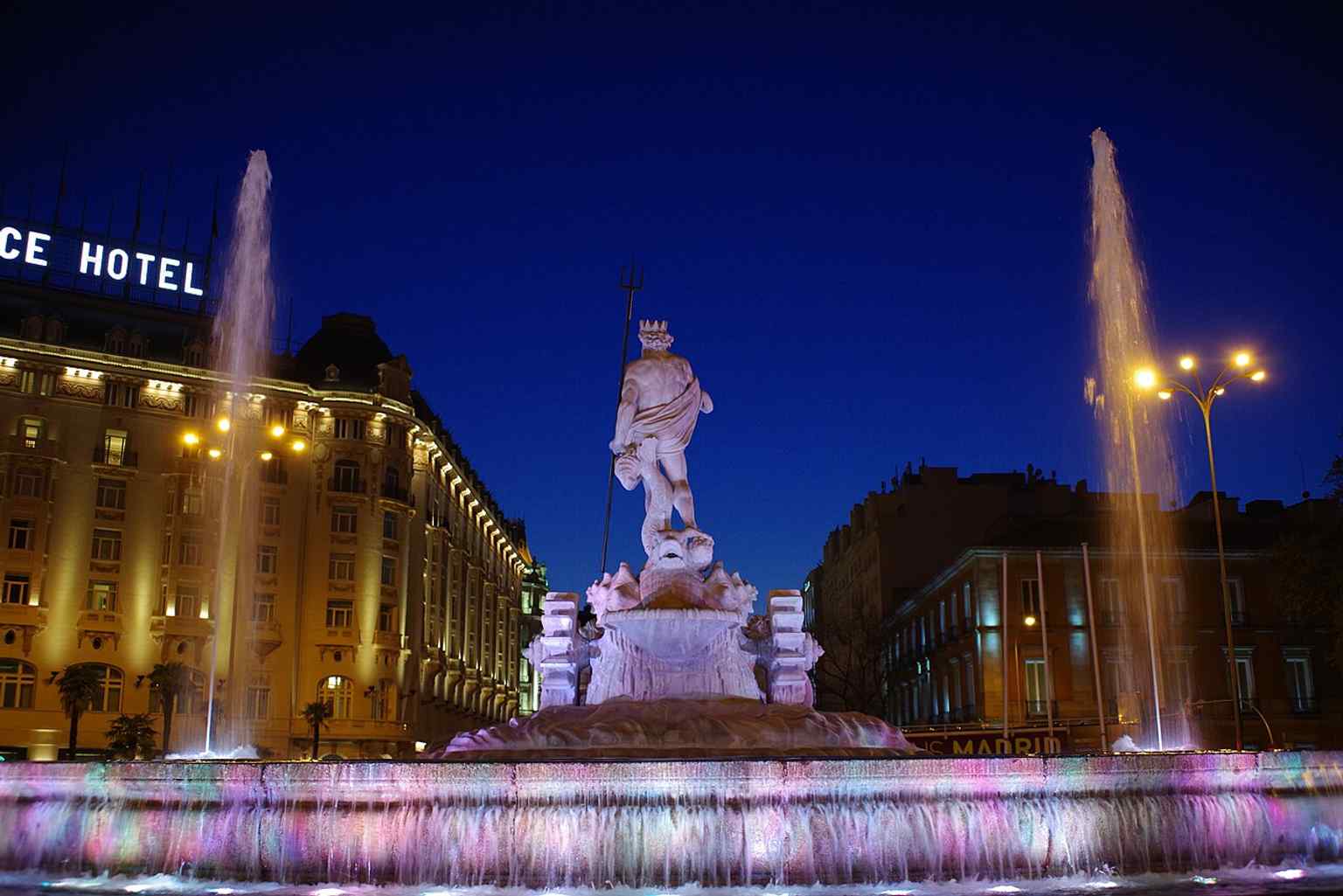
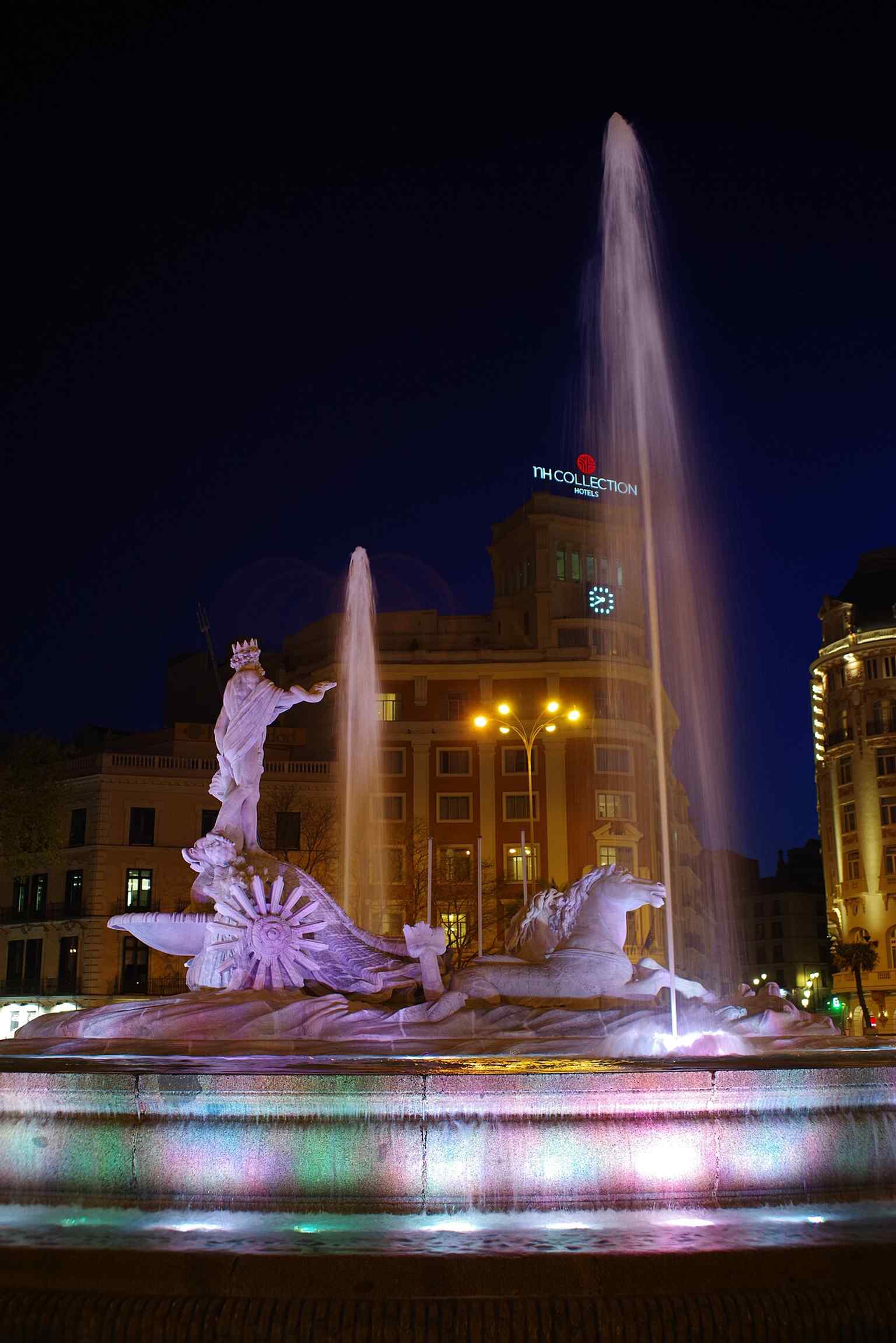
Night photography from 2025 brings out the fountain’s dramatic silhouette and its role as a living city gathering place.
Night photography from 2025 brings out the fountain’s dramatic silhouette and its role as a living city gathering place.Photo: Javier Perez Montes, Wikimedia Commons, CC BY-SA 4.0. Cropped & resized.
Another nocturnal view, adding variety while keeping focus on the monument’s illuminated presence in Madrid.
Another nocturnal view, adding variety while keeping focus on the monument’s illuminated presence in Madrid.Photo: Javier Perez Montes, Wikimedia Commons, CC BY-SA 4.0. Cropped & resized.
A recent high-resolution close-up that captures the stone texture and sculptural detail of the fountain’s central figure.
A recent high-resolution close-up that captures the stone texture and sculptural detail of the fountain’s central figure.Photo: Javier Perez Montes, Wikimedia Commons, CC BY-SA 4.0. Cropped & resized.
A 2025 daylight image showing the fountain in a contemporary urban context, ideal for the story of Neptuno as a modern meeting point.
A 2025 daylight image showing the fountain in a contemporary urban context, ideal for the story of Neptuno as a modern meeting point.Photo: Javier Perez Montes, Wikimedia Commons, CC BY-SA 4.0. Cropped & resized.
arrow_back Back to Madrid Audio Tour: Historic Center Gems
Loved by travellers

Thousands of tours started.
Plenty of opinions.

4.8 across the App Store and Google Play. Here's a few we keep coming back to.

starstarstarstarstar
This was a solid way to get to know Brighton without feeling like a tourist. The narration had depth and context, but didn't overdo it.
Christoph
Christoph
Brighton Tour
starstarstarstarstar
Started this tour with a croissant in one hand and zero expectations. The app just vibes with you, no pressure, just you, your headphones, and some cool stories.
download Get the app

Pop your headphones in.
Step outside.

Free to download. Tours in every city. Start in 60 seconds — no account, no card.

Download on the App StoreGet it on Google Play
starstarstarstarstar_half
4.8
AudaTours app icon
headphones
~ 4 min until your first tour starts
public
1,000+ cities worldwide
all_inclusive
AudaTours
Unlimited

Every tour. Every city. One subscription.

3097 tours2273 cities138 countries50+ languages