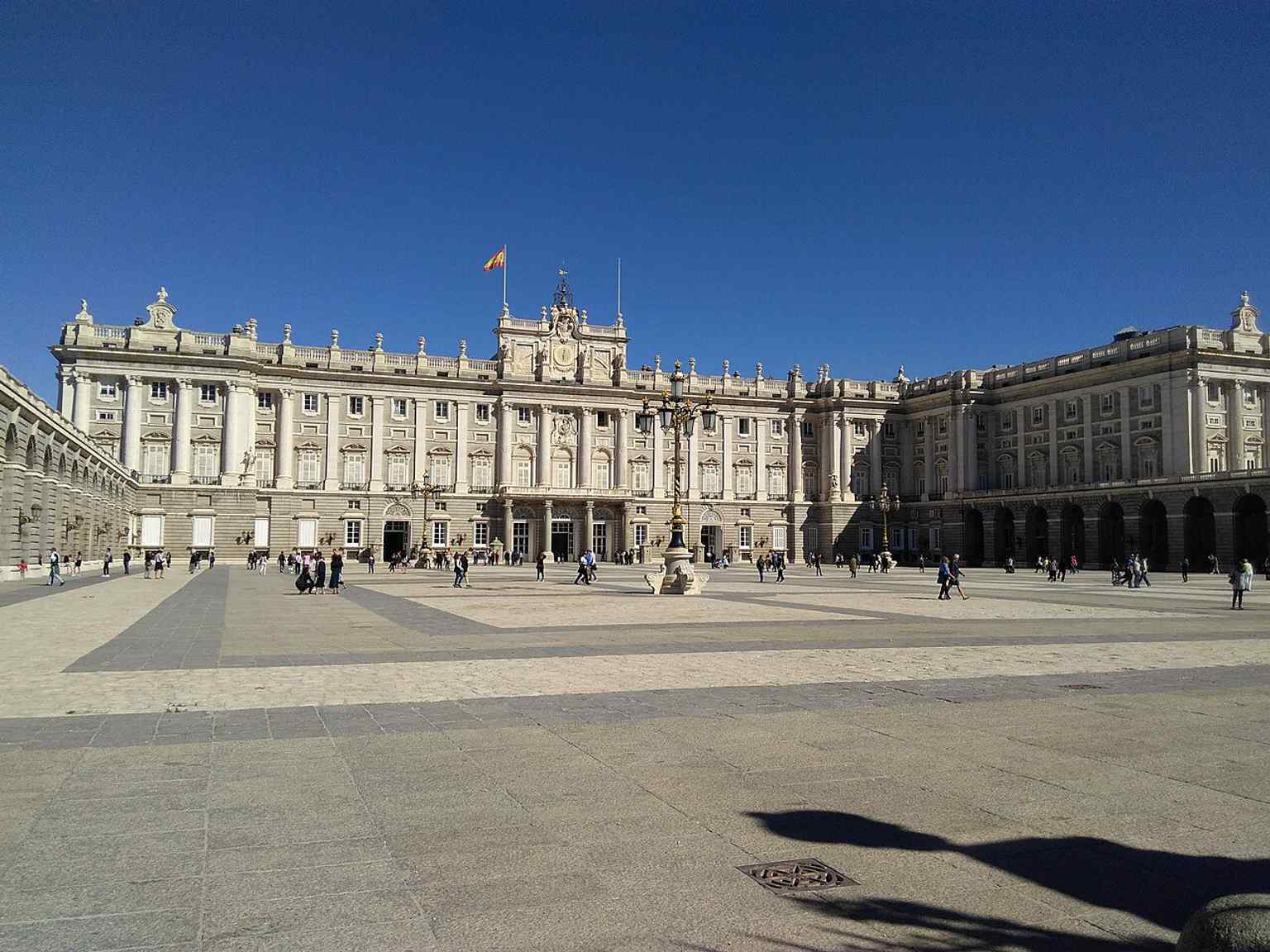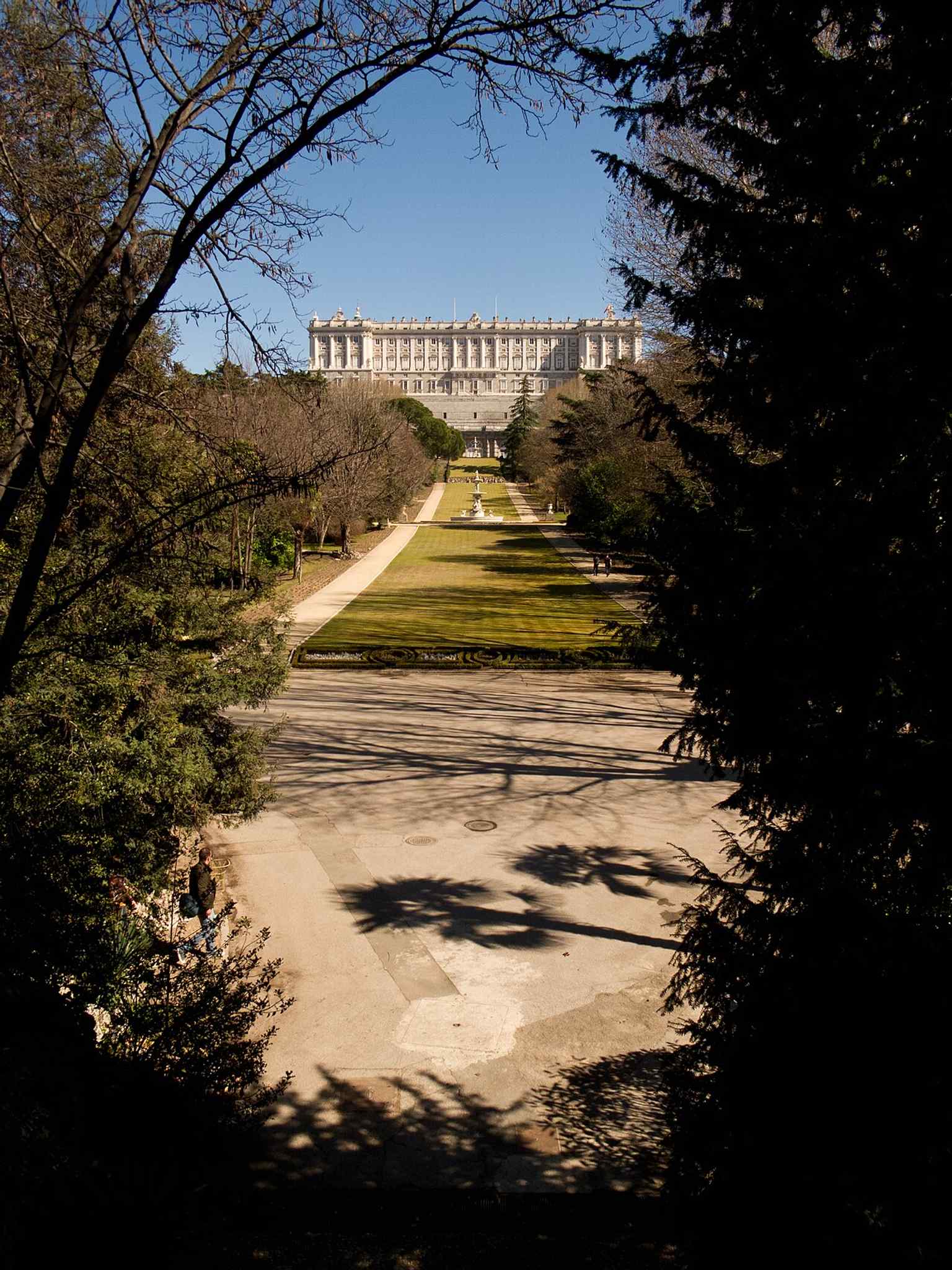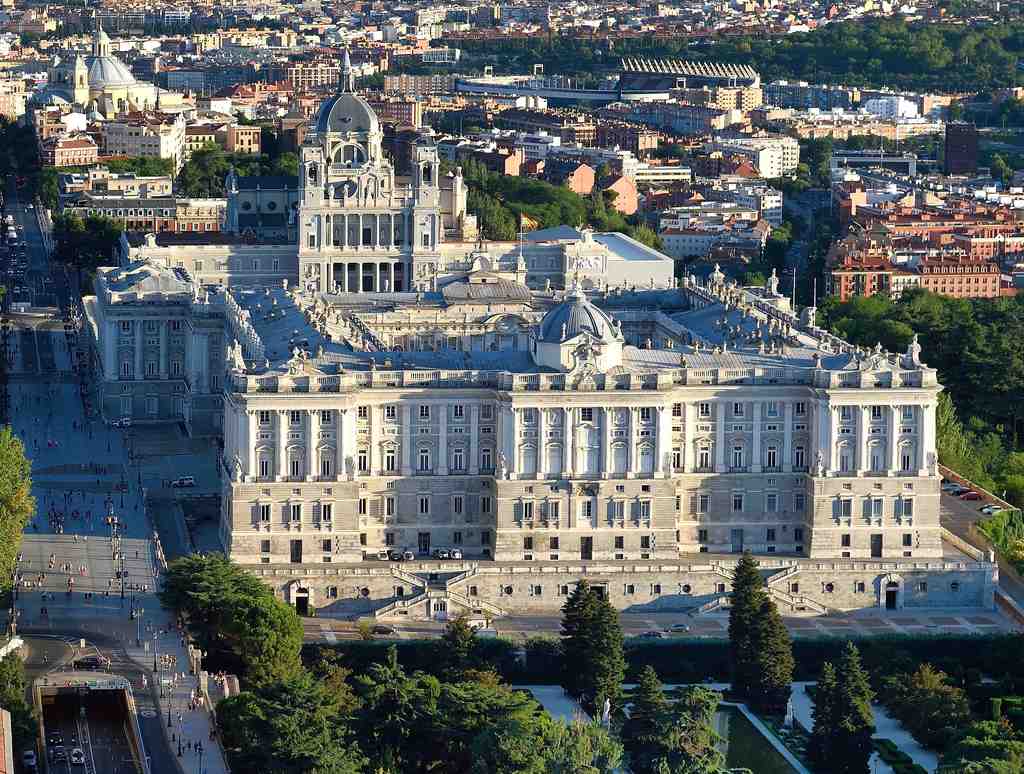
Look to your left for a vast pale-stone rectangle set on a rusticated base, lined with long rows of balconies, and crowned at the center by a raised attic with a clock above the cornice.
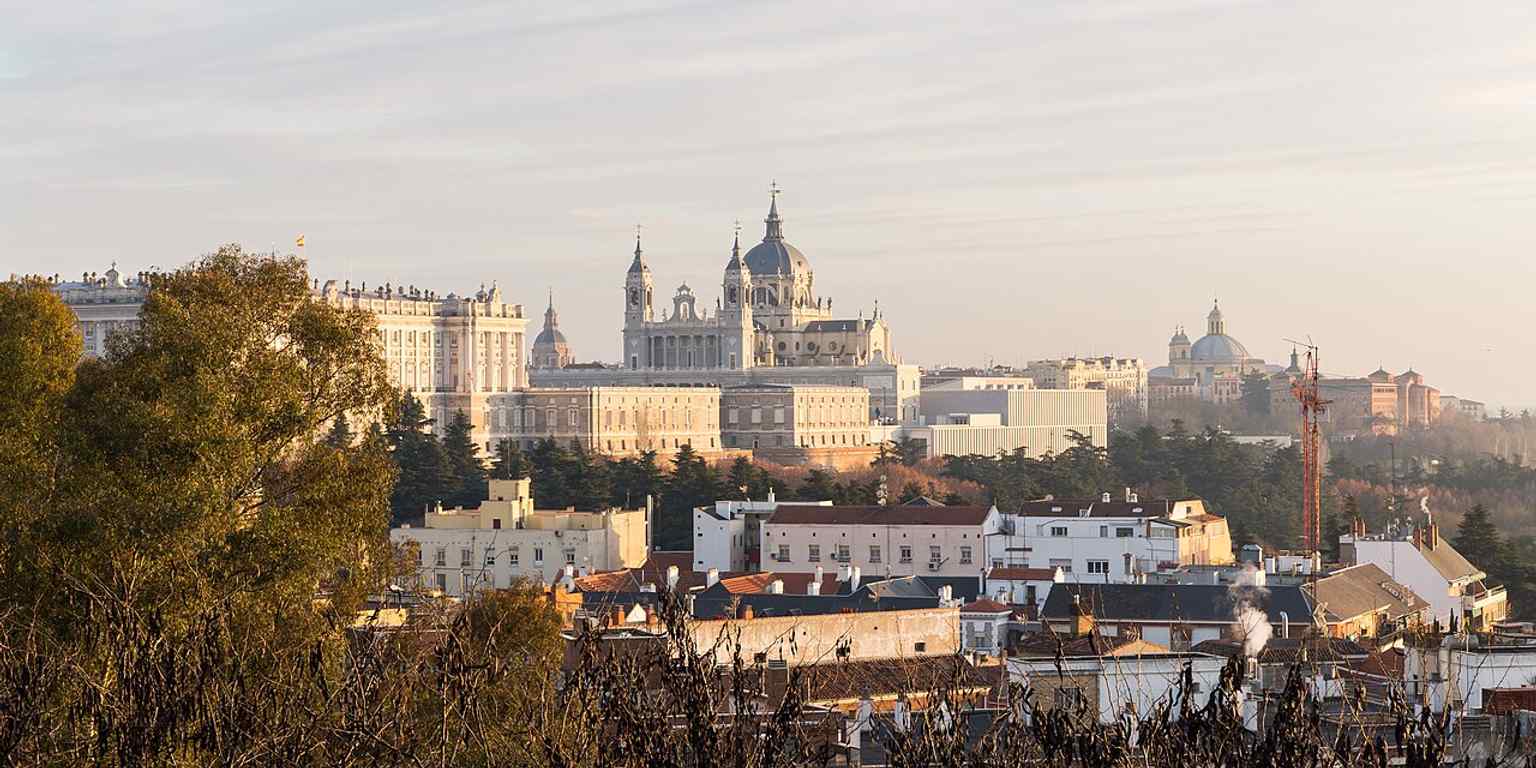
This is the Royal Palace of Madrid... the Bourbon dynasty’s grand reply to disaster, doubt, and the need to look unmistakably in charge. It is still the official residence of the king of Spain, though the royal family lives elsewhere, at the Zarzuela Palace, so this giant now works mainly as a stage for state ceremonies. And giant is the right word: with more than three thousand rooms, it is one of the largest royal palaces in Western Europe. In palace terms, this place does not believe in modesty.
The story begins with the fire of the Real Alcázar. On Christmas Eve in seventeen thirty-four, flames tore through the older royal fortress that stood on this very site, forcing the court to flee. Catastrophe, yes... but also opportunity. Felipe the Fifth had already found the old Habsburg stronghold too severe and old-fashioned, and after the fire he seized the moment to give Madrid a new royal image in stone.
Here is the part most people miss: this palace does not simply replace the Alcázar... it sits on top of it. Beneath this Bourbon monument survive parts of the old foundations, and even some earlier structures, folded into the new building like buried memory under a silk coat.
If you glance at the image in the app, you can see that older Alcázar for yourself; it looks much more like a fortress than the palace in front of you.
Felipe the Fifth called in the Italian architect Filippo Juvara, who imagined something even bigger on another site. Juvara died before he could carry it through, so his student Juan Bautista Sachetti adapted the plan to this awkward, historic plot. Later, Ventura Rodríguez shaped the Royal Chapel, and Francesco Sabatini helped finish and refine the whole enterprise. Architecture here is not one man’s signature; it is a relay race run by ambition.
Look closely at the façade. The heavy lower level, the giant Doric pilasters - those tall flat columns attached to the wall - and the long disciplined rhythm of windows all work like royal body language. Above the center, the statues honor Felipe the Fifth and Fernando the Sixth, the rulers who began and completed the palace. Much of the original rooftop sculpture came down under Carlos the Third, who wanted a cleaner, more classical silhouette. Even kings redecorate.
During the Alcázar fire, the marqués de Villena ordered a frantic rescue of paintings. Masterpieces like Las Meninas escaped, though the flames left damage so real that later restorers had to repaint part of the infanta Margarita’s face. That is Madrid in a nutshell: save what you can, rebuild the rest, and keep the ceremony going.
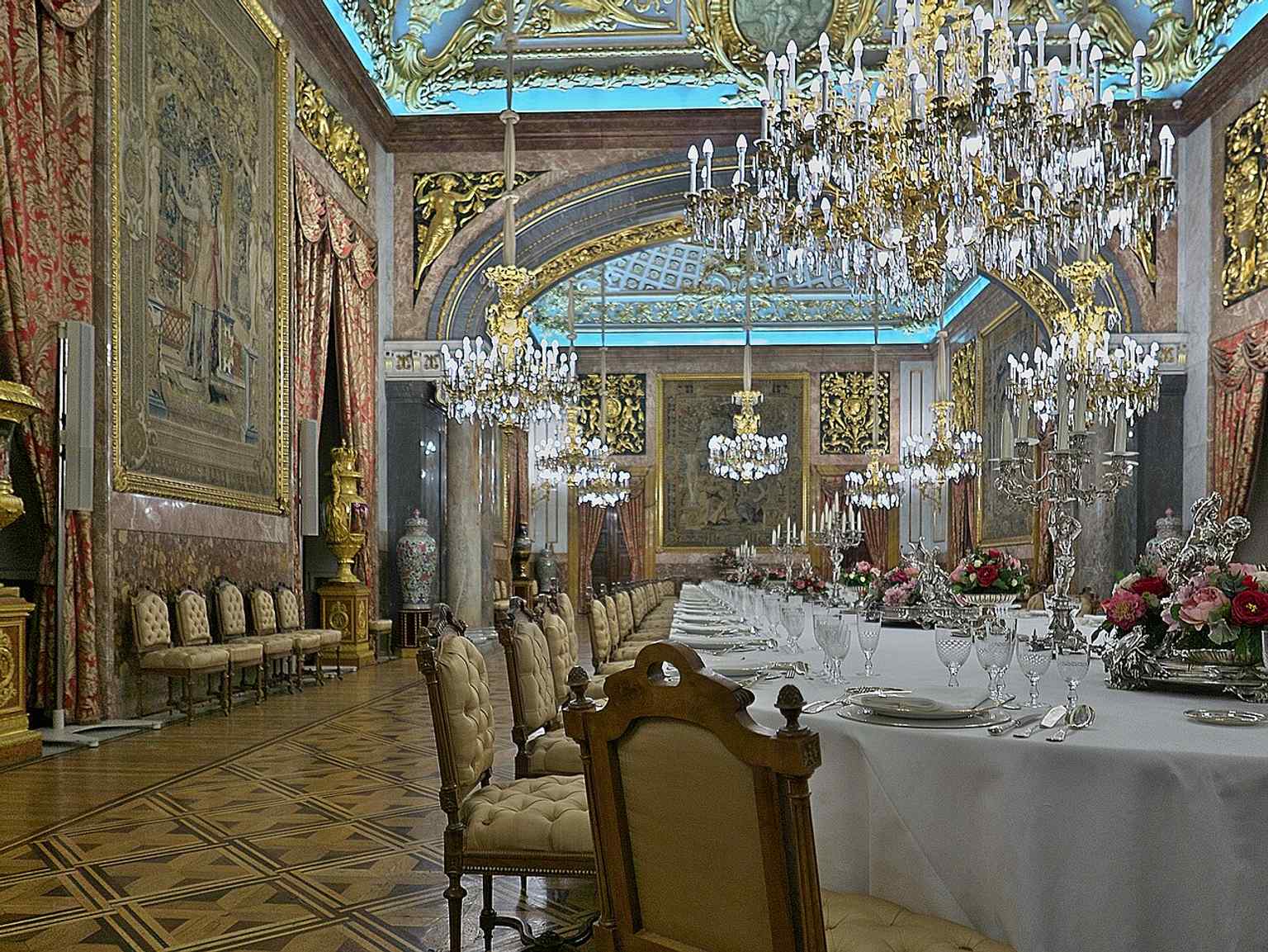
Inside, when no official act interrupts, visitors can enter rooms loaded with Tiepolo, Velázquez, Goya, tapestries, clocks, silver, and the famed Stradivarius instruments of the palace collection. If you feel like it, check the before-and-after view of Calle de Bailén; the palace hardly budges, but the city around it shifts from bus-heavy road life to a more open modern boulevard.
Now we leave the enclosed language of monarchy and step toward the public space designed to frame it. In about one minute, Plaza de Oriente opens out in front of the palace like a theater apron, with the Royal Theatre facing it across the way. If you plan to go inside later, check the current opening hours in the app.