
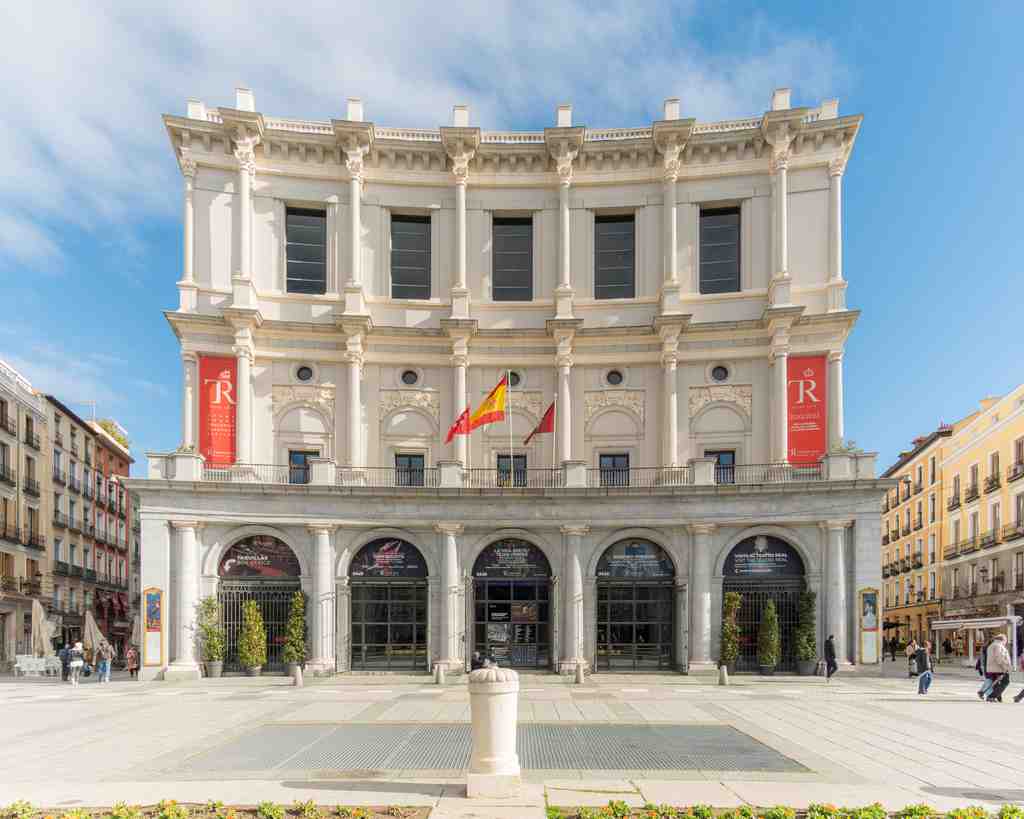
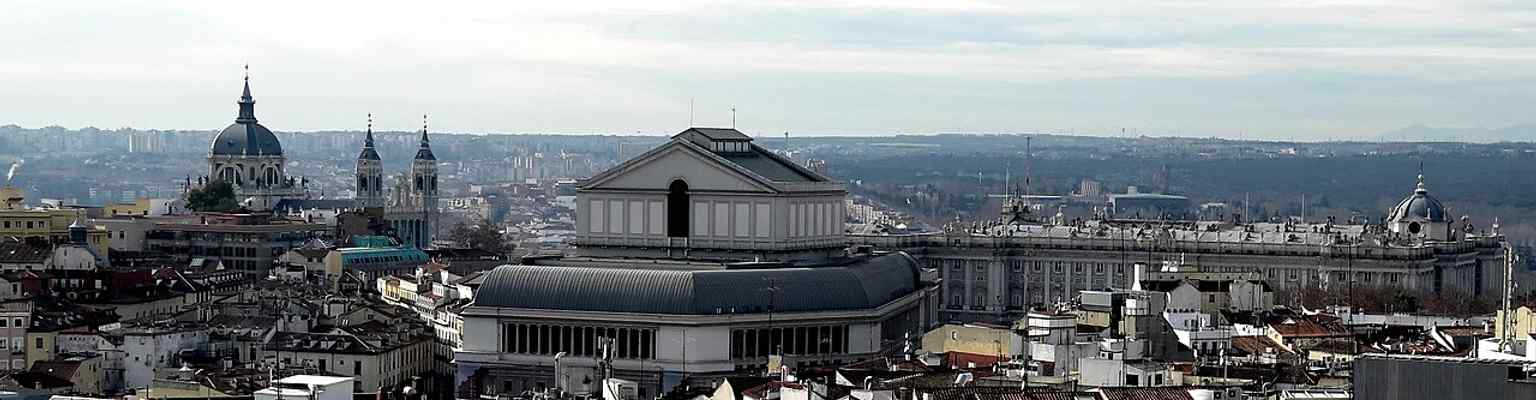
On your right, the Royal Theatre is the broad pale-stone opera house with a gently curved facade, tall arched windows in neat rows, and a bulky upper block rising behind the elegant front.
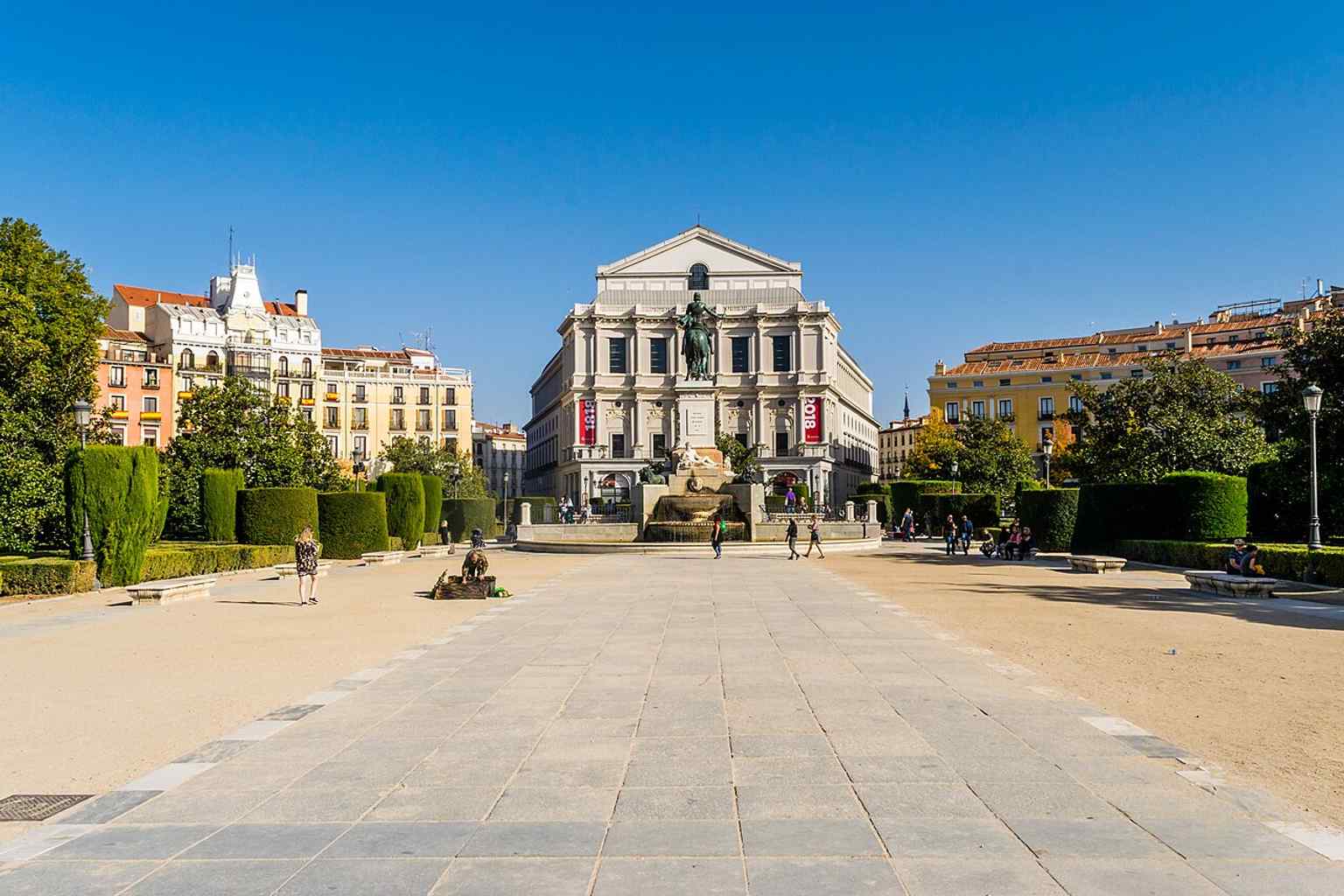
This is the Teatro Real, or simply El Real... and here Madrid turns performance into government by other means. Set directly opposite the Royal Palace, this building did not land here by accident. King Fernando the Seventh pushed for an opera house in eighteen eighteen as part of remaking this whole royal quarter, and architect Antonio López Aguado gave it an irregular hexagonal plan so the grand face would look straight onto Plaza de Oriente, while the less glamorous side turned toward what is now Plaza de Isabel the Second.
That detail matters, because this theater was always meant to be seen as much as heard. In Isabel the Second’s Madrid, the city wanted to look polished, cultured, and fully European. So when the young queen formally inaugurated the theater in eighteen fifty, with Donizetti’s La favorita, the message was clear: Madrid could do opera with the same confidence as Milan or Naples.
Now for the twist... the elegant facade hides a saga of chaos. Work dragged on for decades. Officials ignored funding orders, managers were accused of fraud, and the project survived on improvised taxes on beer, exported lead, hazelnuts, and raisins. Not the most romantic patronage in opera history. Then, suddenly, a royal order demanded the building be finished in just six months. At the peak, more than one thousand workers swarmed over the site, and newspapers marveled that Spain had never seen a public project move so fast.
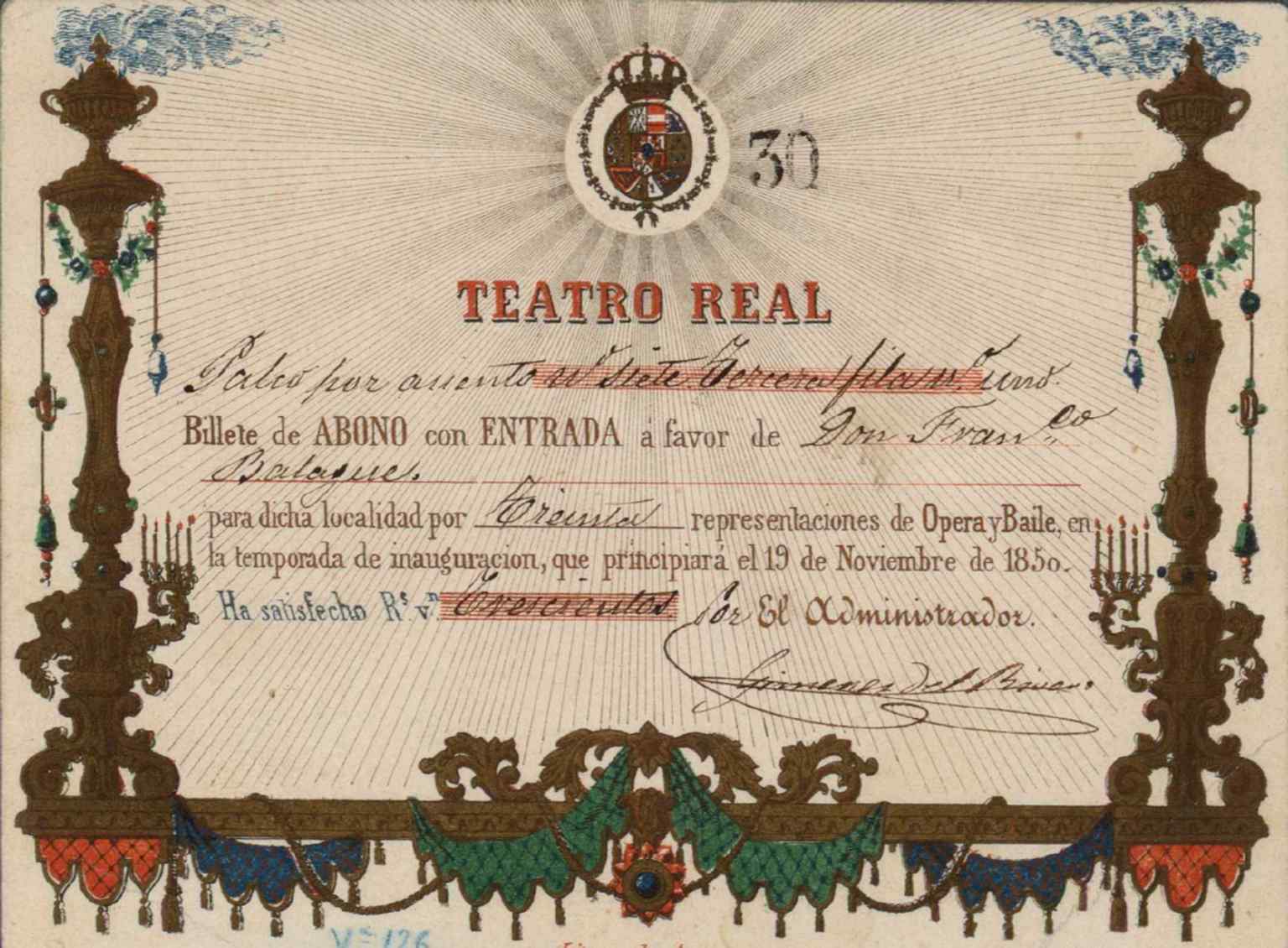
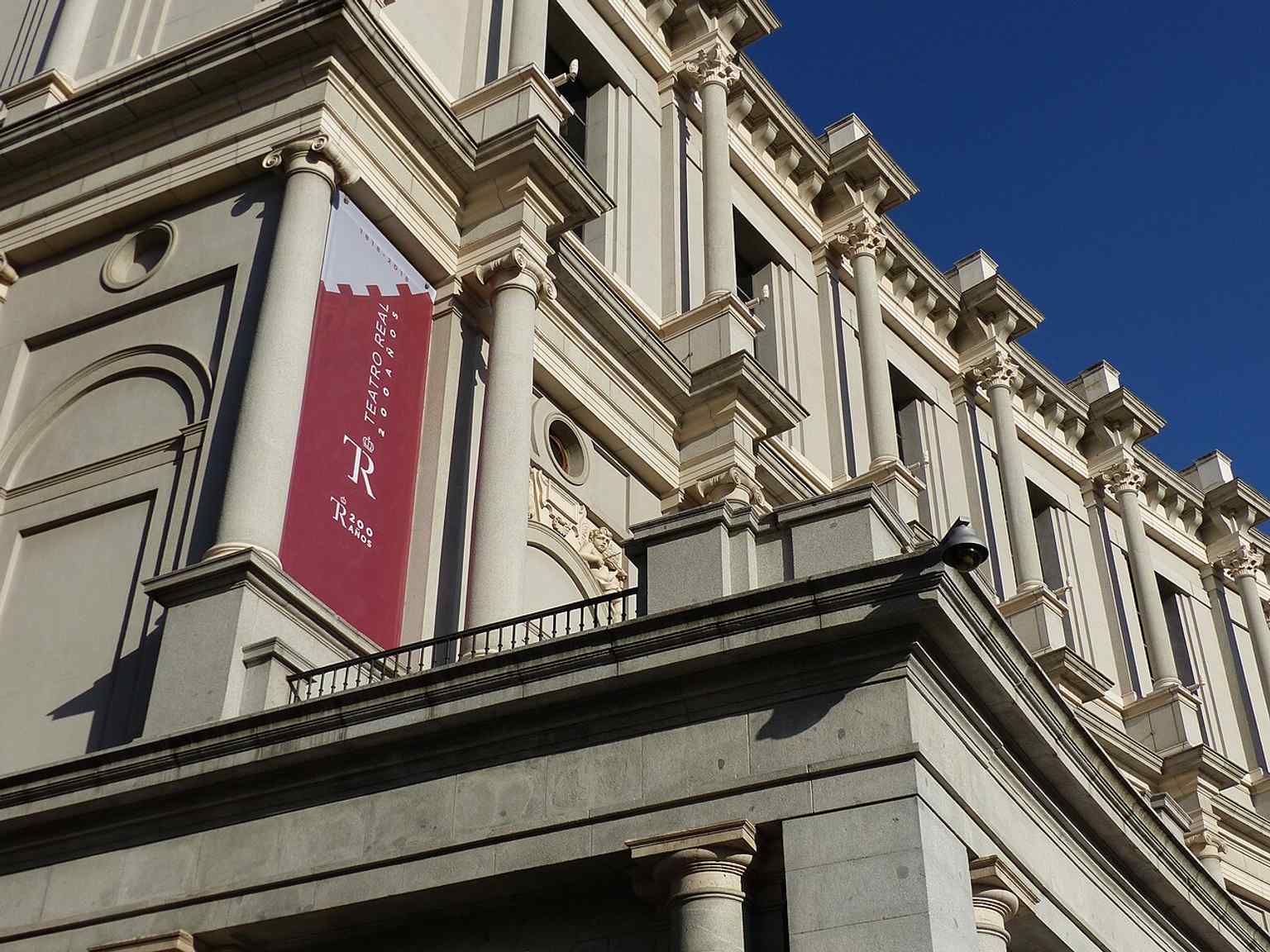
If you check the image on your screen, that original season ticket from eighteen fifty feels almost like a passport into this carefully staged new capital.
Inside, the first audiences did not just watch opera. They watched one another. Boxes, salons, the royal box, the ritual of arriving dressed for display... this was society singing along without opening its mouth. Even the scandals became part of the show. In eighteen sixty-three, the superstar soprano Adelina Patti arrived charging a staggering fee per performance. Ticket prices shot up, resellers got greedy, and at her final appearance some in the crowd brought whistles and used them... with the queen present. Madrid, bless it, has never believed culture should be entirely well behaved.
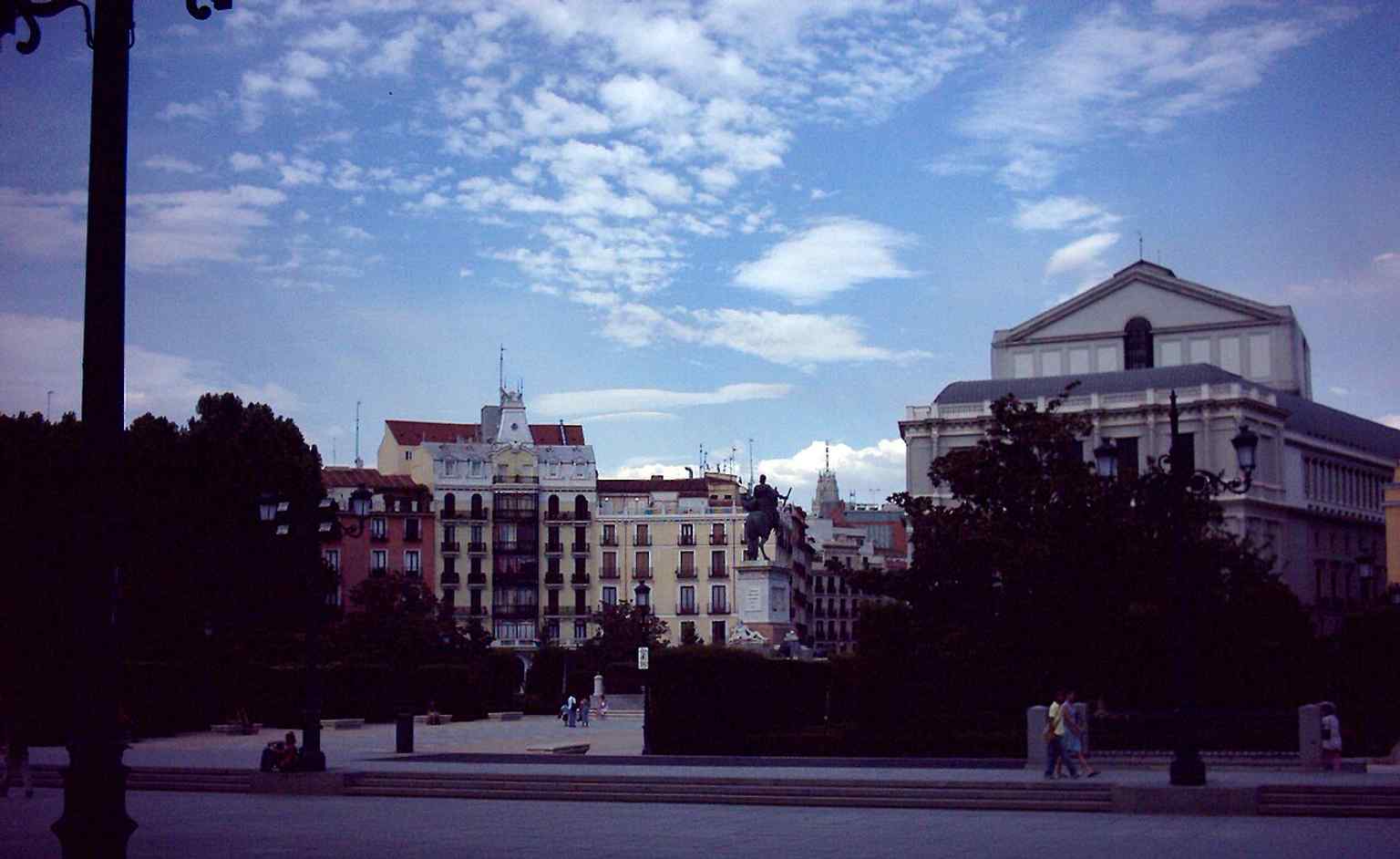
The building itself kept changing as the city changed around it. In nineteen twenty-five, engineers closed it because unstable foundations, worsened by nearby Metro works using explosives, put the whole structure at risk. Later rebuilds made it larger and more solid, which explains the hefty mass behind the refined front. You can see that block-like form especially clearly in the rear view on the app.
Then came another human story. Architect José Manuel González Valcárcel led the late twentieth-century transformation, trying to bring opera back here for good. In nineteen ninety-two, he died inside the theater during a press visit to the works. It is a sobering reminder that grand cultural symbols are never effortless; people pour real lives into them.
El Real reopened as an opera house in nineteen ninety-seven, ending a seventy-two-year absence, and it still serves as one of Europe’s major opera stages. It has also hosted Eurovision, the Goya Awards, and the Christmas Lottery draw. That tells you everything: in Madrid, prestige is never only political. It is rehearsed, performed, and made audible.
Our next stop is the Royal Monastery of the Barefoot Nuns, about a seven-minute walk away, where public splendor gives way to enclosed devotion. If you want to come back inside later, check the current visiting hours in the app.





.png)


