
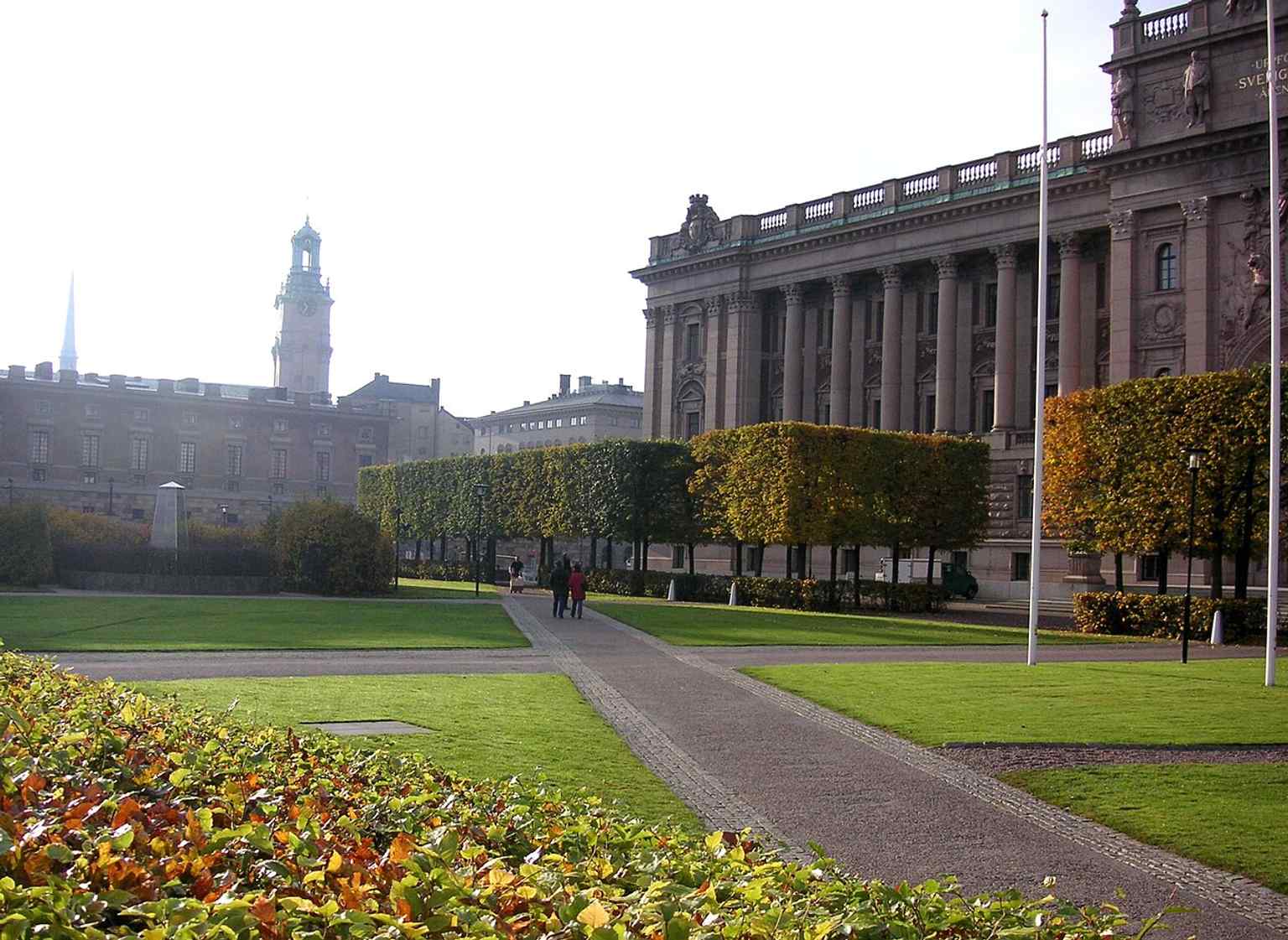
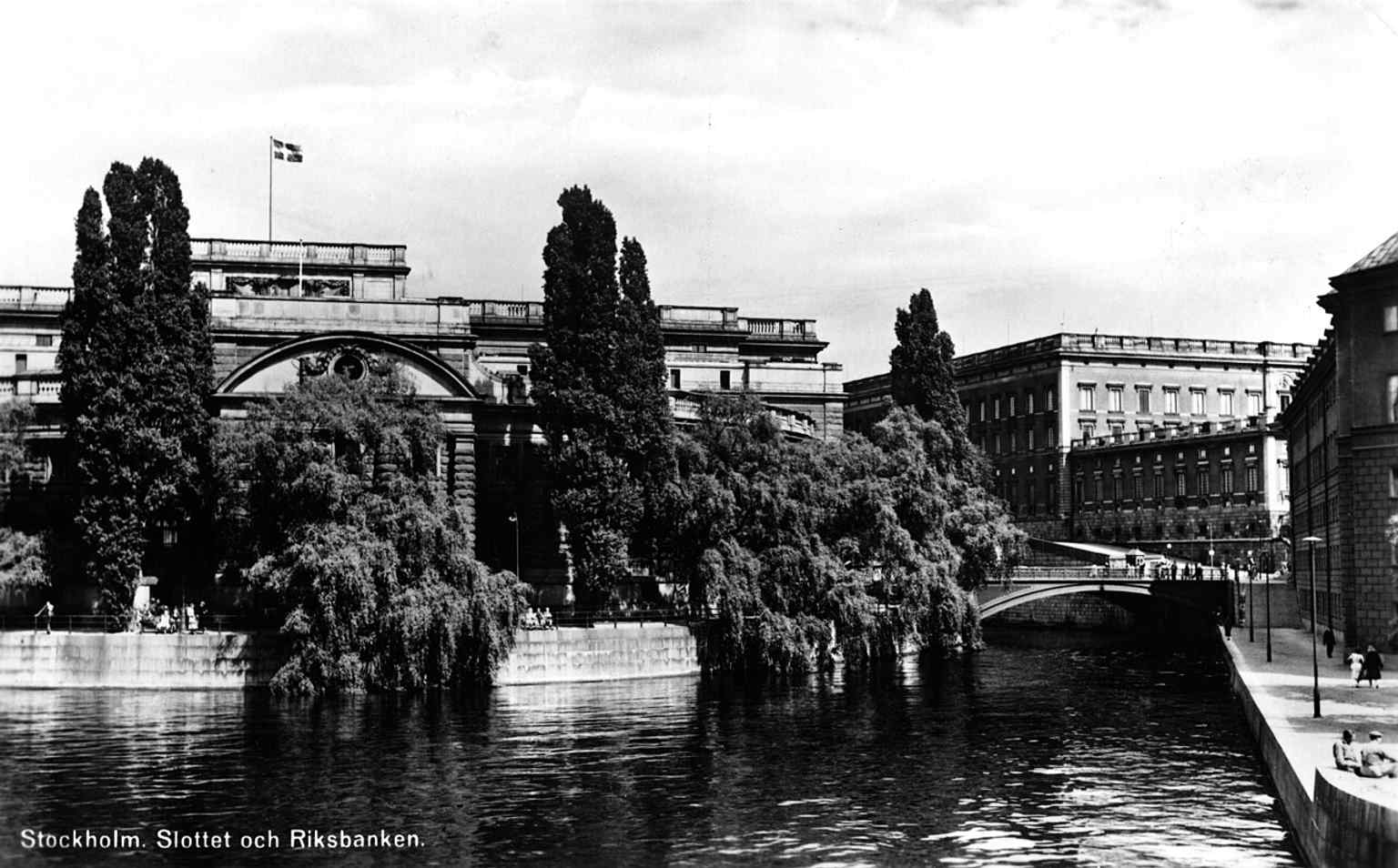
On your left, look for a long pale stone façade with a projecting central arch, rows of tall Corinthian columns, and the Swedish coat of arms carved above the main entrance.
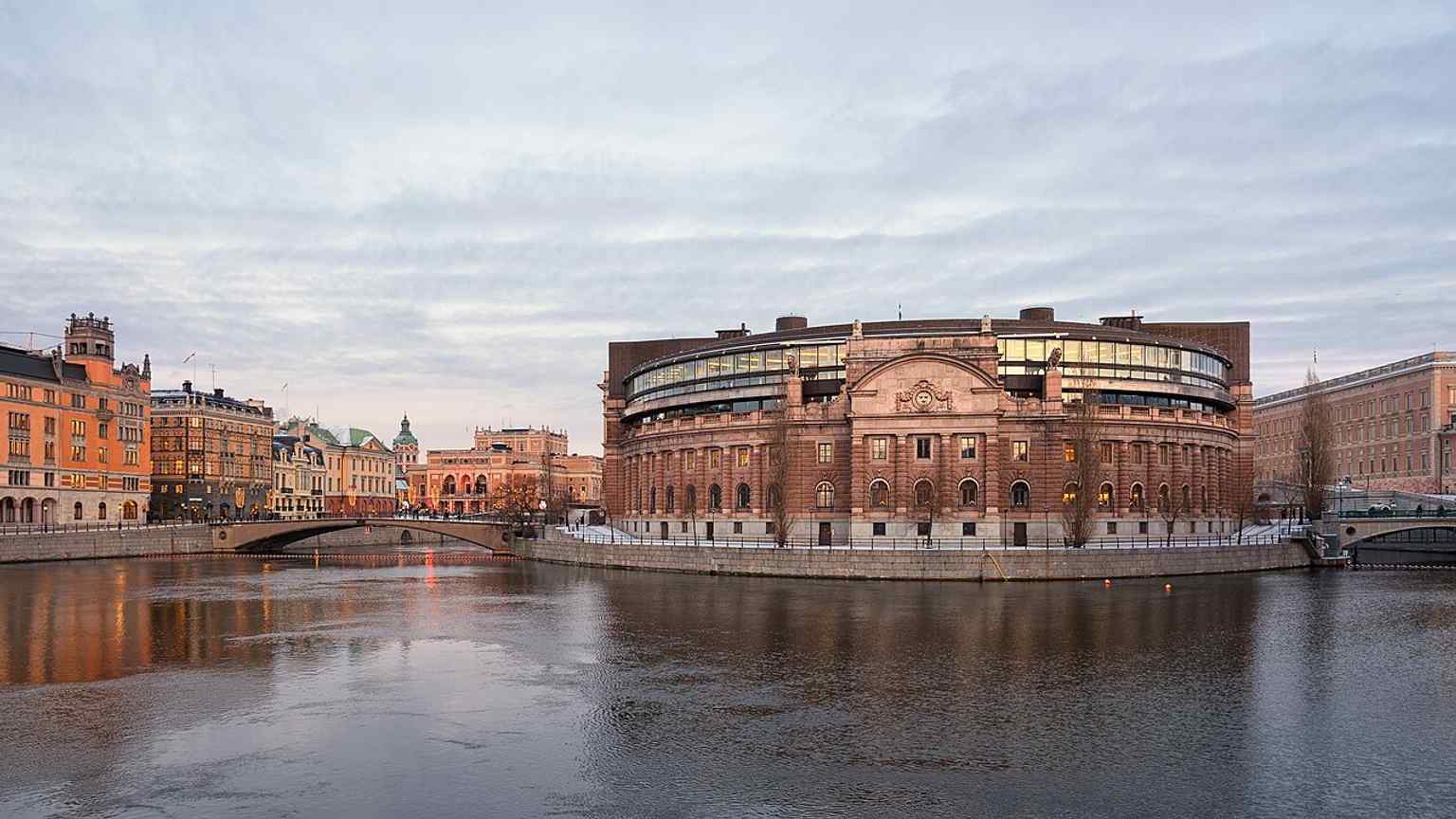
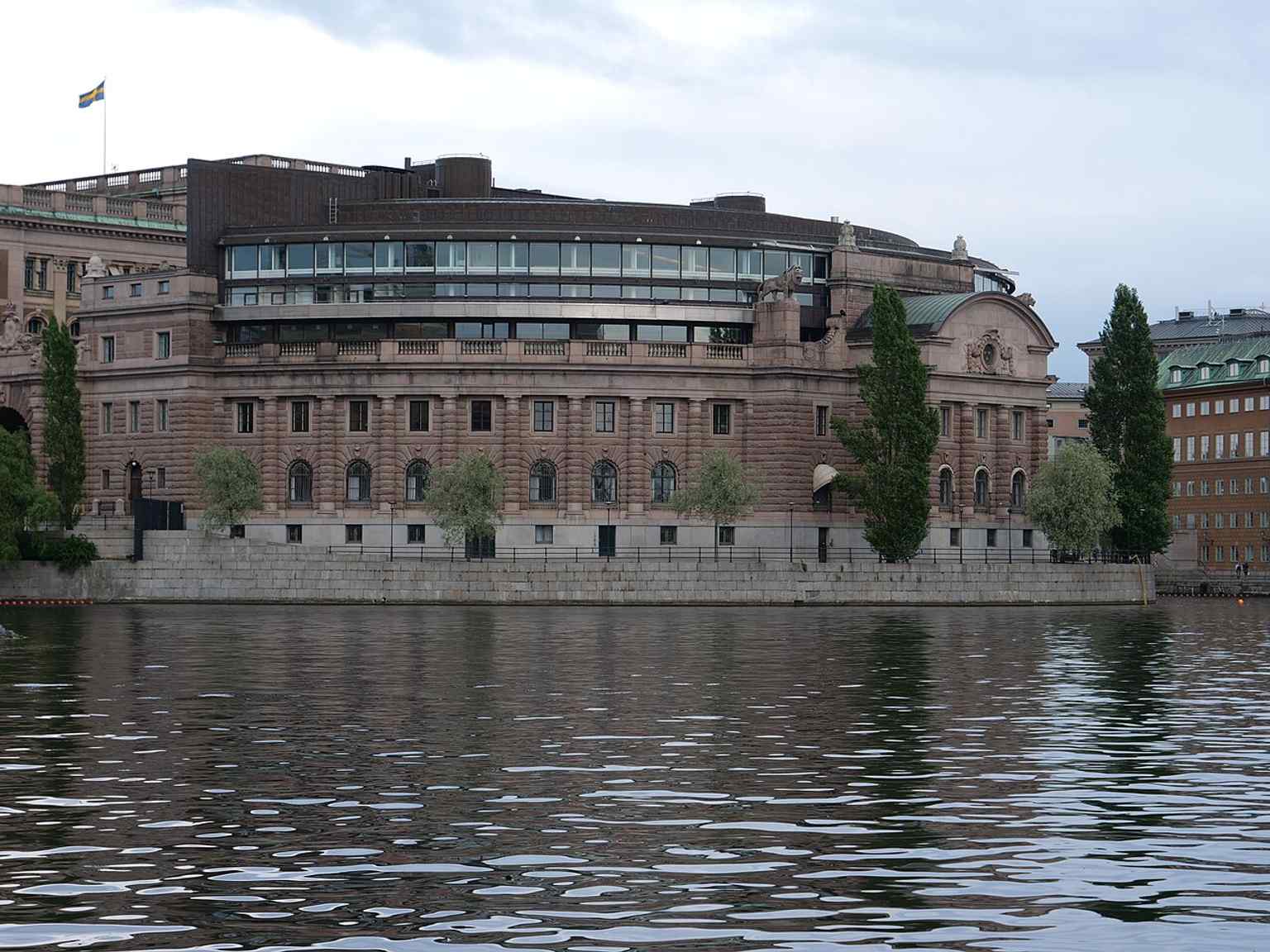
This is Riksdagshuset on Helgeandsholmen: not the Riksdag itself, which is Sweden’s parliament as an institution, but the building that gives that institution its public face. It rose between eighteen ninety-five and nineteen oh four, designed in a late nineteenth-century language of power, then changed again in the early nineteen eighties when parliament took over the old central bank wing and made the whole complex its home.
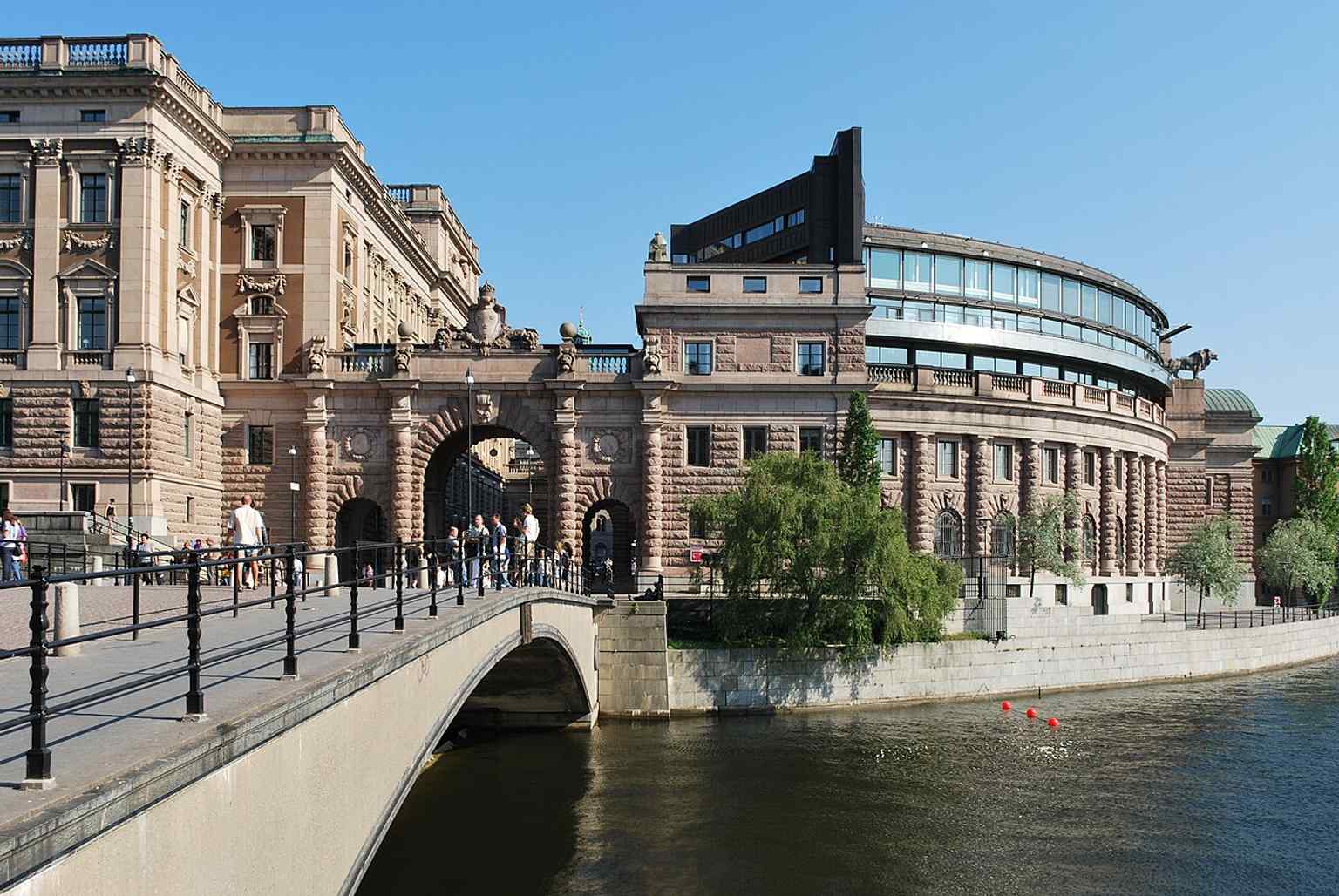
You can read that intention in the architecture. The row of columns in front is a colonnade, a formal screen of columns used to create ceremony before you even cross a threshold. The central section pushes forward like a Roman triumphal arch. Higher up, the roofline hides behind a balustrade, a stone railing, so the building ends with control rather than flourish. This was no accident. Parliament wanted dignity, but Stockholm argued over how much dignity was too much.
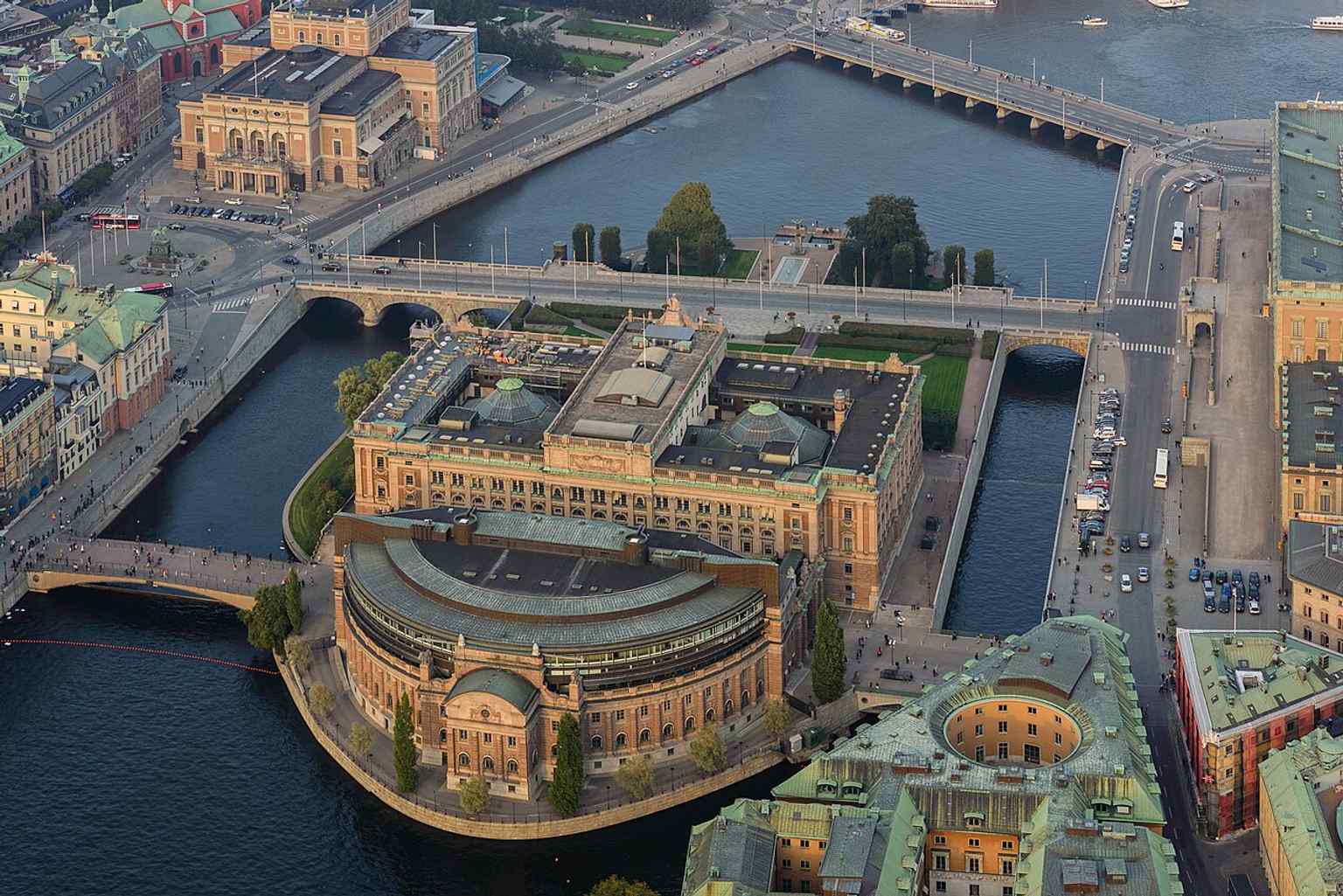
For years, people fought over whether anything this monumental should stand on Helgeandsholmen at all. Critics feared it would crowd the island and challenge the palace across the water. Supporters wanted a building that looked unmistakably national. That tension fell, in the end, onto one young architect: Aron Johansson. He did not even win the original competition. Others were dismissed, his senior collaborator Helgo Zettervall resigned in anger when the façade was pushed six meters closer to Norrbro, and Johansson had to carry one of Stockholm’s most disputed projects forward alone. His earlier design included a dome... but the dome never rose. What remained is more disciplined, almost stern.
If you glance at the image in the app, the overhead view makes the argument clear: the building sits in negotiation with bridges, water, and the royal city around it, not above them.
Its authority also rests on literal foundations. Builders removed thirty-seven thousand cubic meters of earth and drove more than nine thousand oak piles into the ground. On the thirteenth of May, eighteen ninety-seven, King Oscar the Second laid the foundation stone and placed inside it a sealed lead box holding constitutional texts, banknotes, coins, drawings, and newspapers, as if the state wanted to leave a message for the future about what mattered.
Look up to the sculpture if you can, or check the detail on your screen. Above the entrance sits the great coat of arms with lions. Higher still are figures representing the four old estates, and above them Mother Svea with two companions: Vigilance and Reflection. That is a remarkably direct lesson in how a parliament wished to be seen... watchful, thoughtful, and rooted in older forms of representation.
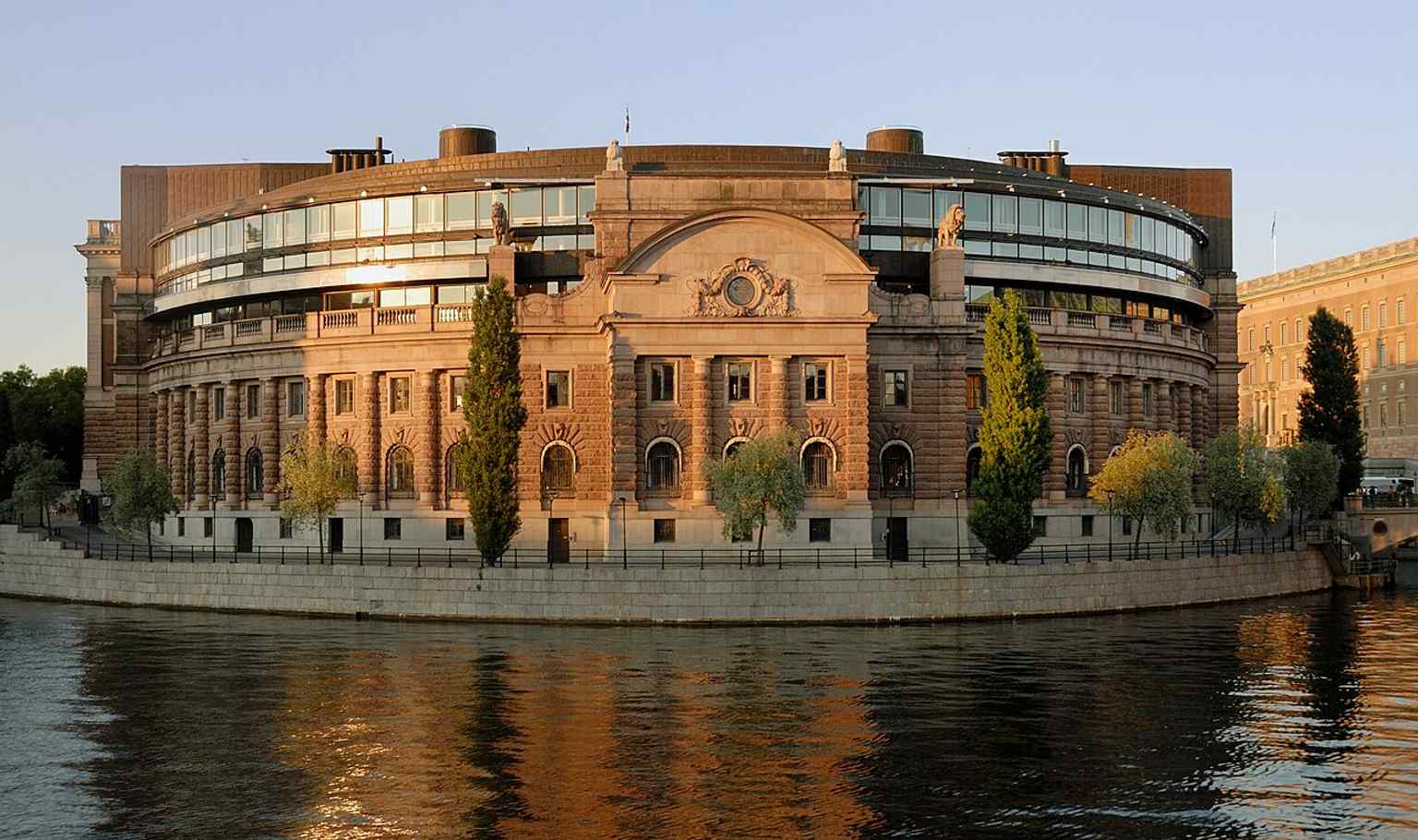
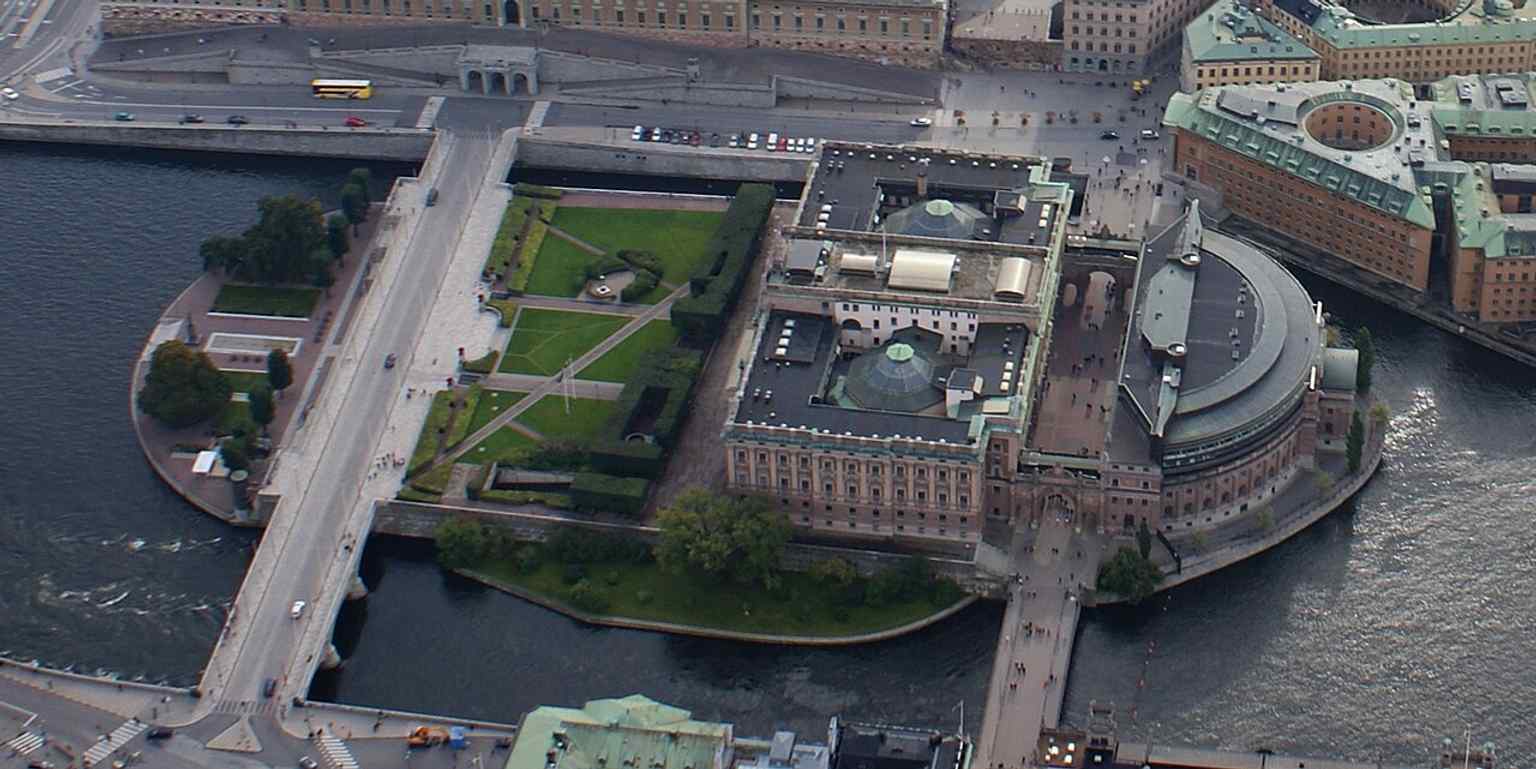
Yet the building did not freeze in nineteen oh five. After Sweden moved to a single-chamber parliament in nineteen seventy-one, architects Ahlgren-Olsson-Silow reshaped the former bank wing and added the new plenary hall, copper-clad above. During excavation, workers expected a garage under Riksplan and uncovered parts of Stockholm’s early sixteenth-century city wall instead. The garage shrank. The Medieval Museum took shape. Even modern democracy, here, had to negotiate with buried history.
That may be the most important thing to notice: this house of government only makes sense because of the crossings around it, the bridge ahead, the palace opposite, the older city pressing close. Next, head toward Norrbro, where those connections become impossible to miss.







%20in%20Gamla%20Stan%2C%20Stockholm.jpg)

