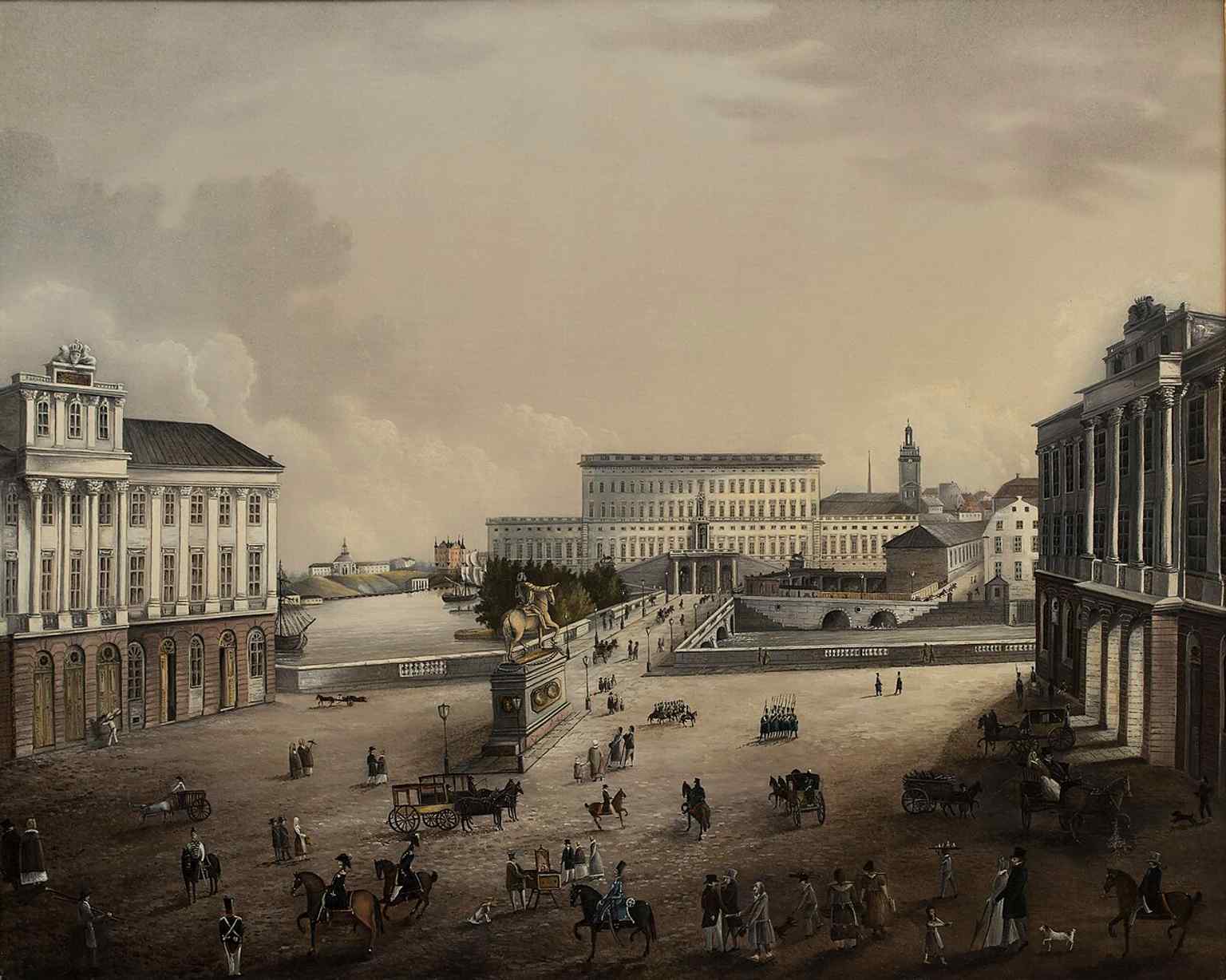
Norrbro means, quite simply, the north bridge... and that plain name tells you something essential about Stockholm. Before this city became a capital of chambers, crowns, and ceremony, it had to solve a more basic question: how do people, goods, soldiers, messages, and orders get across the water?
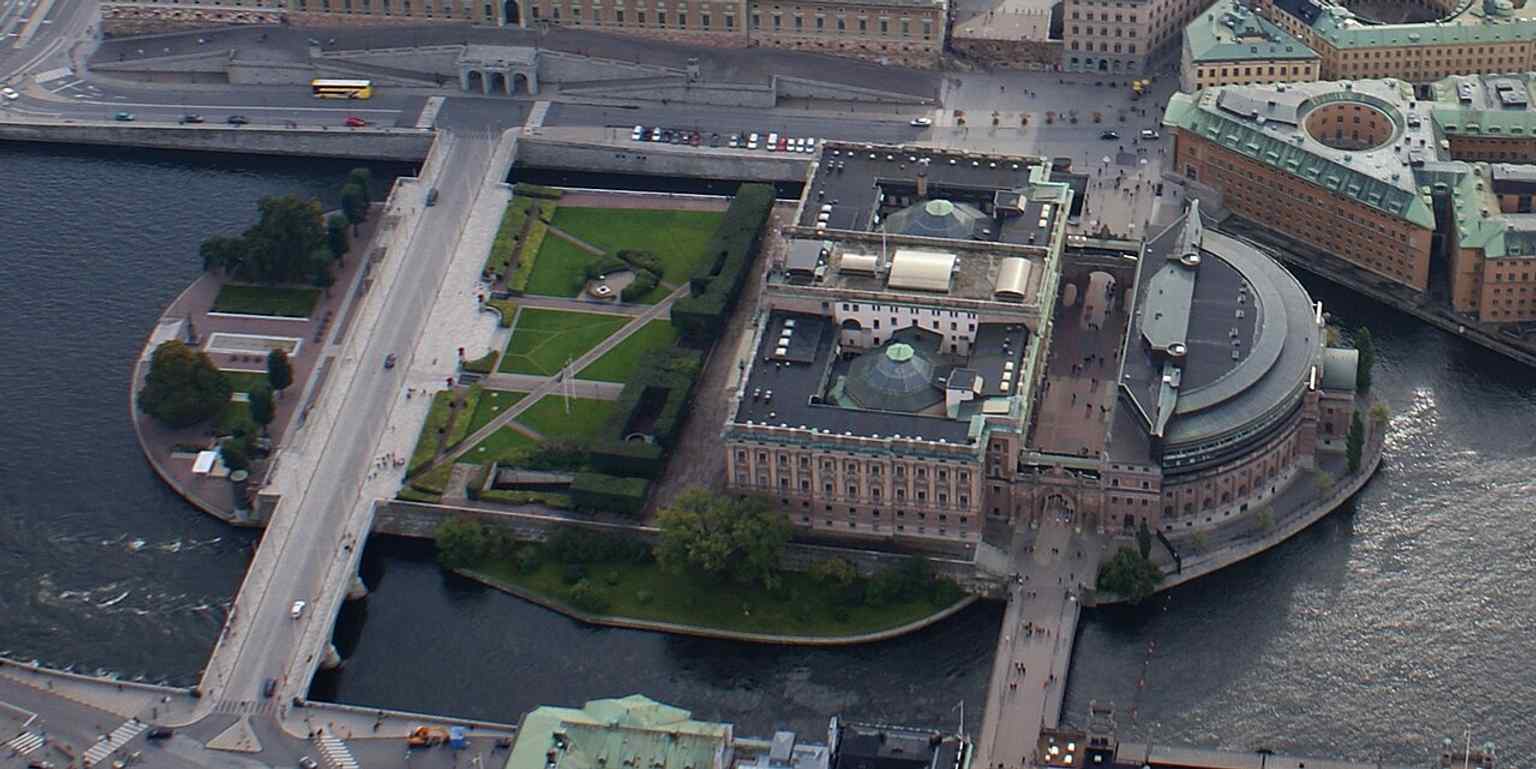
You are standing on the answer. Norrbro links Gamla stan to Norrmalm in a line that runs from Lejonbacken below the palace to Gustav Adolfs torg. The bridge you see now opened in eighteen oh seven, and it still matters because it is the oldest surviving stone bridge in Stockholm. Carl Fredrik Adelcrantz drew the plan, Erik Palmstedt reshaped it, and the builder Jonas Lidströmer helped turn ambition into masonry.
Gustav the Third laid the foundation stone in seventeen eighty-seven. More than two centuries later, Crown Princess Victoria helped mark the bridge’s reopening in twenty ten, almost as if the city wanted to complete the same gesture across generations.
But the need for a northward crossing is much older than this stonework. Written records mention Stockholm’s northern bridge as early as twelve eighty-eight, in a donation letter from King Magnus Ladulås. A few years later, the law code called Upplandslagen mentioned Stockholm’s bridge again. That is a clue to the city’s earliest logic: this was not a place that simply grew on land. It grew by managing passage between islands.
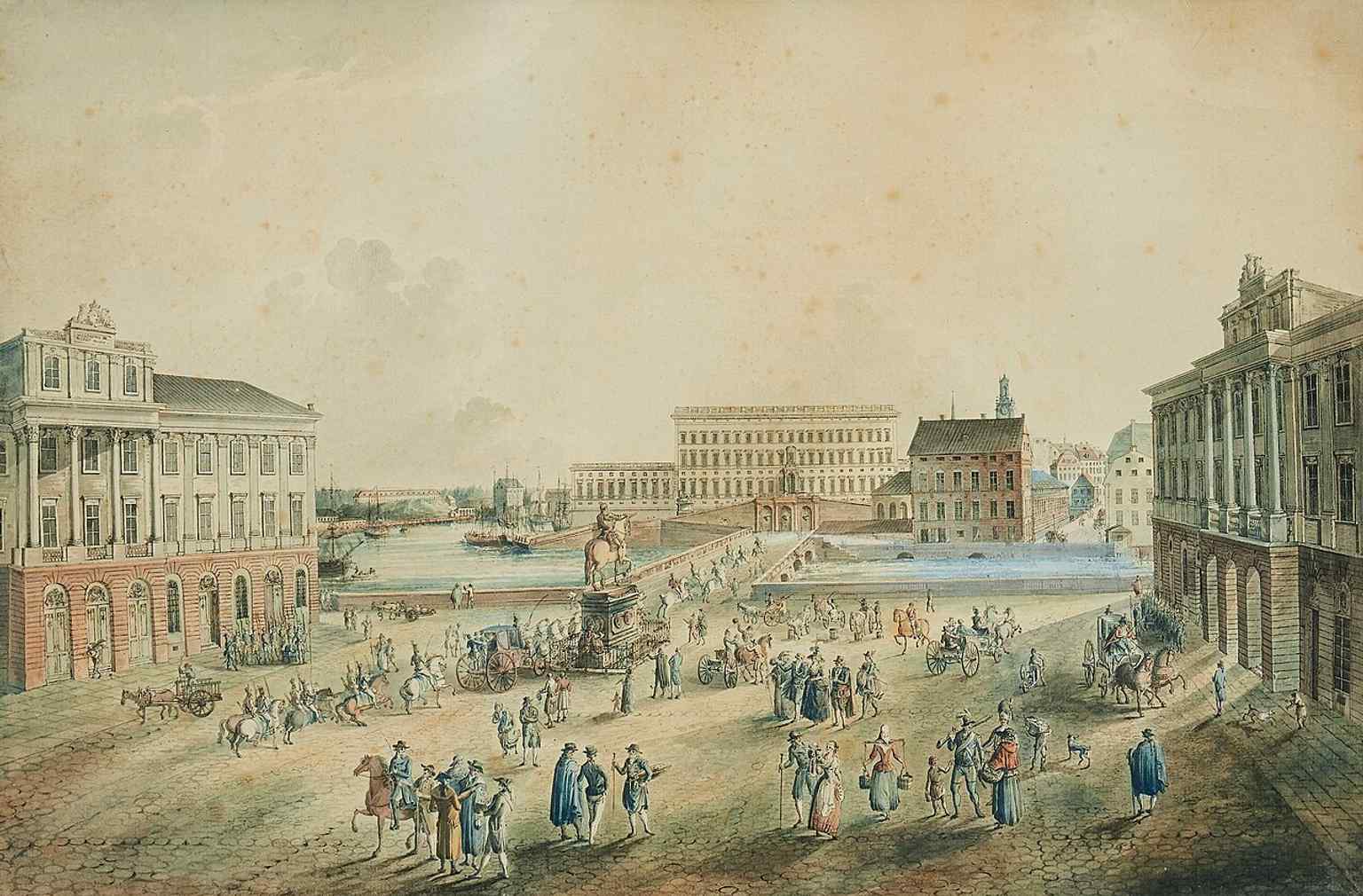
The route itself kept shifting. Earlier bridges stood farther west, more in line with Västerlånggatan, and by the late seventeen hundreds three wooden bridges crossed here, including Slaktarhusbron and Vedgårdsbron. Today’s Norrbro gathered those messy crossings into a single, deliberate royal axis. That matters. A bridge can do more than connect shores; it can organize a city around authority.
Look at its scale. Nineteen meters wide, built in three sections, with stone arches over Stallkanalen and Norrström and a flat middle span across Helgeandsholmen, it was generous for its time. Stockholm laid its first sidewalks here. The city lit its first gas lamps here in eighteen fifty-three, and later tested its first electric lighting here too. For a while, Norrbro did not just carry traffic. It staged urban life.
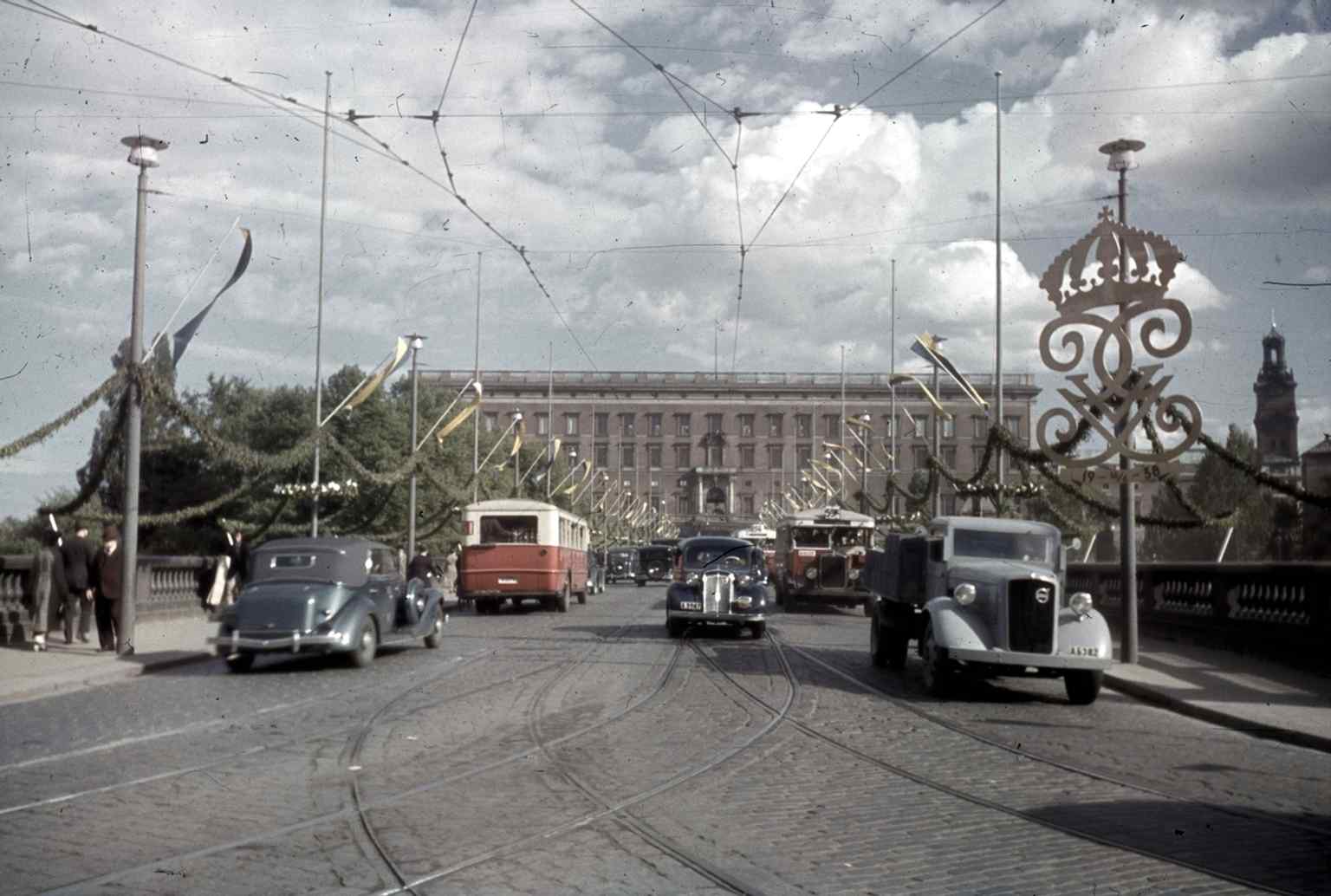
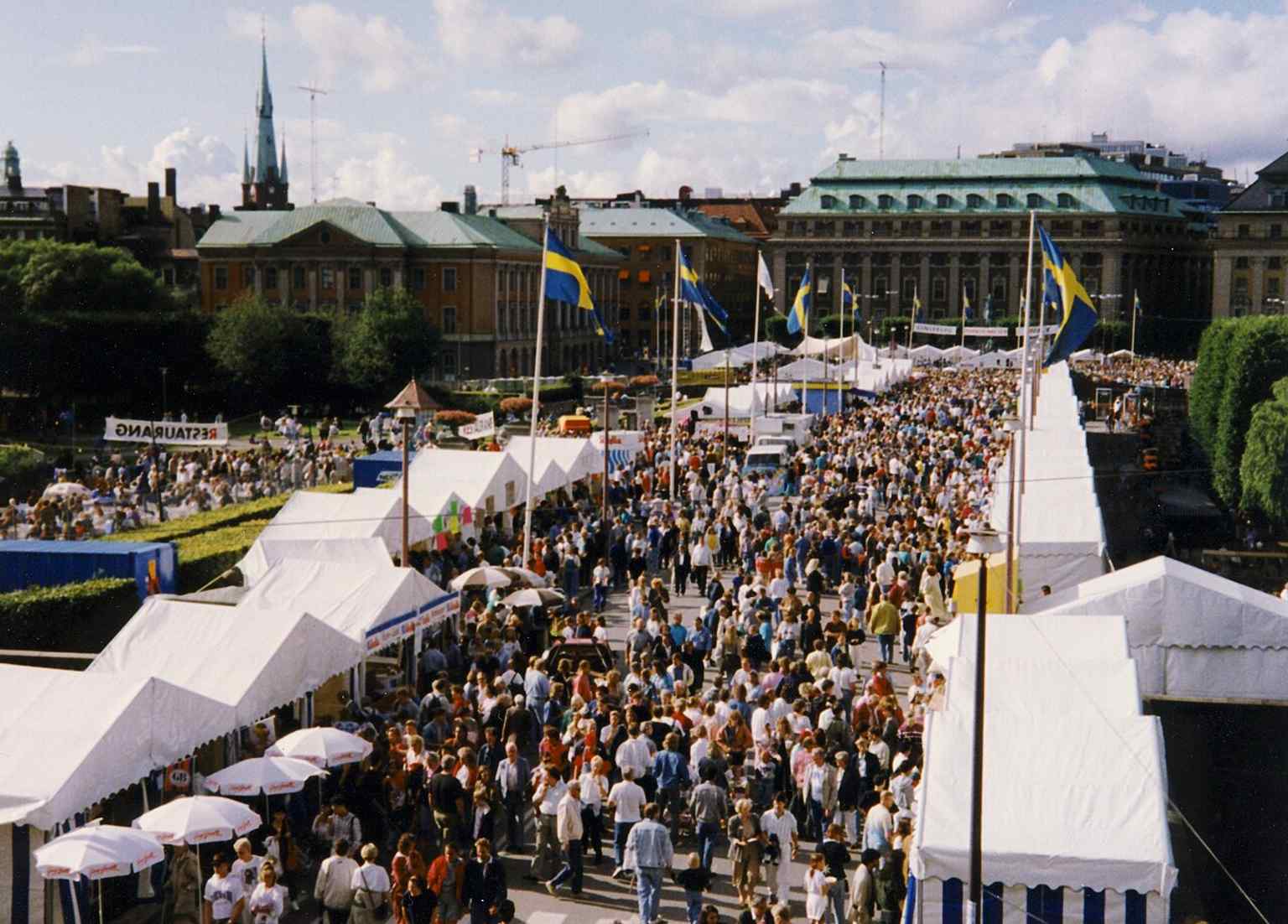
In the nineteenth century, elegant walkers used it as a promenade, a place to see and be seen. Shops lined the bridge in the Norrbrobasaren, turning a crossing into a marketplace. If you look at the before-and-after image, you can watch Norrbro shift from a decorated traffic bridge in nineteen thirty-eight to the modern crossing beside you now. When the parliament complex rose on Helgeandsholmen around nineteen hundred, the bazaar disappeared, and the bridge became less commercial, more ceremonial... a route for parades, protests, funeral processions, and state arrivals.
There is another Stockholm here too, the one under the present surface. Late twentieth-century excavations on Helgeandsholmen made this one of the city’s most important archaeological sites, a reminder that each new route rests on older attempts.
After two hundred years with little major care, the bridge began to fail. Its foundations shifted, the eastern facade bulged outward, and water leaked into the Medieval Museum beneath the middle span. Between two thousand seven and two thousand ten, workers dismantled large sections stone by stone, replaced rusted iron fastenings, renewed utility lines, and anchored the structure with more than three hundred jet columns. The cost reached one hundred seventy-five million kronor.
Walk on toward the palace, and you will see what this bridge ultimately served: passage narrowing into command. And, conveniently, Norrbro is open at all hours.