
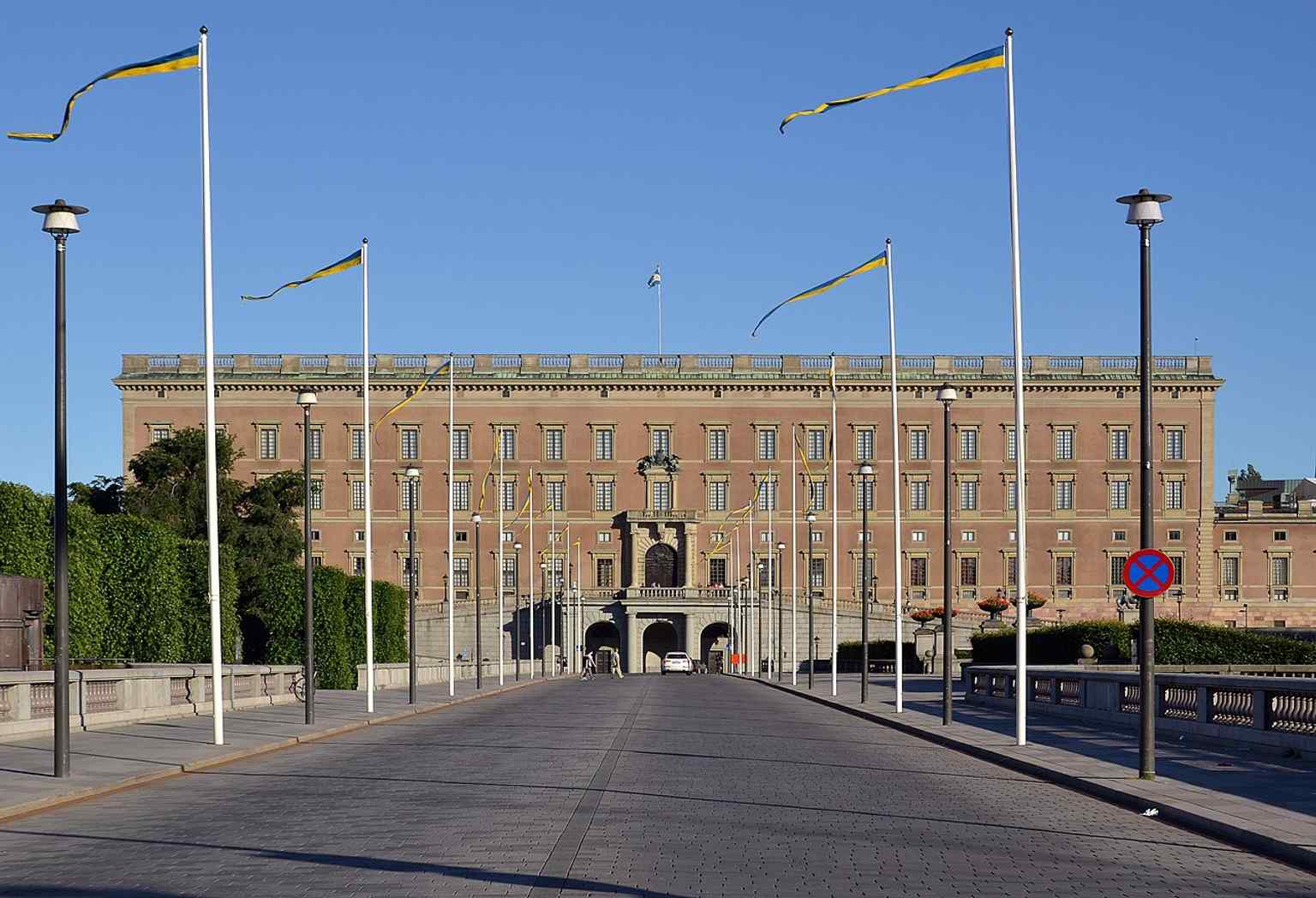
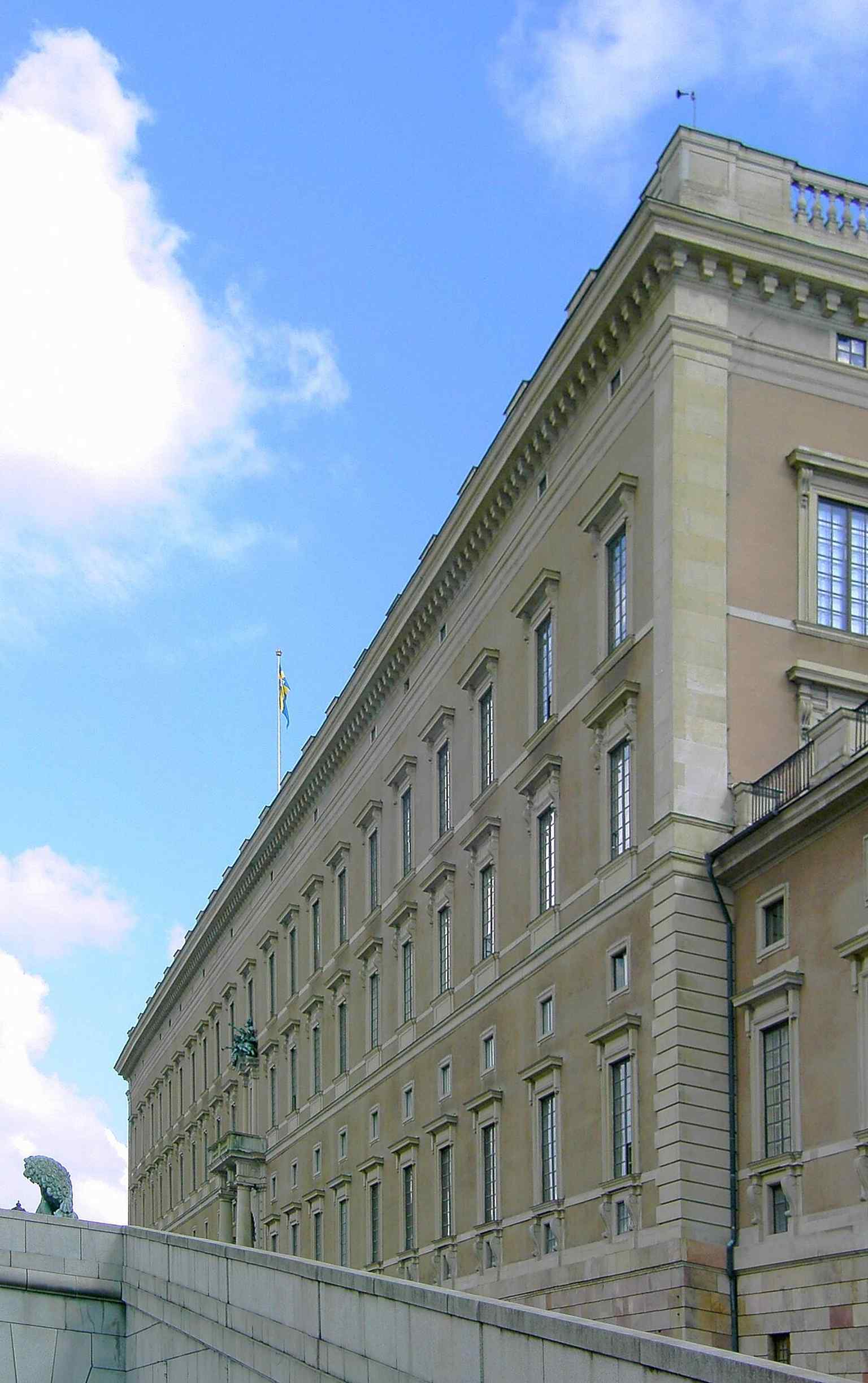
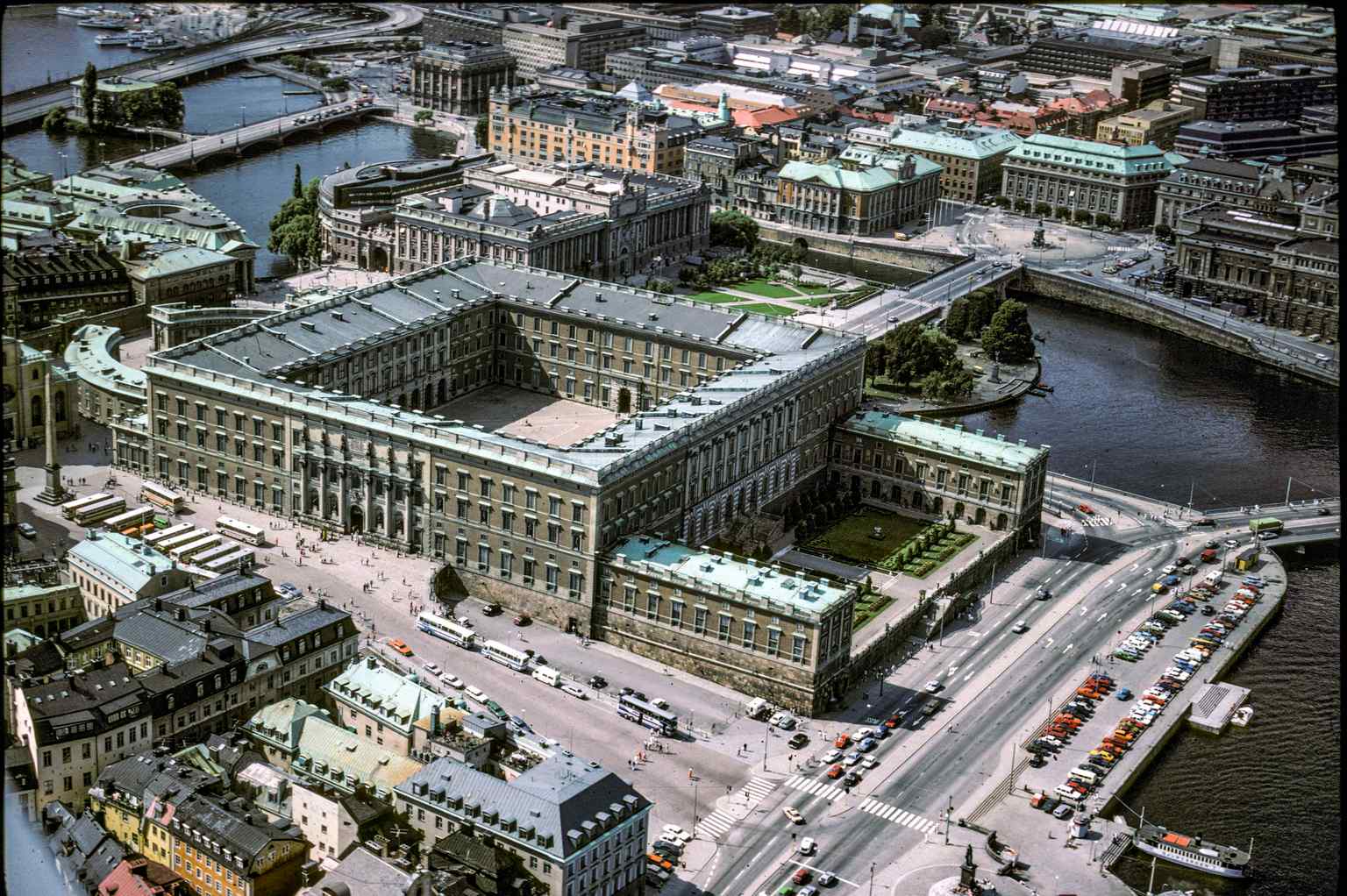
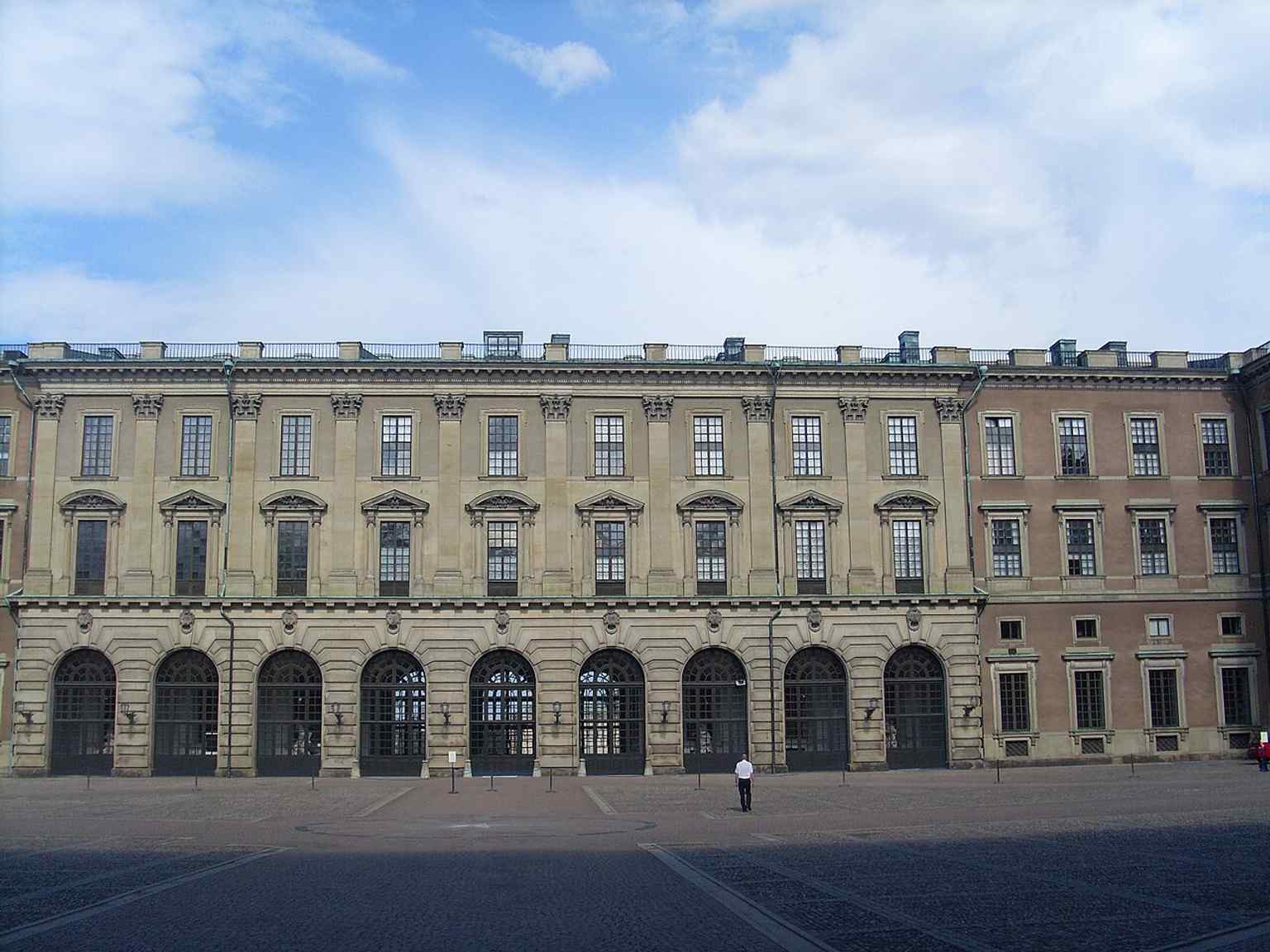
On your left rises a vast brick-red rectangle of brick and sandstone, lined with strict rows of windows and marked by a broad central balcony on the main western facade.
This is Stockholm Palace, the royal palace... but it is not simply a home. King Carl the Sixteenth Gustaf and Queen Silvia usually live at Drottningholm, while this building serves as the monarch’s official address, workplace, and stage for state ritual. Royal power here works through appearance: audiences, banquets, medals, cabinet meetings, guards, entrances, exits. Across the water, the Riksdag speaks for the nation in one architectural language; this palace answers in another, older one... command made ceremonial.
And yet this grand facade stands on a defensive site. In the thirteenth century, Birger Jarl placed a fortress here to control the narrow passage into Lake Mälaren. That mattered more than beauty. Whoever held this point could watch trade, movement, and threat. Over time the stronghold grew into the kingdom’s main residence and administrative center, so monarchy in Stockholm did something very practical: it turned military control into political presence.
The man who gave that change its form was Nicodemus Tessin the Younger. He studied Roman Baroque, especially the strict balance of palaces in Rome, and he wanted Sweden to speak that same language of durability. Then disaster struck. On the seventh of May, sixteen ninety-seven, fire tore through the old castle here.
Most of it died in smoke and heat, but parts of the newer northern walls survived. Only six weeks later, Tessin laid new drawings before the government. That speed tells you a lot. The palace was not just royal property; it was part of how the state functioned.
Take a moment and let your eyes travel across the facade. Count the windows if you like, imagine the courtyards hidden inside, and ask yourself how much stone a monarchy needs in order to look permanent.
The answer is: quite a lot. The palace holds more than one thousand four hundred rooms, about six hundred and sixty windows inside, and nearly a thousand windows in its outer walls. But for all that grandeur, it is surprisingly public in another sense. The Swedish state owns it. The National Property Board maintains it. The Royal Court works here with around two hundred employees. So this immense royal symbol survives not by staying untouched, but by being administered, repaired, modernized, and made useful.
If you want a clearer sense of the palace as a machine of ceremony, glance at the aerial image in the app; the courtyards and wings make the whole complex read almost like a diagram of power.
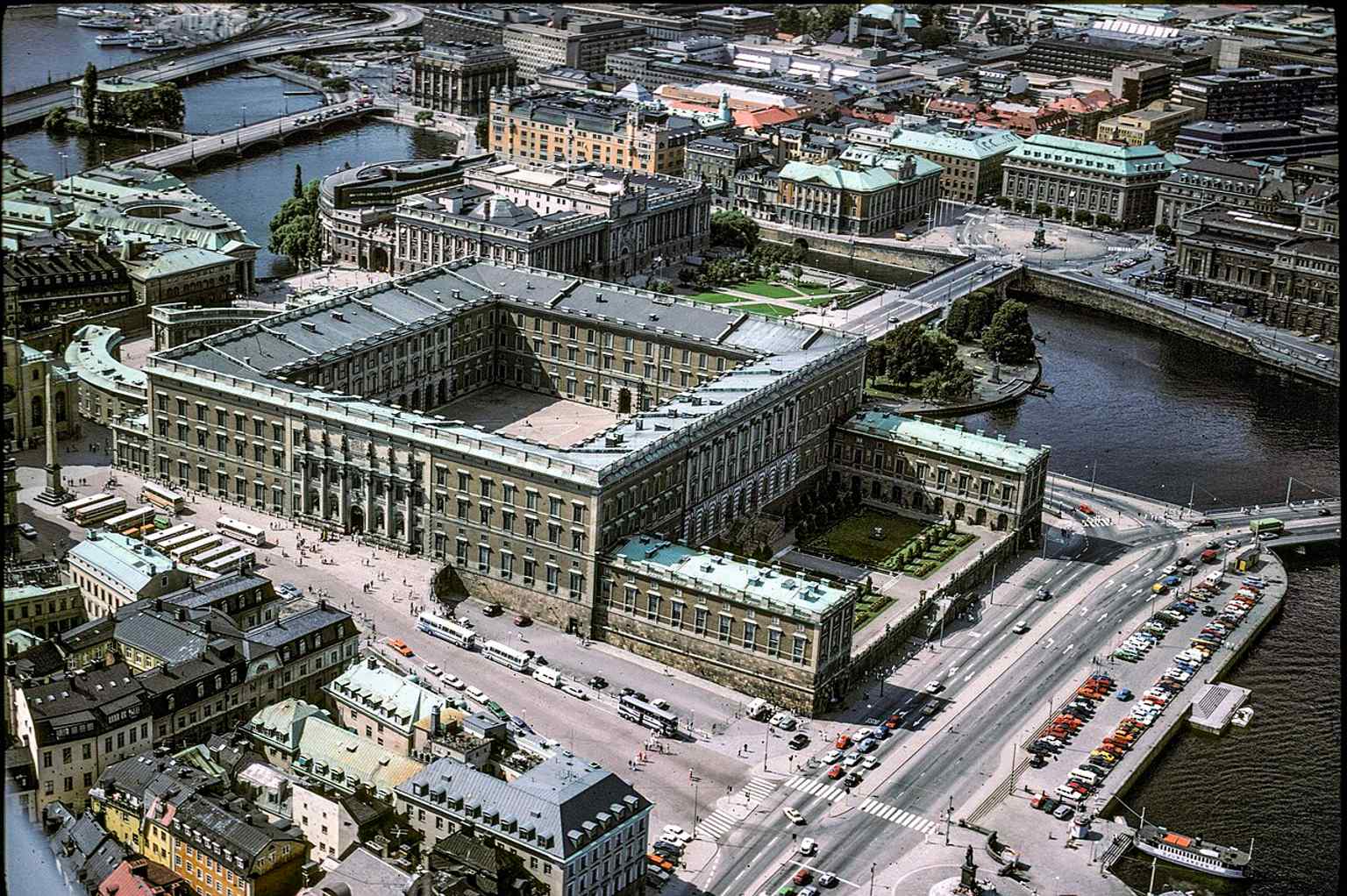
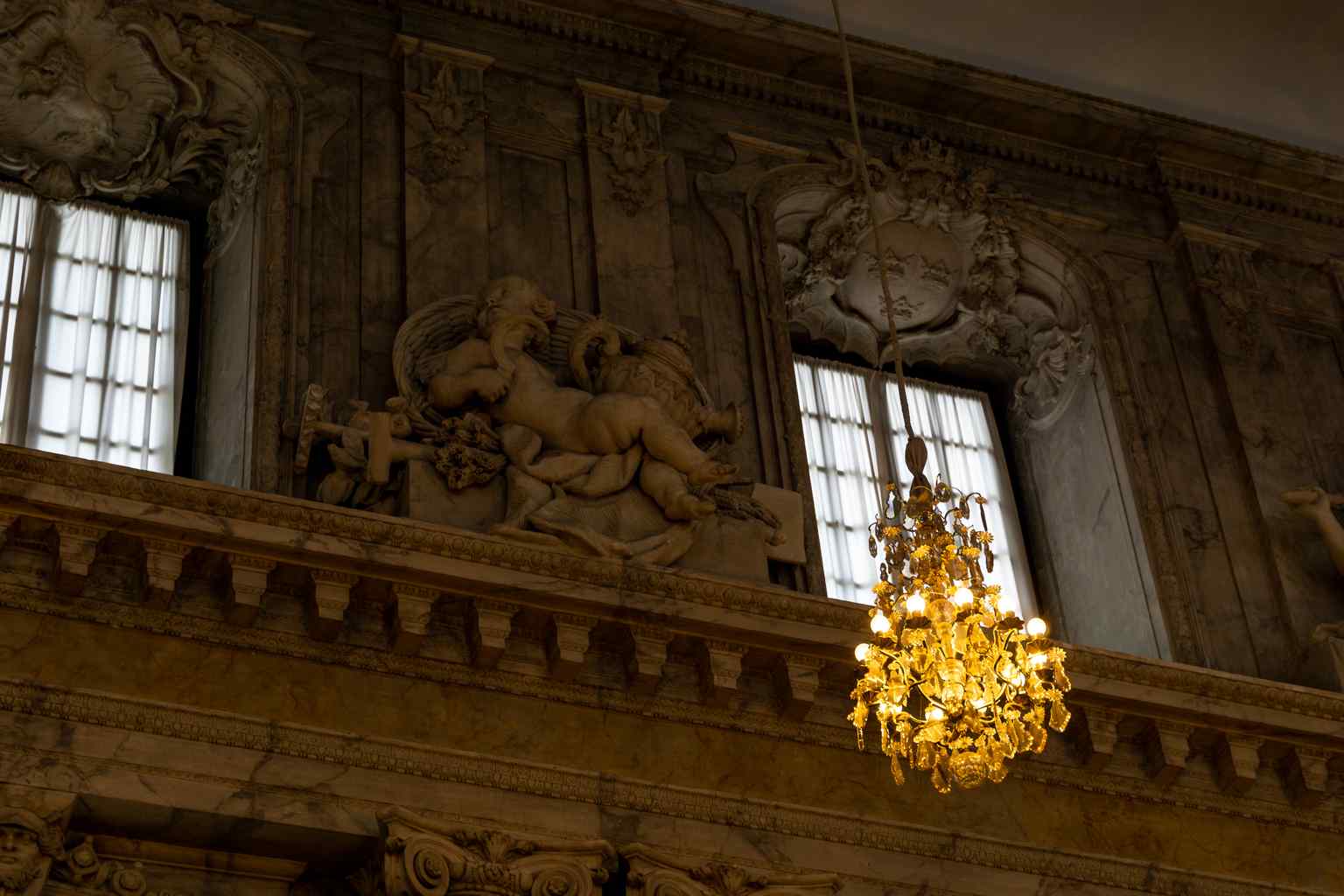
Construction itself dragged on for decades. War halted work in seventeen oh nine. In seventeen twenty-seven, the Riksdag stepped in with funding because the administration needed a proper seat. Tessin died before he saw it finished, and Carl Hårleman completed much of the interior, adding Rococo elegance behind this severe exterior. The royal family finally moved in in seventeen fifty-four.
If you check the before-and-after image, you’ll see how little the palace changed even as the approach around it became cleaner and more ceremonial.
So what looks fixed is really adapted power: fortress to castle, castle to palace, residence to official theater. And behind this ordered face, older walls still linger in cellars and foundations... the outline of a tougher, half-vanished stronghold we’ll meet soon. For now, we continue toward the palace banquet rooms, about two minutes away. The palace is generally open daily from ten to five.






.jpg)


