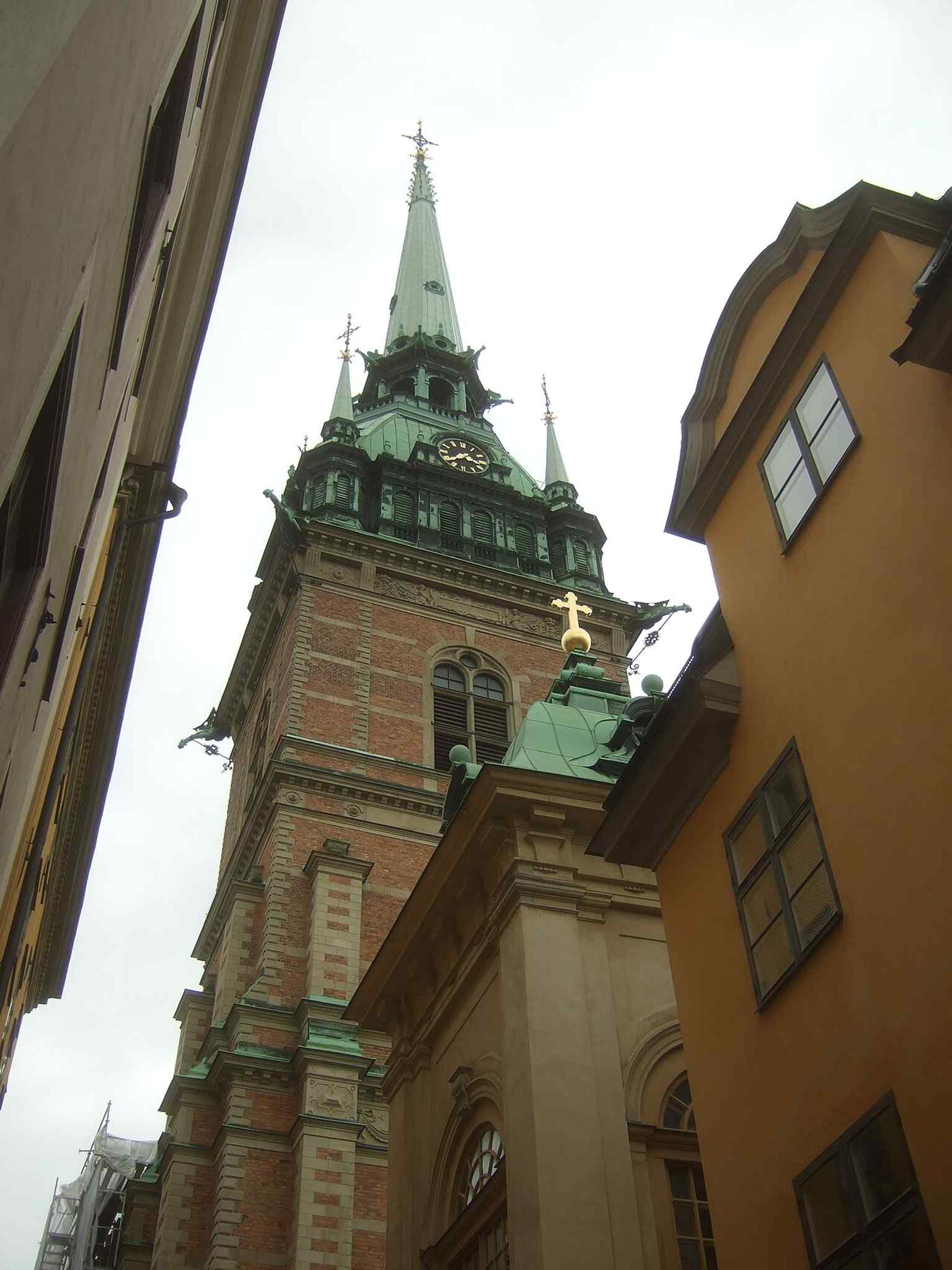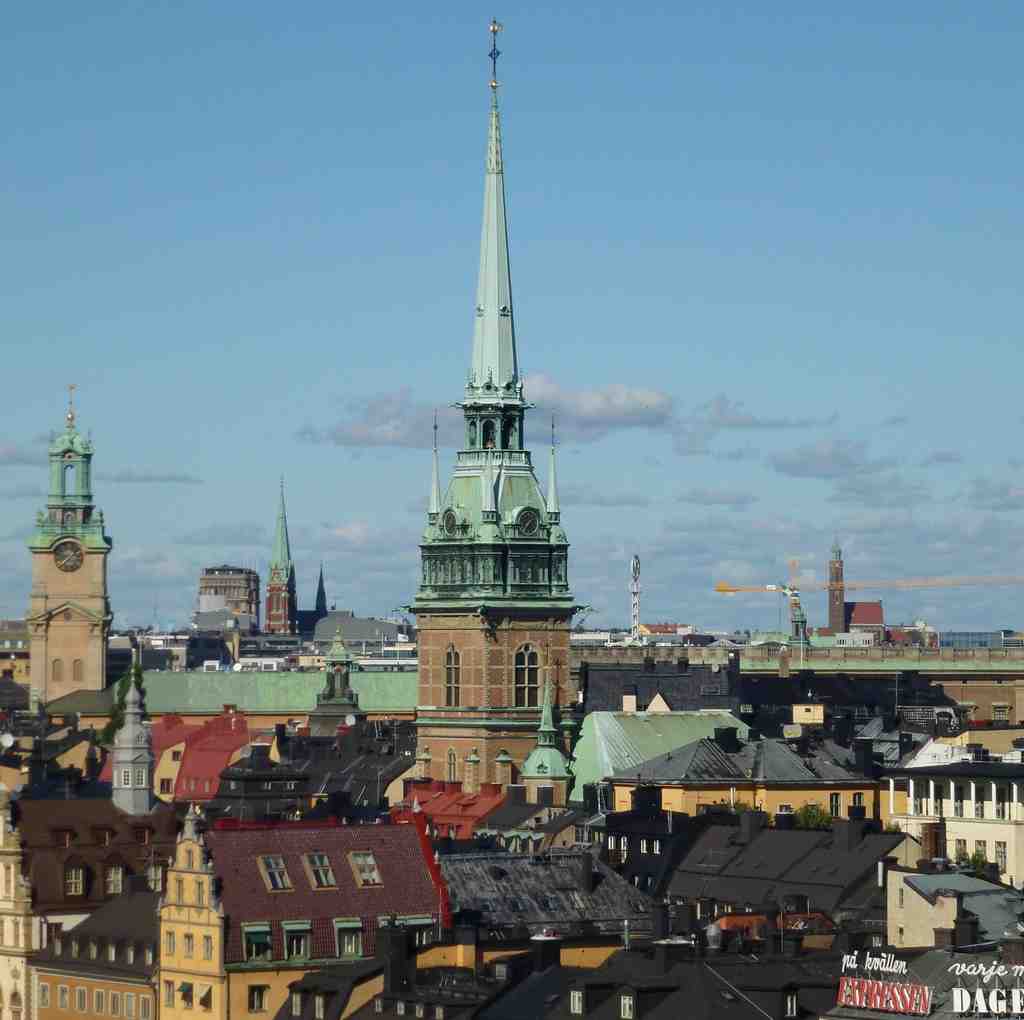
On your left rises a dark red brick church with tall pointed windows and a slender copper spire crowned by a gilded rooster.
This is Tyska kyrkan, the German Church, also called Saint Gertrud’s. It tells you something essential about old Stockholm: the city never grew as a sealed Swedish world. From the Middle Ages onward, German-speaking merchants built a community here that carried trade, credit, language, worship, and influence through these narrow streets. Saint Gertrud, their patron, protected travelers and seafarers, which made her a fitting guardian in a port city where fortunes arrived by ship.
Before this became a church, it was the guild house of Saint Gertrud. A guild was more than a religious club. It was a network for business, status, mutual aid, and political leverage. In other words, while kings ruled from palaces and bishops held the grand stage at Storkyrkan, these merchants built a parallel center of power here, tucked into the street grid yet deeply connected to the Baltic world.
One moment captures that perfectly. In fourteen forty-eight, Karl Knutsson Bonde was chosen king in Saint Gertrud’s guild hall. Not in a royal palace... here, in a merchants’ house. That tells you who mattered in Stockholm.
Pause for a second and study how the church pushes upward from such tight surroundings. When ground is scarce and prestige is contested, a community announces itself vertically... with height, bells, and a tower that claims the skyline.
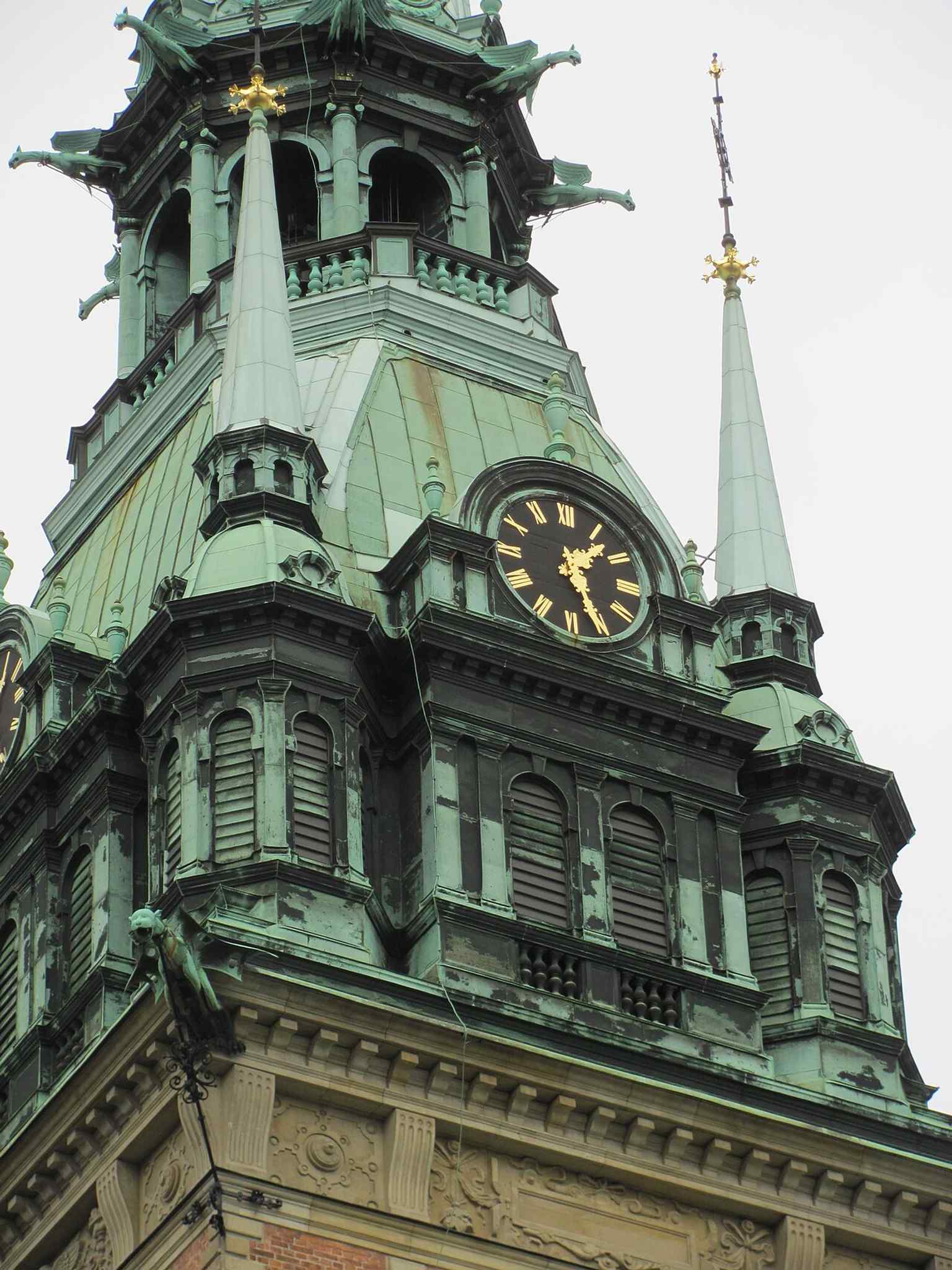
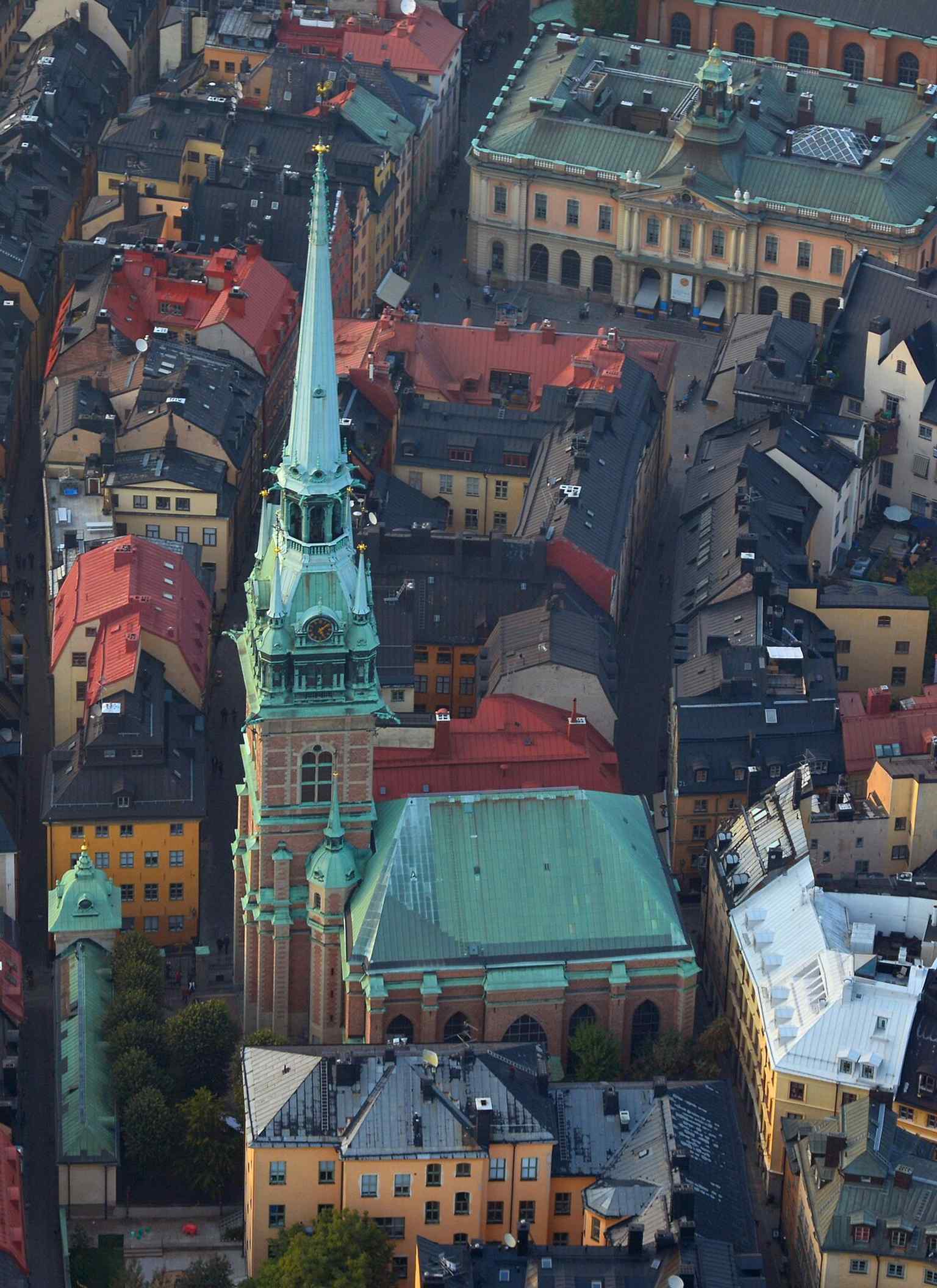
If you glance at the image in the app, you can see how completely the tower dominates the roofs of Gamla stan. The present spire came later, after disaster. Fire destroyed the older tower in eighteen seventy-eight. When the burning spire collapsed, heavy bells crashed down through the roof. Everyone expected the interior to be lost. But the old brick vaults held. That gave Stockholm’s new fire brigade enough time to stop the flames before they consumed the church room.
Most visitors notice the tower. Locals tend to mention what survives below. Under this church complex, the vaulted remains of the old guild cellar still exist, including traces of a hypocaust, an underfloor hot-air heating system borrowed from Roman engineering. Think about what that means: wealthy German merchants once warmed their feast rooms above with hidden heat below. Commerce here did not merely support devotion. It financed comfort, ceremony, and political theater.
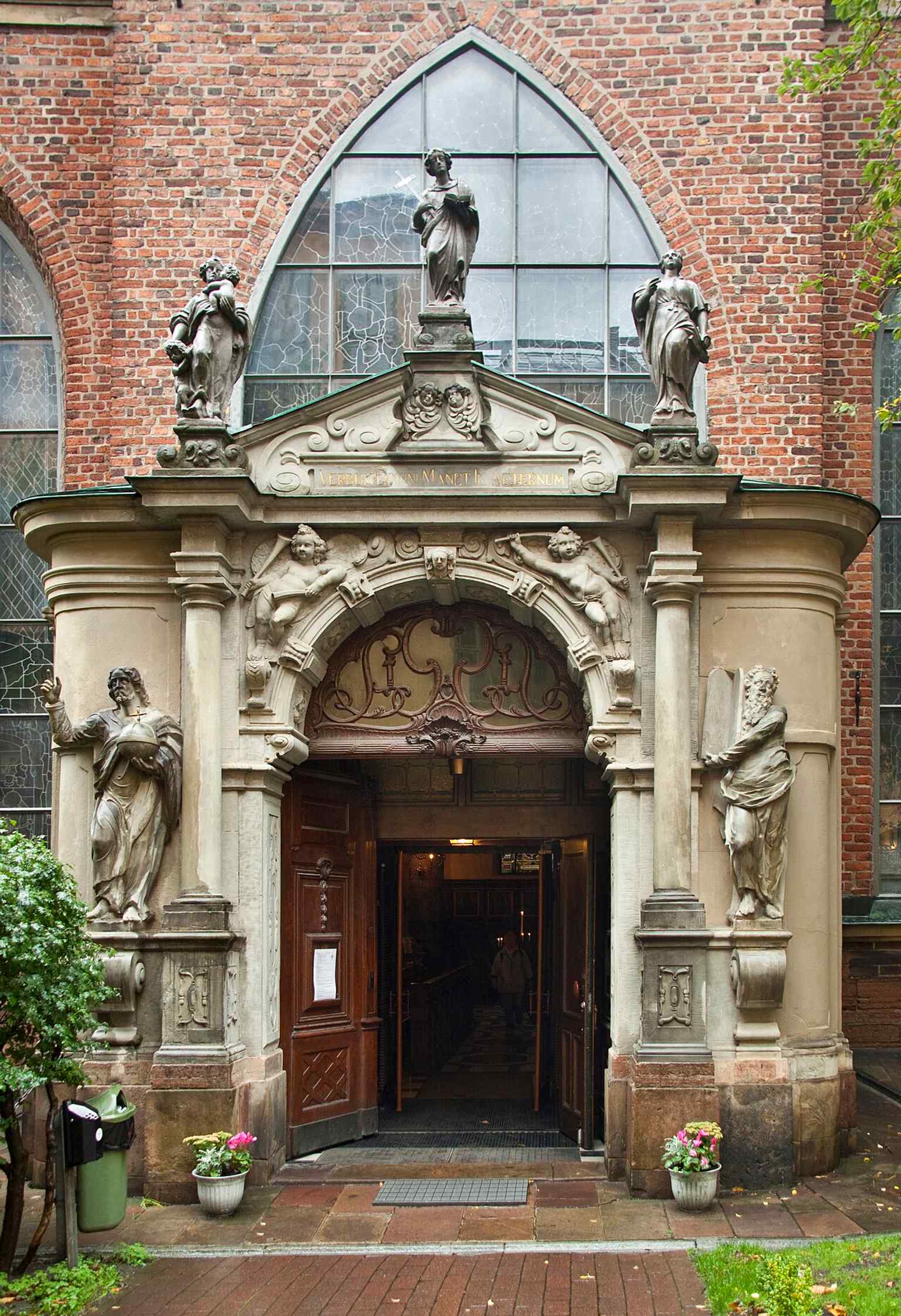
The church you see now took shape in stages. In the 1640s, the builder Hans Jacob Kristler from Strasbourg transformed the earlier chapel into a larger late Gothic hall church, then gave it a face of red brick, buttresses, and gray sandstone details. If you check the portal image, you can catch that layered identity in stone: part merchant house, part church, part international statement.
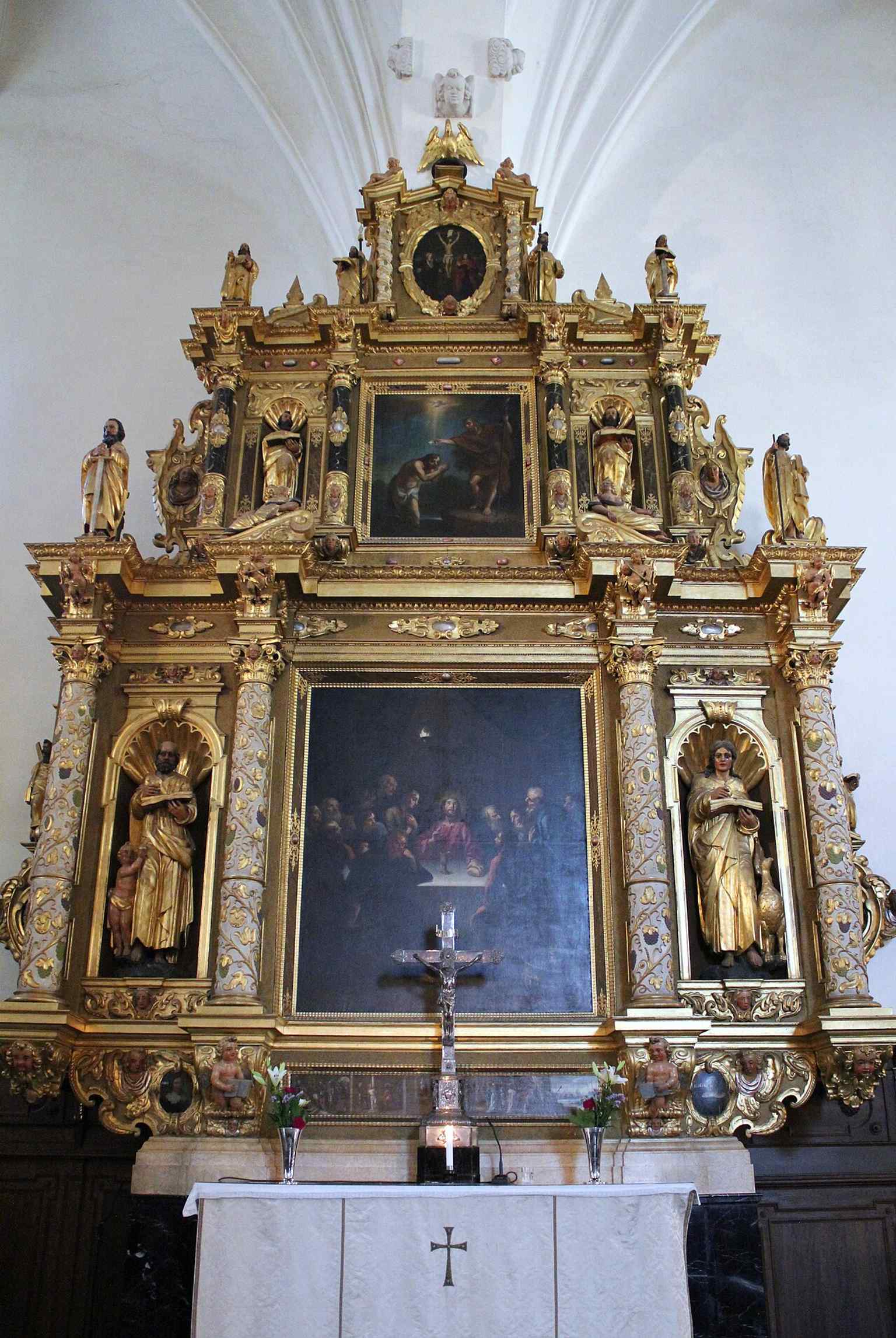
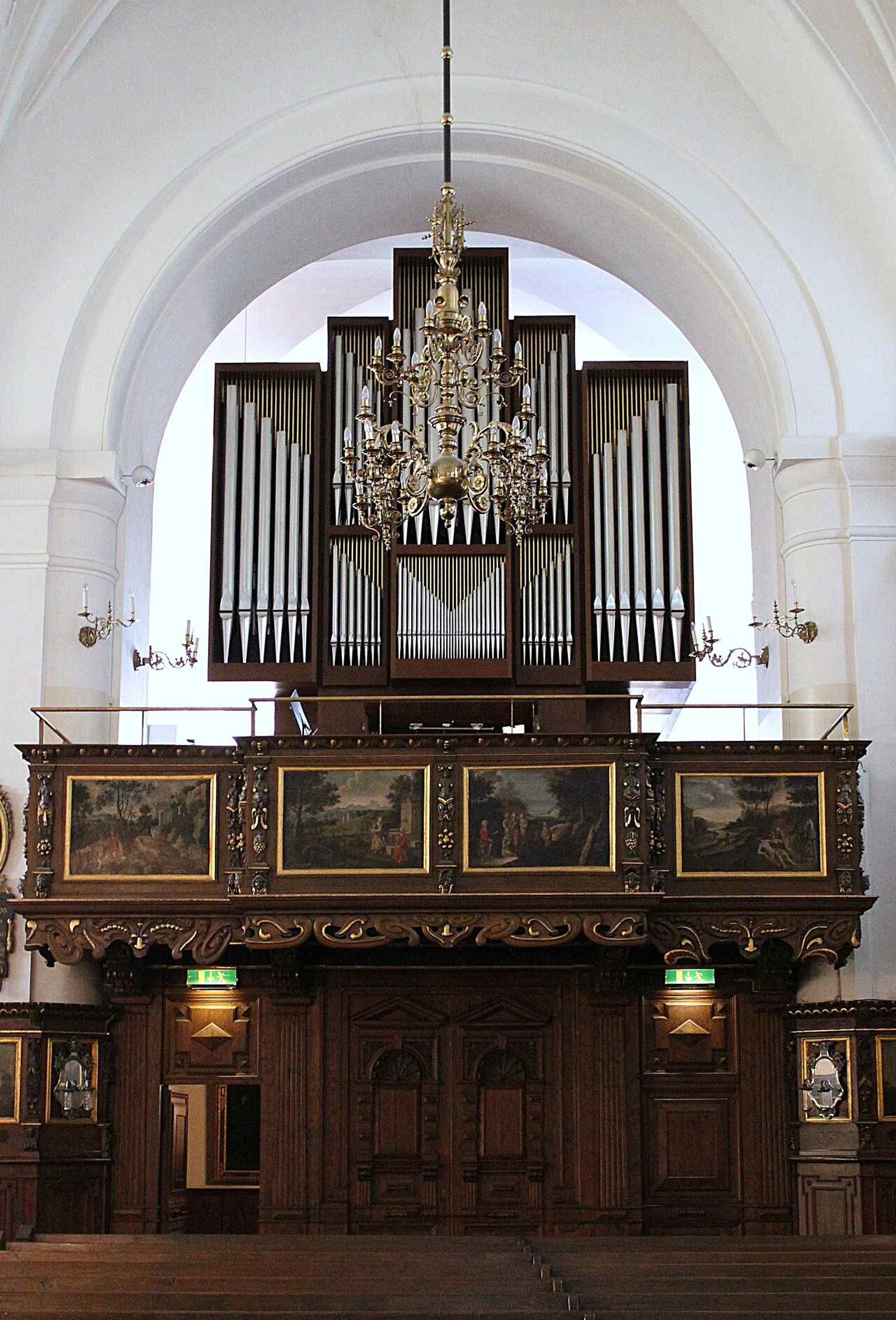
Inside, the story continues in another register: German services, a royal gallery designed by Nicodemus Tessin the Elder, and a near ten-meter Baroque altarpiece by Markus Hebel. So this was never a minor ethnic chapel. It stood at the meeting point of crown, congregation, and capital.
Around it, the streets once pressed close with stalls and clothing booths leaning against the church walls. Trade, prayer, gossip, and many languages mixed in the same few lanes. Hold that image as you continue toward Västerlånggatan, where the city’s daily traffic becomes the story again. If you want to return and go inside, the church generally opens Friday through Sunday from eleven to three.