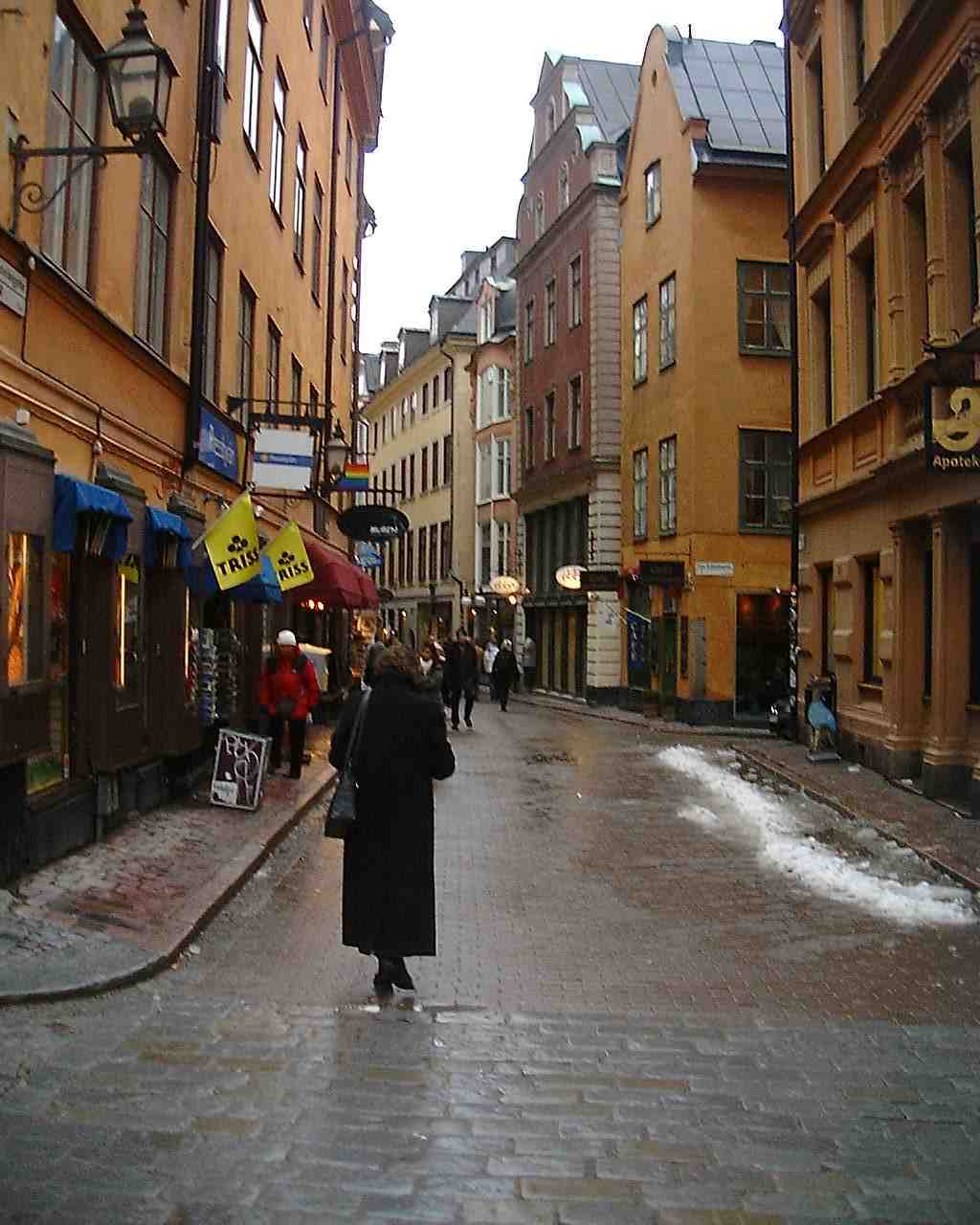
Västerlånggatan looks like a gently curving stone-paved street lined with tall plaster façades, narrow gables, and old forged-iron signs projecting above the shopfronts.
At first glance, this feels like the Stockholm of postcards... charming, crowded, easy to love. But Västerlånggatan did not begin as a pretty shopping street. It began as a path outside the city’s western wall, following the shoreline. The curve you see is the clue. This was once the edge of Stockholm, not its polished center.
In the Middle Ages, this street and Österlånggatan formed a pair, the twin long streets running outside the walls on either side of town. Then this western route took on a larger job. It linked the northern gate at Norrbro to the southern gate at Söderbro, so traffic between Uppland and Södermanland pressed through here. That means this was not just picturesque. It was functional, strategic, and busy with purpose.
By the fifteenth century, the path had become a paved commercial spine. Merchants sold, craftsmen hammered, and the city sorted bodies and trades along its length. At the northern end, blacksmiths worked here because the authorities feared fire inside the walls. Later, goldsmiths moved in and the street climbed in status. If you glance at the image in the app, you can catch that layered look: medieval proportions underneath later shop façades, a street that keeps rewriting its own face.
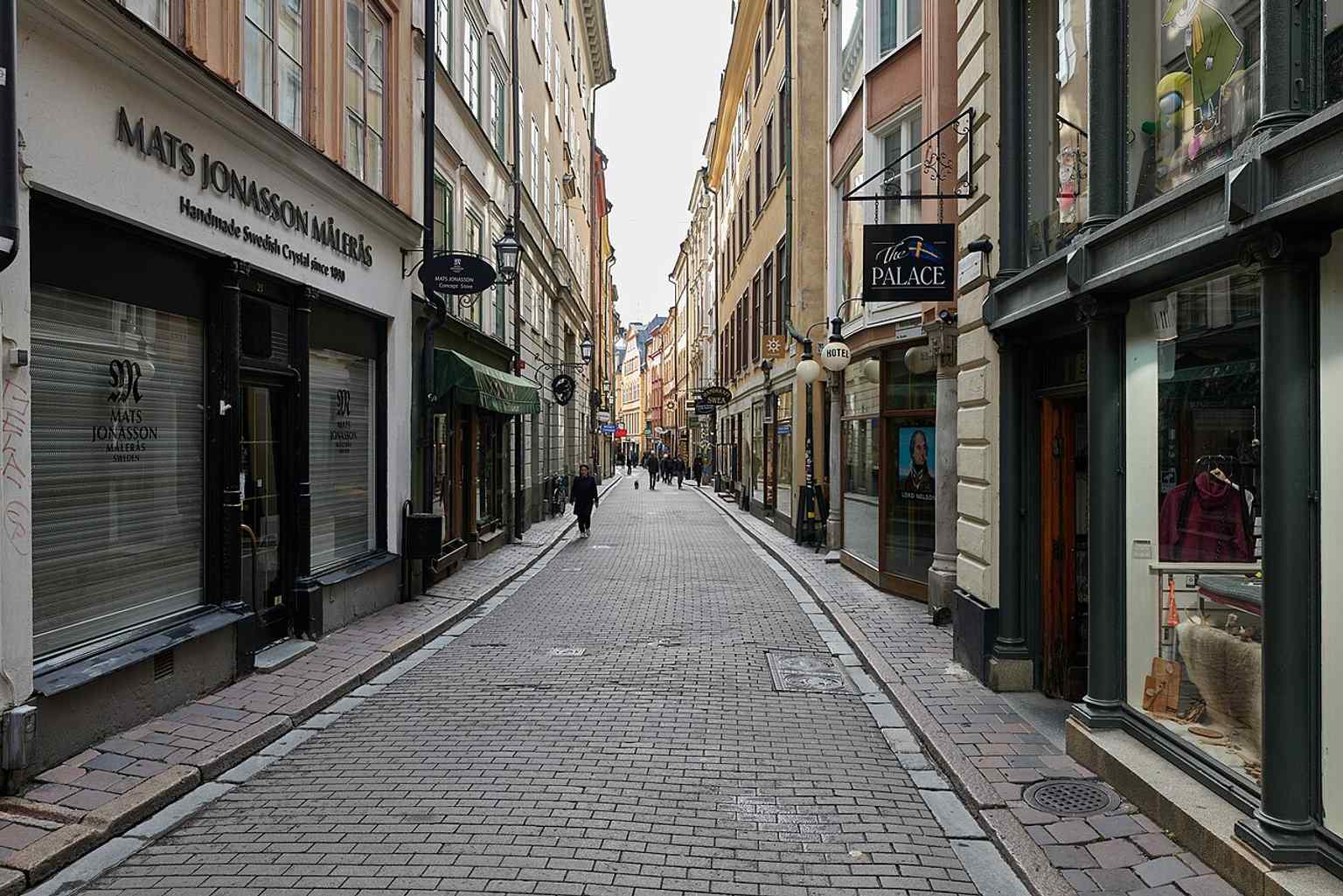
And that rewriting matters. In the nineteenth century, when Stockholm’s commercial center shifted north and parts of Gamla Stan declined, Västerlånggatan escaped. The bridge called Riksbron connected it more directly to newer shopping districts in nineteen oh seven. Shop owners modernized. They added large display windows, plaster ornament, and slim cast-iron colonettes ordered from Germany. Those handsome fronts often conceal much older cores behind them... cellars, beams, arches, whole medieval rooms still living inside the buildings.
One person captures the street’s hard commercial nerve better than any façade. Carolina Lindström ran a milliner’s shop here from the eighteen forties. A milliner, by the way, made and sold women’s hats and fashionable accessories. She worked so late people nicknamed her the Evening Star. Then, in eighteen forty-four, she learned that King Charles the Fourteenth had died before her competitors did. She rushed out and bought the city’s crape and mourning cloth before anyone else. Grief became inventory. Inventory became profit. That is the truth under the charm: this street taught people to turn news, rank, and ritual into business.
Even medicine carried that mix of necessity and theater. On your screen, notice the gilded raven of Apoteket Korpen, the Raven Pharmacy, founded in the sixteen seventies. In a city battered by plague and epidemics, people came here seeking cures that could include frogs, snakes, human fat, even powdered mummy. Elegant signs, desperate customers.
So stand here and read the street properly. Not as a costume backdrop, but as an artery where goods, fear, ambition, and reputation all changed hands. And just ahead, that same closeness between money and power will sharpen into something more dangerous... at the site of the Fersen murder, rank itself will fail to offer protection.