On your right, look for the tall red-brick facade with stepped gables and rows of pale round stones set into the wall beneath the windows.
This is the place tied to the Stockholm Bloodbath, the defining trauma of fifteen twenty. It began in ceremony and ended in slaughter, which is exactly why it stayed lodged so deeply in Swedish memory: here, royal ritual did not restrain violence... it gave violence a stage.
Christian the Second had just taken the crown. In Storkyrkan, he swore the usual oath to rule through native-born Swedes. At Tre Kronor, the court feasted for three days. Wine and beer flowed, and after months of siege and negotiation, many believed the danger had passed. Christian had already promised amnesty, a formal pardon for past resistance, when Stockholm surrendered.
But Archbishop Gustav Trolle had another plan. He wanted revenge and compensation after his fortress at Almarestäket had been demolished, and he used canon law, meaning church law, to argue that the men who opposed him had committed heresy. Heresy sounds theological, but here it became a political weapon. First came the coronation, then the banquet, then the legal language.
On the evening of the seventh of November, Christian summoned leading Swedes to a private meeting at the palace. On the next night, Danish soldiers entered with lanterns and torches and seized noble guests one by one. They had already been marked on Trolle's proscription list, a written list of enemies.
What makes a public promise feel solid... and what happens to a city when mercy is performed in front of everyone, then taken back behind closed doors?
At noon on the ninth of November, the executions began here. The bishops of Skara and Strängnäs were led out first and beheaded. Then fourteen noblemen, three burgomasters (that is, town mayors), fourteen town councillors, and around twenty townsmen were hanged or beheaded. The killings continued the next day. The chief executioner, Jörgen Homuth, later said eighty-two people died, though other accounts argued over the number. Even the death toll became part of the struggle over memory.
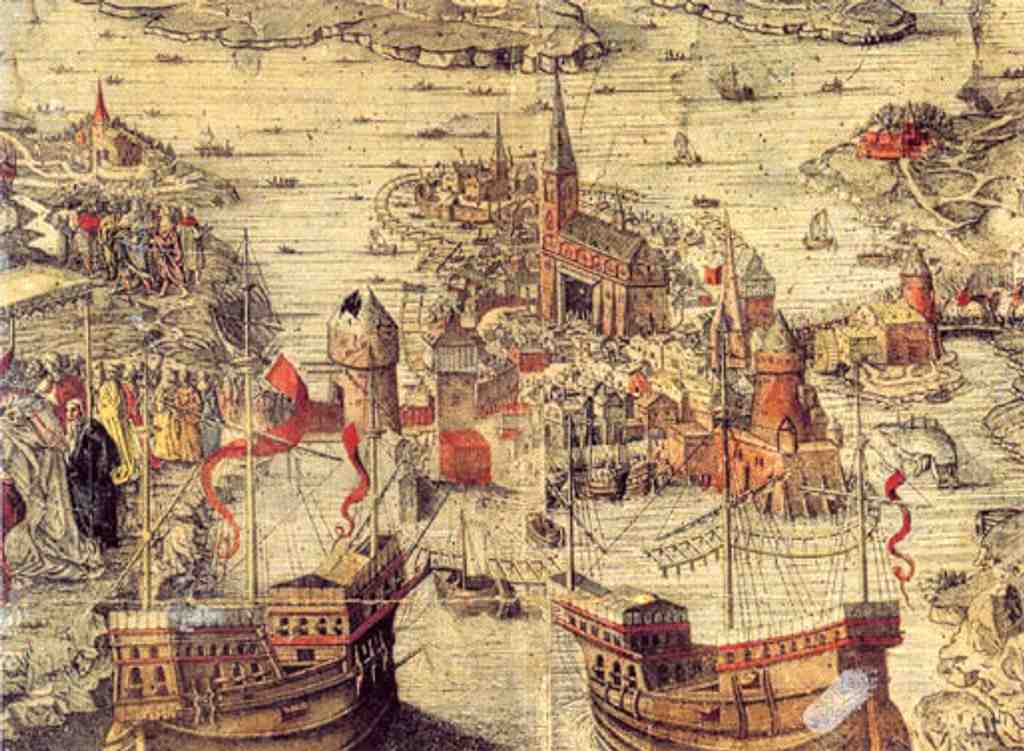
If you glance at your screen, you can see a later engraving imagining the scene: bishops and nobles brought out after the king's promise had already been broken.
One of the dead was Erik Johansson, father of Gustav Vasa. That matters because the bloodbath did more than kill opponents; it nearly erased a family that would soon reshape Sweden. When Gustav Vasa heard what had happened here, he went north to gather support. The revolt that followed broke Christian's power and helped sever Sweden from Denmark for good. Christian gained the Swedish name Kristian Tyrann, Christian the Tyrant, and he has never really escaped it.
If you look at the Bloodbath painting on your phone, notice how memory turns murder into instruction: later generations wanted this wound preserved, not softened.
And yet the city did not stop. Trade resumed, ships still came in, and ordinary life continued along the waterfront ahead of you. That uneasy survival is part of the story too. From here, continue toward Skeppsbron, where commerce kept moving beside the stain of state violence. If you plan to visit the related venue, it generally opens from ten to seven and stays closed on Sundays.