
50+ languages

 Konya · Türkiye
 Konya Audio Tours
Discover Konya with self-guided audio walking tours
headphones
2 tours
pin_drop
17 landmarks
translate
Konya tours
Pick a Konya worth walking.
Self-guided audio tours written by people who actually live there.
2 tours
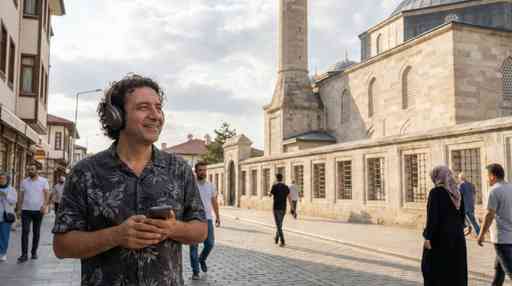
Konya Highlights Audio Tour: Historical Treasures
Beneath the silent turquoise dome of Konya lies a city built on the embers of empires and the whispered secrets of dervishes. This is a landscape where every shadow hides a forgotten rebellion and every stone marks a broken vow. Unlock these hidden layers through this immersive self-guided audio tour. Wander beyond the crowded courtyard of the Mevlana Museum and explore the obscure corners of the Selimiye and Aziziye Mosques that most tourists walk past in ignorance. What dark political betrayal was plotted inside these ancient walls? How did a single prayer change the course of a bloody palace coup? And why does the scent of roses persist in a room sealed for three centuries? Navigate through the heart of history as the past breathes against your skin. Peel back the gilded layers to reveal a raw and untamed Konya. Begin your journey into the mystery now.
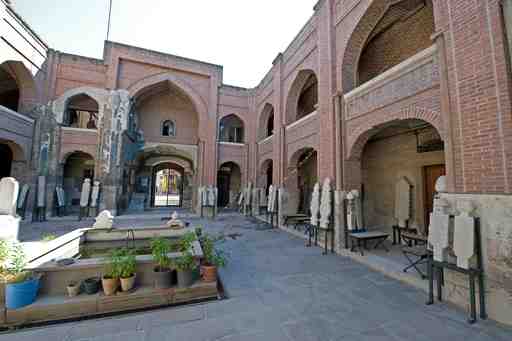
Karatay Audio Tour: Echoes of Spiritual Splendor in Konya
Beneath Konya’s sun-baked streets lie stories of vanished empires, whispered secrets, and once-forbidden knowledge waiting to rise from the dust. Explore the city on a self-guided audio tour designed to reveal the drama hidden in plain sight, far beyond the usual postcard views. Uncover the forgotten mysteries behind each ancient stone and intricate tile as you wander at your own pace. What shadowy plot nearly toppled rulers beneath the soaring domes of Aziziye Mosque? Why did revered scholars risk everything inside the silent halls of Sircali Madrasa? And how did a single accidental discovery at the Archaeological Museum spark a controversy still unresolved today? Move through centuries of intrigue and inspiration, tracing the footsteps of rebels, visionaries, and artists who reshaped Konya forever. Ready to unlock the secrets beneath Konya’s surface? Let your journey begin.
Top landmarks
The Konya everyone knows.
The landmarks in every guidebook — and the tours that tell you what guidebooks don't.
A few words on Konya
Rumi is buried here. The dervishes still turn.
Jalaluddin Rumi, the 13th-century Persian poet and mystic whose verses on love and surrender are still read in dozens of languages eight centuries after his death, spent the last fifty years of his life in Konya and died here in 1273. His mausoleum, the Mevlana Museum, draws more than two million visitors a year, making it the most visited site in Turkey outside Istanbul and the major archaeological sites. The turquoise-tiled dome is visible from across the city. Inside, the silver-latticed tomb and the domed chambers where his manuscripts are kept under glass create one of the more genuinely moving museum experiences in the country.
Konya served as the capital of the Seljuk Sultanate of Rum from the late 11th century until the Mongol invasions of the 13th century, and the Seljuk architectural legacy is still visible in the Karatay and Ince Minare Medrese, both now tile and stone carving museums, and in the city walls.
The Aladdin Mosque on the city's central hill, the oldest mosque in Konya, was built by Seljuk sultans in the 12th and 13th centuries and is one of the finest examples of early Anatolian Islamic architecture.
Konya
Konya FAQ
Before you walk.
The Mevlana Museum occupies the former dervish lodge and contains the tomb of Rumi, manuscripts, musical instruments, and historical artifacts of the Mevlevi order. Modest dress is required and shoe covers are provided at the entrance. Photography is permitted in most areas. Plan at least an hour and a half. The complex is free to enter.
Weekly sema (whirling) ceremonies for visitors are held on Saturday evenings at the Mevlana Cultural Center near the museum. These are free performances by practitioners of the Mevlevi order and last about an hour. The annual International Mystic Music Festival in December, timed to the anniversary of Rumi's death (Seb-i Arus), is the major formal event.
Both are 13th-century Seljuk theological schools now used as museums. The Karatay Medrese holds a world-class collection of Seljuk ceramic tiles in a building with a spectacular star-patterned dome. The Ince Minare Medrese displays stone and wood carvings from the same period. Both are a short walk from the Mevlana Museum.
Konya is famous for etli ekmek, a thin flatbread topped with minced meat and baked in a wood-fired oven, eaten by wrapping or folding. Firin sutlac, baked rice pudding with a caramelized top, is the classic dessert. Tirit, a lamb and bread dish with yogurt, is another local specialty. The restaurants around the Mevlana Museum cater heavily to pilgrims and are reliable for traditional Anatolian cooking.
Every Konya tour, in your language.
All 50+ languages, included with every booking.
🇬🇧 English🇫🇷 Français🇪🇸 Español🇩🇪 Deutsch🇮🇹 Italiano🇯🇵 日本語🇨🇳 中文🇰🇷 한국어+ 41 more
star AudaTours Unlimited
Visiting more than one city? Subscribe.
Unlock every Konya tour — plus thousands more worldwide. Cancel any time.
$4.99/week · Cancel anytime

More in Türkiye
Explore Türkiye arrow_forwardOther cities to walk in Türkiye.




Loved by travellersThousands of tours started.
Thousands of tours started.
Plenty of opinions.
4.8 across the App Store and Google Play. Here's a few we keep coming back to.
starstarstarstarstar
This tour was such a great way to see the city. The stories were interesting without feeling too scripted, and I loved being able to explore at my own pace.

Jess
Tbilisi Tourstarstarstarstarstar
This was a solid way to get to know Brighton without feeling like a tourist. The narration had depth and context, but didn't overdo it.

Christoph
Brighton Tourstarstarstarstarstar
Started this tour with a croissant in one hand and zero expectations. The app just vibes with you, no pressure, just you, your headphones, and some cool stories.

John
Marseille Tourdownload Get the app Pop your headphones in.


Pop your headphones in.
Step outside.
Free to download. Tours in every city. Start in 60 seconds — no account, no card.

headphones
~ 4 min until your first tour starts
public
1,000+ cities worldwide
all_inclusive
AudaTours
Unlimited
Every tour. Every city. One subscription.
3097 tours2273 cities138 countries50+ languages
$39 /year
all_inclusive Explore Unlimited