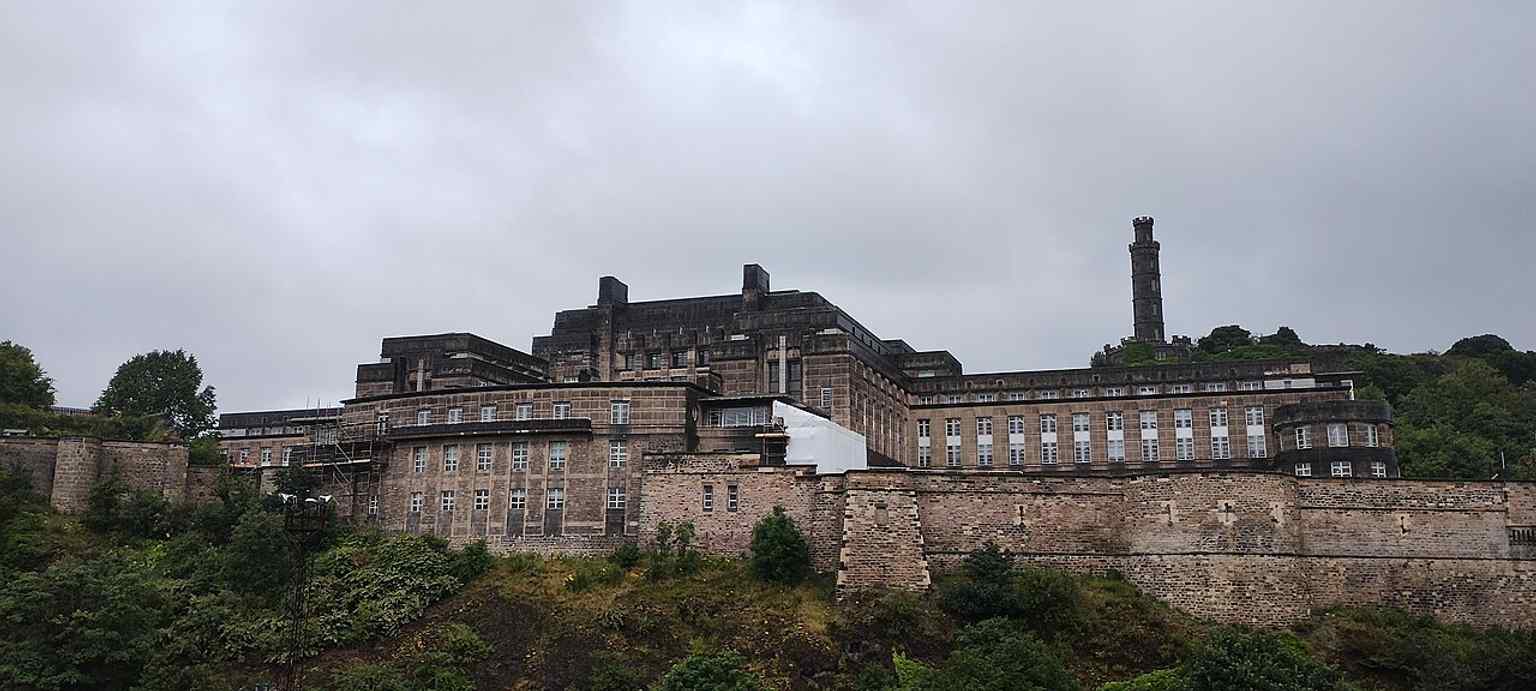
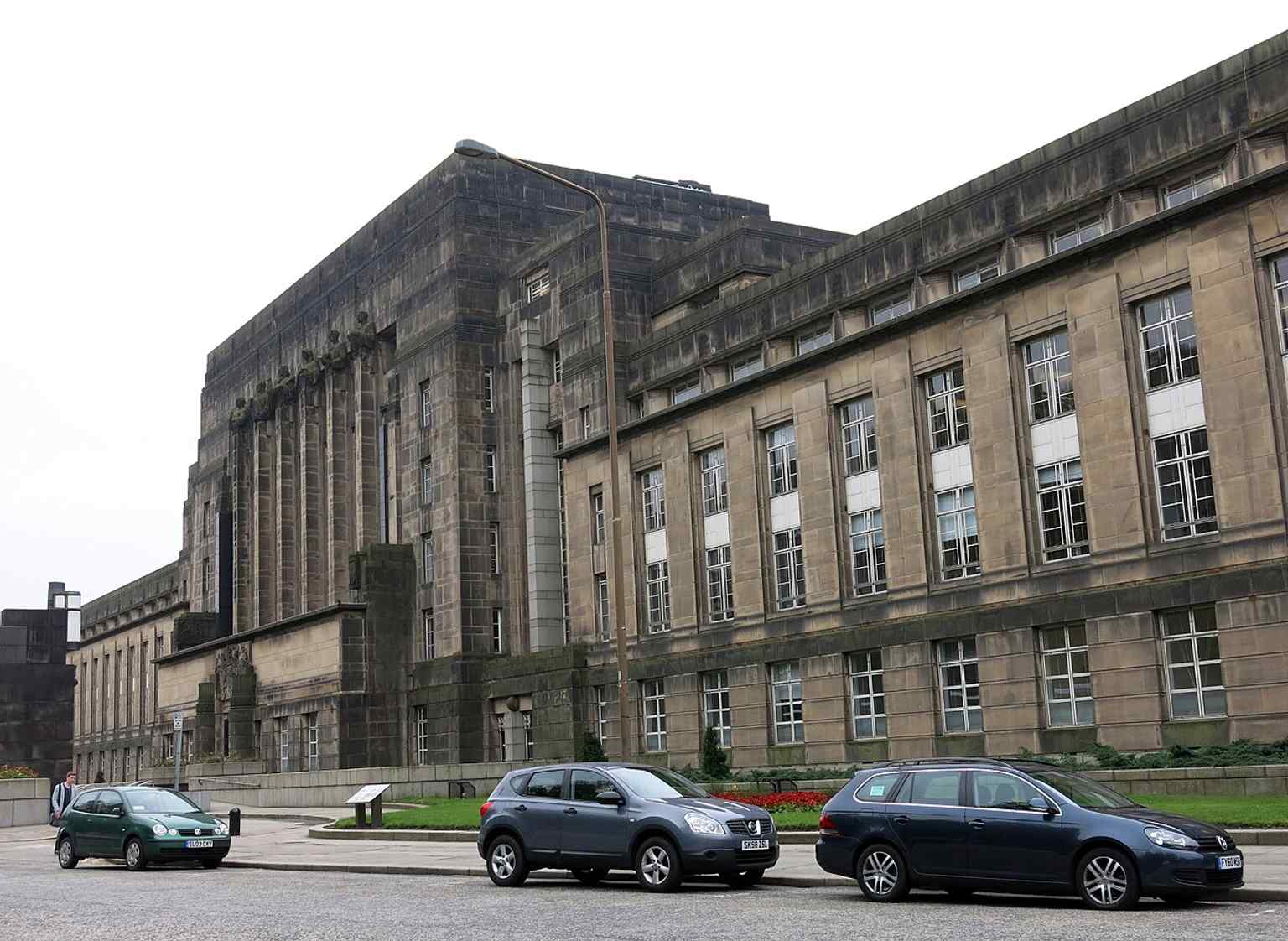
Look for the long pale-stone block with its stern symmetrical front, square-edged massing, and carved heraldic sculpture set above the main entrance.
This is St Andrew’s House, the headquarters of the Scottish Government, and it is Edinburgh doing power in stone. The building gathers the offices of the First Minister, the Deputy First Minister, and senior civil servants behind one immense facade. When workers finished it in nineteen thirty-nine, it was the largest metal-framed building in Europe, and for the first time government departments serving Scotland came together under one roof in Edinburgh.
But Edinburgh has a habit of keeping a hidden city beneath the surface. Its polished official buildings often rest on older worlds that have been sealed over, tidied away, or left to haunt the edges of memory. Here, that hidden layer is not metaphorical at all.
This slope of Calton Hill acts almost like Edinburgh’s acropolis - that is, a hill made dense with public meaning. Around you, government, prison history, burial ground, monument, and spectacle all jostle for space. The city likes to present order here, but the ground keeps older stories.
Before this building rose, Calton Jail stood here. Most tourists never notice that the jail’s turreted Governor’s House still survives beside the complex, a stubborn scrap of the old prison. Stranger still, ten murderers from that jail remain buried beneath the St Andrew’s House car park. So let me put the awkward question gently: when a government places its headquarters over a prison and forgotten graves, does that feel like continuity, erasure, or a little of both?
The architect Thomas S. Tait finally ended a long civic quarrel by giving Scotland a modern seat of administration. The argument had dragged on since nineteen twelve, through competitions, professional sulks, and political interventions; John Buchan and Ramsay MacDonald both entered the debate. When Tait won the job in nineteen thirty-four, he had less than five months to produce the design. What he gave them was restrained Art Deco - that crisp nineteen-thirties language of clean lines, stylised sculpture, and controlled grandeur. If you glance at the before-and-after image in the app, you can see how completely this building changed the side of Calton Hill. There is a sharp irony in its timing. Staff moved in on the fourth of September, nineteen thirty-nine, the day after war was declared. The planned royal opening vanished at once; King George the Sixth and Queen Elizabeth finally opened it in February nineteen forty. Inside, government machinery shifted immediately into wartime mode. Tom Johnston convened the first meetings of the new Council of State here, while staff destroyed older files in case incendiary bombs turned paper records into a firestorm. Even during quieter moments, the building carried tension: civil servants later remembered windows rattling during wartime alarms, and new recruits were sometimes shown the old condemned cell as part of the grand tour.
Then there is the soot. Trams and trains below quickly blackened the fresh facade, so the building acquired a grimy skin almost as soon as it opened. Rather fitting, really. Even the stone could not stay pure for long.
So here on Calton Hill’s flank, modern government sits above old punishment, polished authority above buried violence. Keep that uneasy pairing in mind as you head on to the City Observatory, about six minutes away, where Edinburgh’s lofty ideals and its ghosts continue to share the same ground.