50+ languages

 Grenoble · France
 Grenoble Audio Tours
Discover Grenoble with self-guided audio walking tours
headphones
2 tours
pin_drop
20 landmarks
translate
Grenoble tours
Pick a Grenoble worth walking.
Self-guided audio tours written by people who actually live there.
2 tours
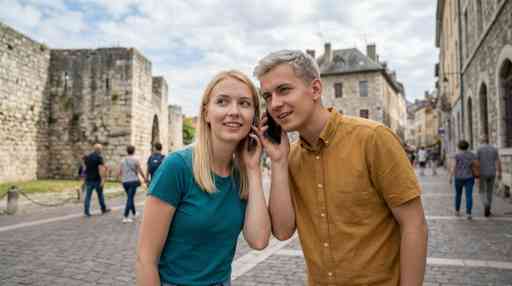
Grenoble Highlights Audio Tour: Historical Treasures and Alpine Views
Grenoble sits beneath jagged peaks where rebellious whispers have shattered the silence for centuries. Behind the postcard views lie forgotten cells, scandalous betrayals, and streets carved by blood and ambition. Unlock these secrets with a self-guided audio tour that bypasses the tourist crowds. Wander from the heights of the Bastille cable car to the quiet corners of the Josephine Baker Botanical Garden and the historic halls of Hotel de Lesdiguières. Why did a local uprising ignite a fire that still burns in the city archives? What dark secret was buried deep within the walls of a forgotten political stronghold? Which eccentric aristocrat left a trail of gold coins that vanished into thin air? Trace the pulse of a city built on defiance. Experience the relentless energy of historical upheaval as the layers of time peel back to reveal a raw and untamed Grenoble. Start your journey and confront the legends waiting in the shadows.
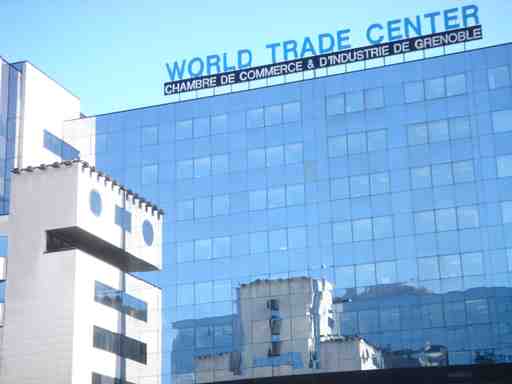
Grenoble Audio Tour: Exploring Grenoble’s Urban Marvels
On the banks of the Isère, Grenoble’s streets once echoed with secret inventions, student uprisings, and shadowy political alliances that changed the face of France. Explore these stories on a self-guided audio tour winding from the prestigious Grenoble Institute of Technology to bustling boulevards like Jean Jaurès, Liberation, and General de Gaulle. Find what hides beyond plain facades and city rhythms—tales even locals forget. Who sparked rebellion in a quiet laboratory and almost brought an industry to its knees? What cryptic messages fluttered between stone benches along Saint-André Course under threat of police raids? Which forgotten engineer’s blunder left behind an artifact that still causes debate today? Move through centuries as you walk—following the thrum of innovation, espionage, and protest beneath your feet. The city reveals itself anew at each turn for those who truly look. Hit play now and unlock Grenoble’s hidden pulse.
Top landmarks
The Grenoble everyone knows.
The landmarks in every guidebook — and the tours that tell you what guidebooks don't.
A few words on Grenoble
Mountains on three sides. Science on the fourth.
Grenoble is encircled by mountains in a way that no other European city quite matches. The Belledonne range to the east, the Chartreuse to the north, and the Vercors plateau to the west create a natural amphitheater that makes the sky above the city dramatic at almost any hour. Stendhal was born here in 1783 (as Henri Beyle, before he adopted the pen name) and spent his adult life feeling vaguely superior about Grenoble while writing nostalgically about it in his memoirs. The house where he was born on Rue Hector Berlioz is now a museum.
The city has the highest concentration of particle physicists and nuclear research facilities outside Geneva, owing to the European Synchrotron Radiation Facility (ESRF) on the outskirts of town, and the Institut Laue-Langevin neutron research center nearby.
This gives Grenoble a particular energy: the cafes on Place Saint-Andre and around the university fill with people discussing things most cities don't discuss over lunch. The Bastille fortress, reachable by cable car (telepherique des Bulles, the bubble cars) from the Quai Stephane Jay, hangs above the city at 476 meters and offers a view over the whole Isere valley that justifies the trip alone.
Grenoble
Grenoble FAQ
Before you walk.
Grenoble has a TGV station with direct trains from Paris Gare de Lyon in about 3 hours. From Lyon, the journey is under an hour. The city center is compact and the tram network (TAG) covers the main areas efficiently. The Bastille cable car departs from near the Musee Dauphinois.
The city center around Place Victor Hugo and along the Isere river is flat. The Bastille area requires either the cable car or a fairly steep climb on foot. The old Saint-Laurent district between the Isere and the Bastille has some inclines worth noting.
Very easily. Chamrousse, Les Deux Alpes, and Alpe d'Huez are all within an hour's drive of Grenoble. Many visitors combine a morning city walk with an afternoon on the slopes in winter. The ski season runs roughly December to April depending on the resort.
Gratin dauphinois, the potato dish named for the Dauphine region, originates here. For something sweet, try the noix de Grenoble, local walnuts with protected designation. A small glass of Chartreuse from a bar on Place Saint-Andre is the local ritual. The market halls on Les Halles Sainte-Claire have excellent produce most mornings.
Every Grenoble tour, in your language.
All 50+ languages, included with every booking.
🇬🇧 English🇫🇷 Français🇪🇸 Español🇩🇪 Deutsch🇮🇹 Italiano🇯🇵 日本語🇨🇳 中文🇰🇷 한국어+ 41 more
star AudaTours Unlimited
Visiting more than one city? Subscribe.
Unlock every Grenoble tour — plus thousands more worldwide. Cancel any time.
$4.99/week · Cancel anytime


Loved by travellersThousands of tours started.
Thousands of tours started.
Plenty of opinions.
4.8 across the App Store and Google Play. Here's a few we keep coming back to.
starstarstarstarstar
This tour was such a great way to see the city. The stories were interesting without feeling too scripted, and I loved being able to explore at my own pace.

Jess
Tbilisi Tourstarstarstarstarstar
This was a solid way to get to know Brighton without feeling like a tourist. The narration had depth and context, but didn't overdo it.

Christoph
Brighton Tourstarstarstarstarstar
Started this tour with a croissant in one hand and zero expectations. The app just vibes with you, no pressure, just you, your headphones, and some cool stories.

John
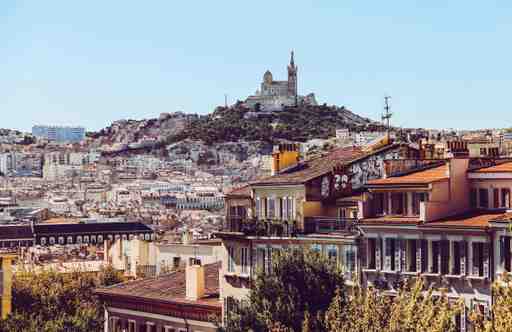
Marseille Tourdownload Get the app Pop your headphones in.


Pop your headphones in.
Step outside.
Free to download. Tours in every city. Start in 60 seconds — no account, no card.
headphones
~ 4 min until your first tour starts
public
1,000+ cities worldwide
all_inclusive
AudaTours
Unlimited
Every tour. Every city. One subscription.
3097 tours2273 cities138 countries50+ languages
$39 /year
all_inclusive Explore Unlimited