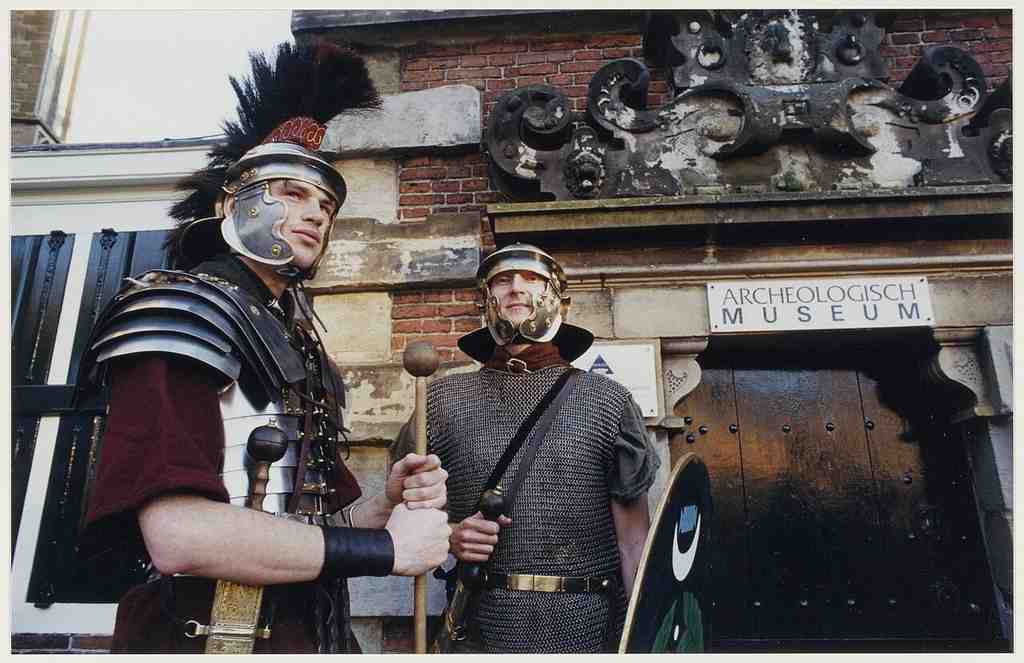
Look for the sturdy brick frontage with its low arched entrance and stone trim, tucked into the base of the old Vleeshal like a doorway cut straight into Haarlem’s storage chest.
This museum sits in the cellars of the Vleeshal, and that feels exactly right, because this is Haarlem’s memory vault. Inside, the city gathers what excavations have pulled from the ground over the last decades, and the permanent display stretches across six thousand years of local life... from prehistory to the early modern city.
The part most visitors never hear is how urgent this work became. In the late nineteen sixties, new building plans and new sewer works threatened to wipe out the buried archive before anyone had studied it. So in nineteen sixty-eight, amateur archaeologists stepped in to help, first with volunteers from Velsen, and that scramble grew into what archaeologists call rescue archaeology: emergency digging and recording before development destroys the evidence. By nineteen seventy, Haarlem had its own volunteer working group, and by nineteen eighty-one the city appointed its first official city archaeologist. This museum opened in nineteen ninety-one.
There’s a nice local irony here. We’ve already met hidden stories sealed up in rooms above street level; here, the hidden layers sit under the square. Even this building keeps secrets: excavators found heavy medieval foundations under the museum itself. Haarlem really does stack its centuries like dinner plates.
Inside, one of the most human faces belongs to Cornelis, a medieval man whose skeleton archaeologists uncovered at the Botermarkt in twenty twelve. They even reconstructed his face, so he stops being “human remains” and becomes a neighbor again.
The museum also keeps legend honest. One old story says Saint Bavo appeared during a siege in twelve seventy-five. Archaeologists are kinder but firmer than legend: Bavo’s cult likely reached Haarlem through the counts of Holland and Egmond Abbey, while the harder evidence comes from older wall remains near the great church and stone projectiles that Jacoba of Bavaria fired at the city in fourteen twenty-six.
Now lift your eyes from this cellar entrance to the great church rising over the market... that’s where we’re headed next, the Grote Kerk, about two minutes away; if you want to return later, this museum is free and usually open Wednesday through Sunday from one to five.