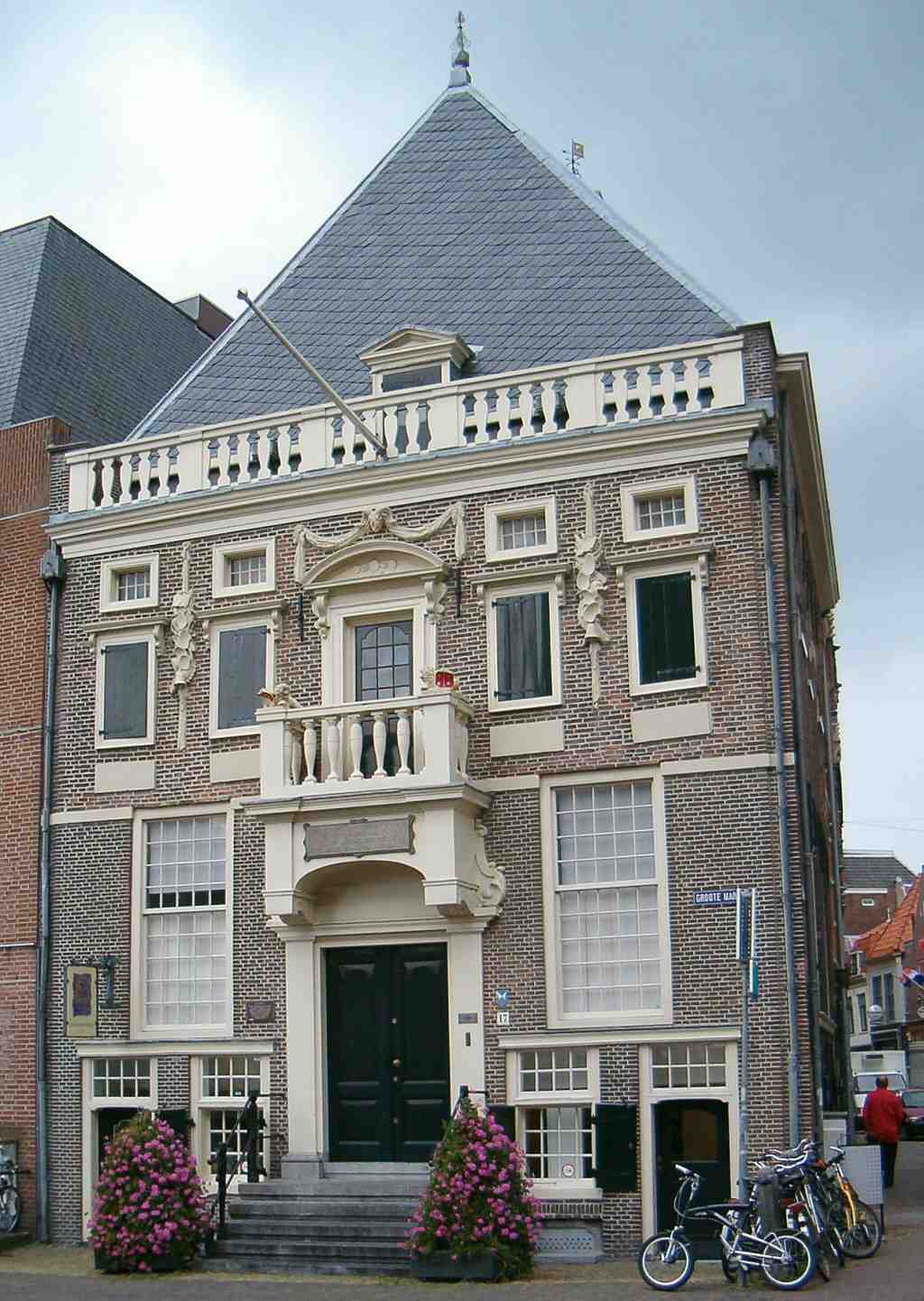
On your right, spot the sturdy brick-and-stone front, the narrow balcony above the entrance, and the plaque set over the doorway.
Haarlem has a habit of tucking its biggest stories into buildings that look almost modest... and this is one of the grandest examples. The Hoofdwacht is a rijksmonument, meaning a nationally protected historic building, and it is widely considered the oldest building in Haarlem, with a medieval core going back to the thirteenth century.
Now here is the trick of this place: it kept changing uniforms. From about twelve fifty to around thirteen fifty, this was Haarlem’s first city hall, the old center of authority before the newer city hall rose across the square. After that, important families moved in, so the former seat of government turned into a private house. Down below, the lower rooms worked hard too: people used them as a printshop, a general store, and even beer storage. One address, a whole stack of jobs... very Dutch, very practical.
The plaque above the door preserves one of its official afterlives. In old Dutch, it says that whenever the Count of Holland “planted his court here on the sand” - meaning when he stayed in the Count’s hall across the square - this honorable house served again as the courthouse. So even after losing the title of city hall, it kept getting pulled back into power.
And then came Dirck Volckertszoon Coornhert, one of Haarlem’s most interesting minds. Around fifteen sixty, he ran a printing shop here with burgomaster Jan van Zuren, whose family owned the house for roughly a hundred and twenty-five years. Coornhert earned his living as an engraver, printer, and later a notary, but he was more than a tradesman. He wrote one of the earliest arguments for treating prisoners more humanely. That matters here, because this building also held jail rooms upstairs. In other words, ideas about justice lived inside the same walls that enforced it. That is a powerful little contradiction.
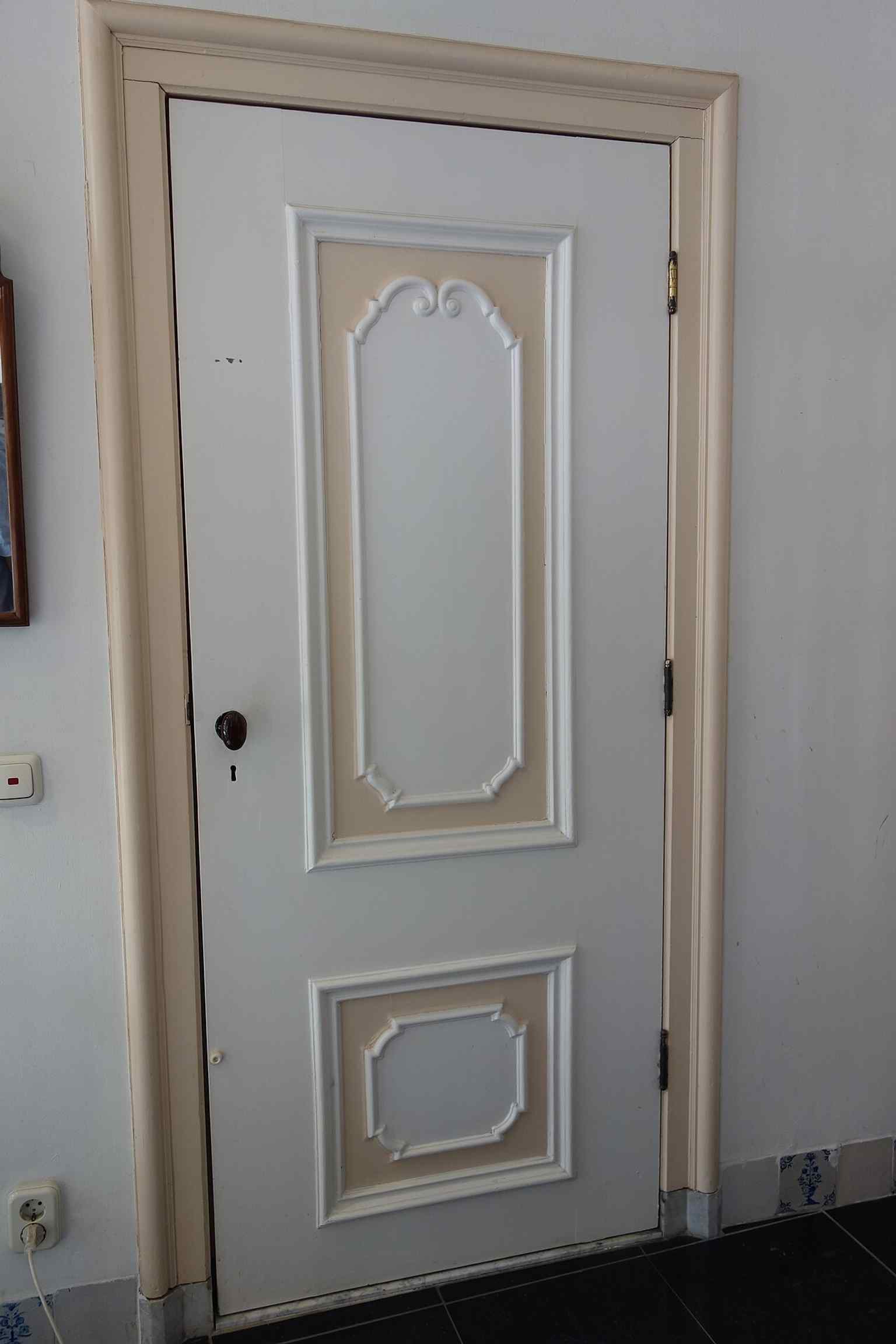
If you want a glimpse of the house side of the story, take a look at the painted interior door in the app; it hints at the domestic life that once sat behind this civic face.
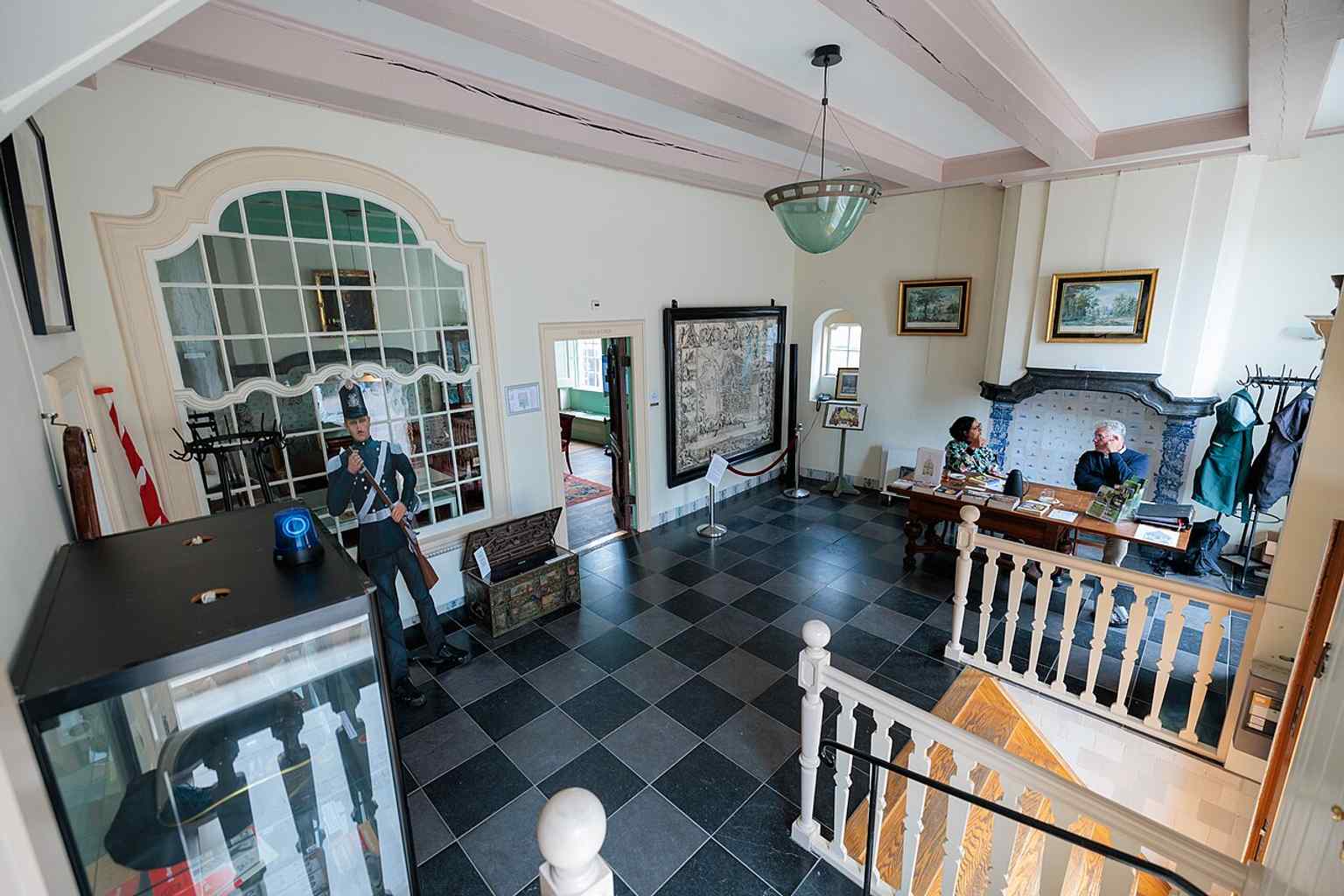
In seventeen fifty-five, the city bought the building and gave it the role that named it: the Hoofdwacht, the head watch. The schutterij - that is, the civic guard, armed citizens who patrolled and kept order - lived here, unlocked the city gates morning and evening, and used this as their base. Guards even watched from upstairs near the balcony, while a sentry in the church tower opposite could signal them with red flags if fire or unrest broke out.
Later still, this same building served briefly as a military hospital, and in eighteen fifty-one Antonius Mathijsen developed the plaster cast here - not a bad medical footnote for an old guardhouse. If you like, glance at the before-and-after image in the app; the square changed a lot between nineteen sixty-four and twenty thirteen, but this balcony-fronted facade still holds its ground.
Since nineteen nineteen, the Historische Vereniging Haerlem has cared for the place, and restoration in the mid-nineteen nineties helped peel apart its medieval bones from later changes.
Before we move on, cast your attention down to the square beneath your feet. Some of Haarlem’s deepest history is not in the skyline at all, but under the ground... and that makes our next stop, the Archaeological Museum, a very fitting next step, about a two-minute walk away. If you want to return, the Hoofdwacht usually opens Monday through Friday from nine to four, stays open until eight on Thursday, and closes on weekends.