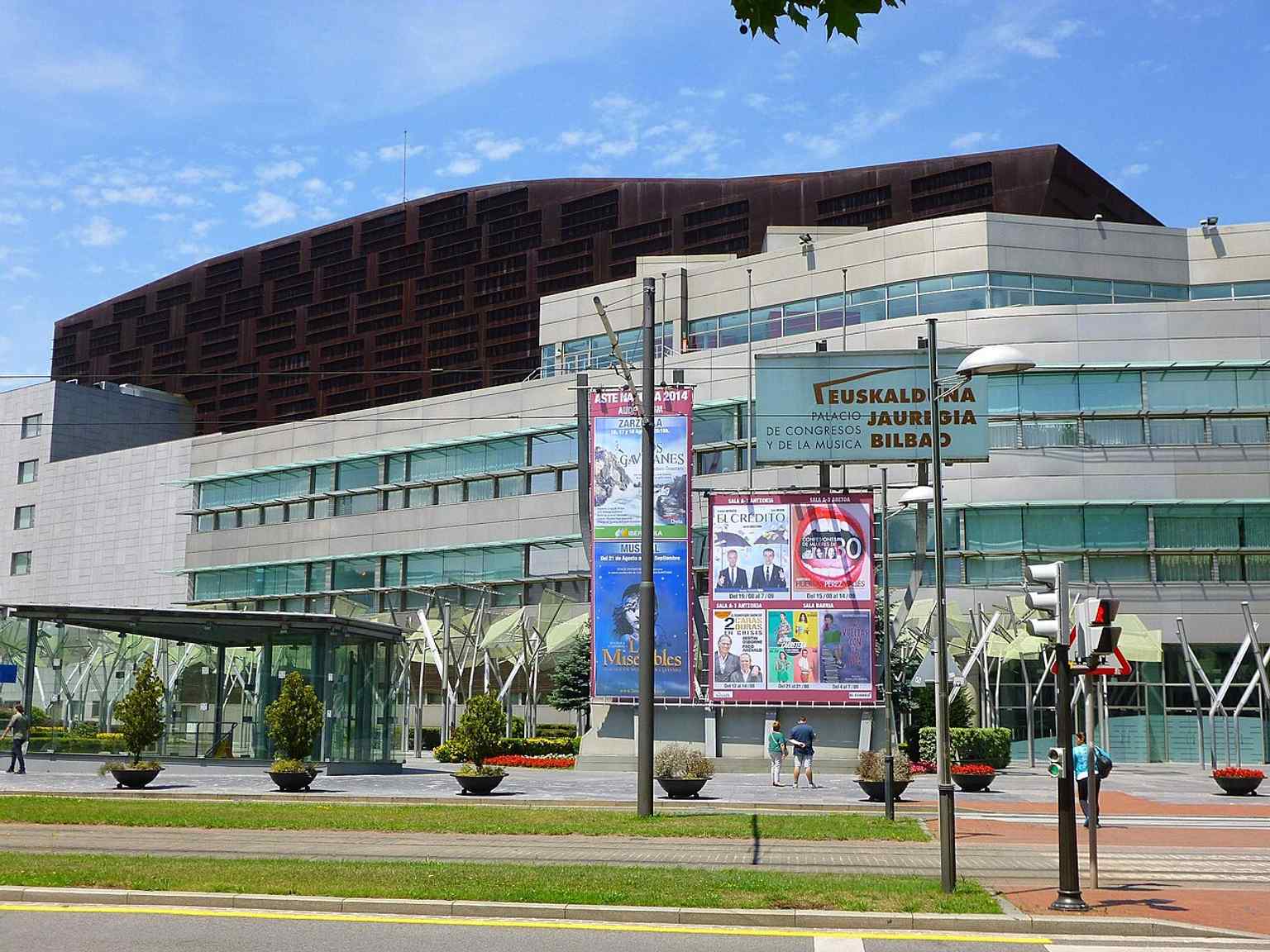
On your left, the Euskalduna looks like a giant rust-red ship run aground: broad corten-steel walls, sharp hull-like angles, and a long sloping edge that feels almost like a prow.
This is one of Bilbao’s boldest acts of translation. Before this hall stood here, this ground belonged to the former Euskalduna shipyard. In nineteen ninety-three, crews cleared away the last remains of those yards, and the city made a choice: not to hide the industrial past under a pretty blanket, but to recast it in steel, scale, and swagger.
Architects Federico Soriano and Dolores Palacios led that move. They designed this place beside the estuary as a kind of memory machine, and the corten steel was no accident. That weathered metal deliberately echoes the last vessel launched from the old yards. If you glance at the image on your screen, the ship idea becomes even clearer from a wider angle.
Now here is the part most people miss. Inside, the building works like two interwoven systems. The architects created separate vestibules - entrance halls, basically - so opera audiences and conference delegates can move through the complex without tangling into one giant coat-check traffic jam, while still sharing the same vast interior voids and circulation spaces. It is half theatre, half congress engine, and all of it runs with a certain industrial logic. Very Bilbao.
The place opened in February of nineteen ninety-nine, and it did not open timidly. The first major opera night brought the Mariinski Theatre from Saint Petersburg, with Valery Gergiev conducting a demanding Musorgsky work. That choice mattered. The organizers could have gone for an easy crowd-pleaser, but instead they chose discovery over nostalgia. That tells you a lot about the city standing here and saying, more or less, we remember what we were, but we are not going backward.
Inside are a concert hall, an opera house, conference facilities, exhibition space, rehearsal rooms, dressing rooms, even restaurants. The main auditorium seats two thousand one hundred sixty-four people, and its stage is unusually large, stretching across one thousand seven hundred seventy square meters. In two thousand three, the complex earned major recognition as a leading congress centre, and it also took the Enric Miralles award. Not bad for ground that once rang with instead of applause.
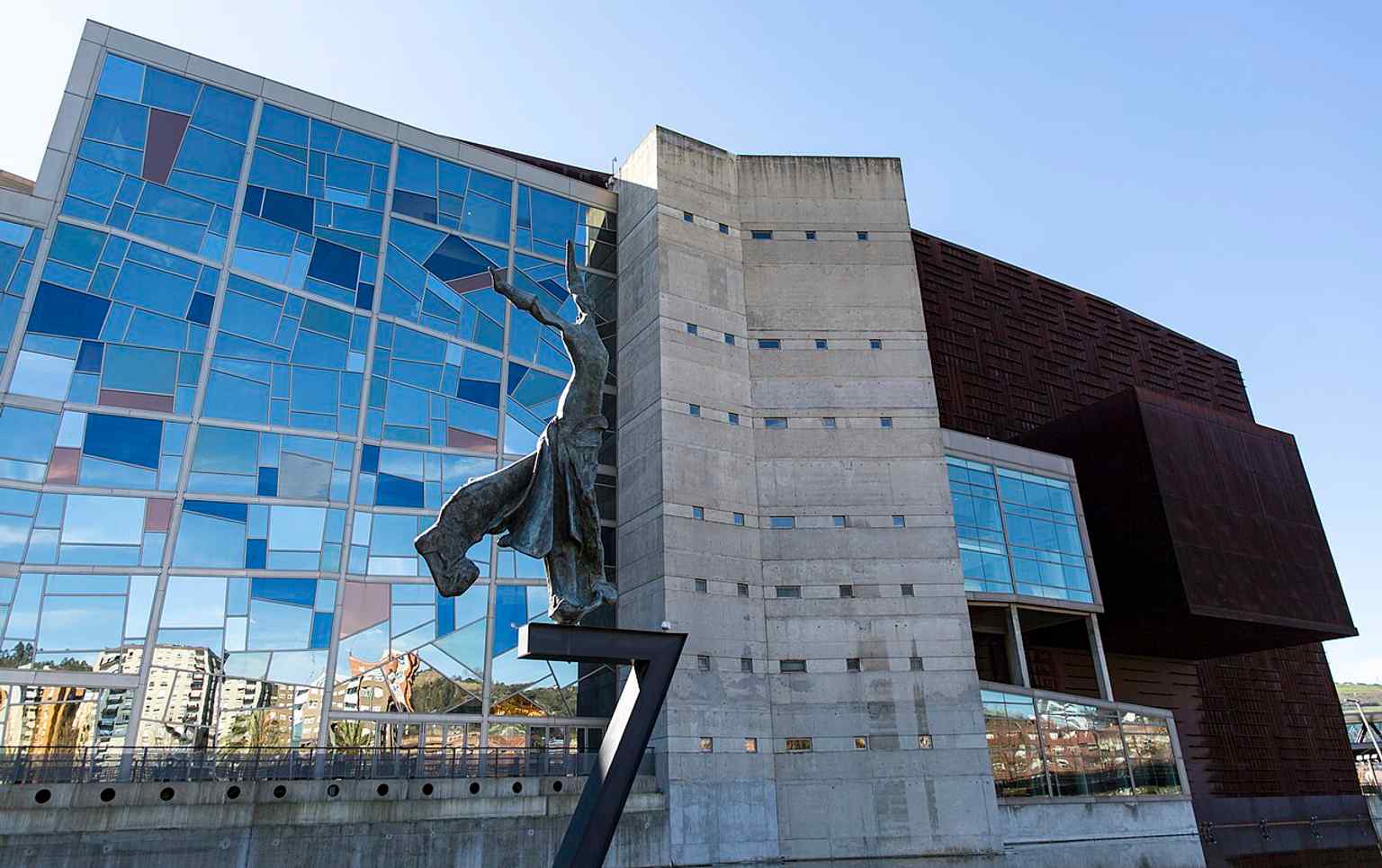
If you check the other exterior image, you can see how massive and layered the whole complex is, more like urban infrastructure than a single hall. That matters, because this is the hinge in Bilbao’s story: shipbuilding gave way not to amnesia, but to culture, business, and public performance on the very same soil.
Ahead, the University of Deusto and the Guggenheim will offer two different answers to the same question: when an industrial city remakes itself, what comes next? We’ll head to the university next, about a fourteen-minute walk from here. If you want to plan an interior visit later, public opening hours are generally Tuesday through Friday from five to eight in the evening, with Monday and the weekend closed.