
50+ languages

 Belem · Brazil
 Belem Audio Tours
Discover Belem with self-guided audio walking tours
headphones
2 tours
pin_drop
20 landmarks
translate
Belem tours
Pick a Belem worth walking.
Self-guided audio tours written by people who actually live there.
2 tours
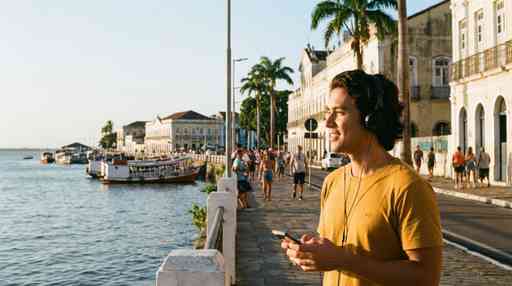
Belem Highlights Audio Tour: Historic Heart and Colonial Charm
Beneath the sweltering Amazon sun, Belém hides secrets carved into gold leaf and crumbling stone. This city is not merely a tropical port. It is a battlefield of faith and fierce rebellion waiting for the right ears to listen. Unlock the past with this self-guided audio tour designed to lead you past the crowds and deep into the city’s true pulse. Forget the postcard views and uncover the scandals and forgotten ghosts lurking within the shadows of these historic streets. Why did a holy sanctuary become a flashpoint for a bloody popular uprising? What dark ritual remains etched into the foundations of the riverside docks? Which local aristocrat vanished without a trace just before the city’s most scandalous political betrayal? Traverse the vibrant heart of the city as history unfurls beneath your feet. Transform your walk into a cinematic journey. Begin now and let the ghosts of Belém whisper their truths.

Belem Audio Tour: Belem's Heritage Odyssey
Gold-laden ships once crowded the waters where Belém’s markets now burst with color and secrets. Here, colonial facades hold whispers of uprisings and intrigue waiting just beneath the surface. This self-guided audio tour peels back layers of Belém, leading you from the bustle of Ver-o-peso to the grandeur of Palácio das Onze Janelas and Lauro Sodré Palace. Hear stories rarely told, reveal hidden corners, and let the city’s pulse guide your discoveries. Which explosive protest echoed through these cobbled streets? What shadows linger in a palace that once decided fates? How did smuggled spices spark an unexpected scandal right at the market’s edge? Move through centuries in minutes. Picture faded revolutions colliding with vibrant street life as you uncover untold dramas behind iconic walls and lively stalls. Experience Belém through eyes sharpened by curiosity and suspense. Begin exploring and unlock the city’s secrets that wait just beyond sight.
Top landmarks
The Belem everyone knows.
The landmarks in every guidebook — and the tours that tell you what guidebooks don't.
A few words on Belem
The Amazon's front door, built by Portugal, flavored by everything.
Belem was founded in 1616 by the Portuguese captain Francisco Caldeira Castelo Branco, a strategic fortification 100 kilometers from the Atlantic on the Guajara River, the southernmost arm of the Amazon delta. It was the first European foothold on the Amazon and for centuries controlled everything that came down the river or tried to go up it. The rubber boom of the late 19th and early 20th centuries made it fabulously wealthy: the Theatro da Paz, opened in 1874 in Italian neoclassical style with a Carrara marble interior, was built on rubber money and still performs opera today. The wealth collapsed with the rubber price, but the architecture and the Ver-o-Peso market, operating on the waterfront since the 17th century, remained.
Ver-o-Peso translates as 'see the weight' and refers to the colonial tax-collection point where goods coming off the river were weighed and taxed.
Today it is one of the largest open-air markets in Latin America, spreading across the waterfront in a chaos of fish stalls, Amazonian fruit, herbal medicine, and ceramics. The fish you will see include species you have never encountered anywhere else: jaraqui, tambaqui, pirarucu, tucunare, each one pulled from a river system that contains more species than the entire Atlantic Ocean. The tucupi soup, made from the fermented liquid pressed from manioc root, and the tacacai stew with shrimp and jambu leaves that numbs your lips, are things that exist nowhere else on earth.
Belem
Belem FAQ
Before you walk.
Very light clothing and strong sun protection are essential. A small umbrella or packable rain jacket handles the frequent passing showers. Sandals work in many areas but the Ver-o-Peso market is wet and slippery, so closed shoes with grip are better for market exploration.
The Cidade Velha, Estacao das Docas waterfront complex, and the areas around Ver-o-Peso are manageable in daylight with standard urban vigilance. The market area is crowded and pickpocketing risk is real, so secure valuables and keep one earbud out. Avoid wandering unfamiliar areas alone after dark.
The historic sights cluster in the Cidade Velha and along the waterfront, making the central area walkable. Ridesharing (99 and Uber operate in Belem) is the most reliable option for moving between neighborhoods. City buses run throughout but routes can be confusing for first-time visitors.
Absolutely. Belem has one of the most distinctive food cultures in Brazil. Tacacai (shrimp and jambu broth served in a gourd) and pato no tucupi (duck in manioc broth) are quintessentially Para dishes. Fresh acai here is different from the frozen export version: it is thick, purple-grey, and eaten savory with dried shrimp and manioc flour.
Every Belem tour, in your language.
All 50+ languages, included with every booking.
🇬🇧 English🇫🇷 Français🇪🇸 Español🇩🇪 Deutsch🇮🇹 Italiano🇯🇵 日本語🇨🇳 中文🇰🇷 한국어+ 41 more
star AudaTours Unlimited
Visiting more than one city? Subscribe.
Unlock every Belem tour — plus thousands more worldwide. Cancel any time.
$4.99/week · Cancel anytime






Loved by travellersThousands of tours started.
Thousands of tours started.
Plenty of opinions.
4.8 across the App Store and Google Play. Here's a few we keep coming back to.
starstarstarstarstar
This tour was such a great way to see the city. The stories were interesting without feeling too scripted, and I loved being able to explore at my own pace.

Jess
Tbilisi Tourstarstarstarstarstar
This was a solid way to get to know Brighton without feeling like a tourist. The narration had depth and context, but didn't overdo it.

Christoph
Brighton Tourstarstarstarstarstar
Started this tour with a croissant in one hand and zero expectations. The app just vibes with you, no pressure, just you, your headphones, and some cool stories.

John
Marseille Tourdownload Get the app Pop your headphones in.


Pop your headphones in.
Step outside.
Free to download. Tours in every city. Start in 60 seconds — no account, no card.

headphones
~ 4 min until your first tour starts
public
1,000+ cities worldwide
all_inclusive
AudaTours
Unlimited
Every tour. Every city. One subscription.
3097 tours2273 cities138 countries50+ languages
$39 /year
all_inclusive Explore Unlimited